
Is Amdro Fire Ant Bait Granules Safe for Pets?
At a Glance
- Product: Fire Ant Bait Granules by Amdro · Amdro
- Active ingredient: Hydramethylnon 0.73%
- Re-entry: Varies by ant activity and weather; the label is the legal authority — follow its specific outdoor re-entry directions.
- Cat owners: Cats differ — read the cat card below
The short, honest answer
The score rolls up every per-species verdict below, weighted by the honest exposure that matters — a chewed-open tube, not a hidden dab — and is checked against the EPA label and veterinary toxicology.
Low acute mammalian toxicity — but corn-grit granules scattered on turf can look like kibble to an investigating dog.
Amdro Fire Ant Bait Granules use hydramethylnon (0.73%, EPA Reg. No. 73342-1), a slow-acting stomach poison that NPIC describes as practically non-toxic to mammals at labeled use — a genuinely favorable acute profile compared to many actives in this hub. The pet-safety variable here isn't the chemistry alone, though: this is a broadcast corn-grit bait scattered across open lawn, and to an investigating dog those granules can look and smell like kibble or mulch. The label itself directs keeping people and pets out of the treated area during application, and the EPA has separately classified hydramethylnon as a possible (Group C) human carcinogen — a reason to minimize incidental contact even though acute pet toxicity is low. Treated-area exclusion, not drying time, is the safeguard.
General information, not veterinary advice. For a suspected exposure, contact your veterinarian or a pet-poison hotline. Verdict checked 2026-07-13 against the EPA label and veterinary toxicology.
It's not one answer — it's one per animal
Cats, birds, and fish routinely differ sharply from dogs. That contrast is the whole point of this scorecard, and no manufacturer page draws it.
- DogsCaution
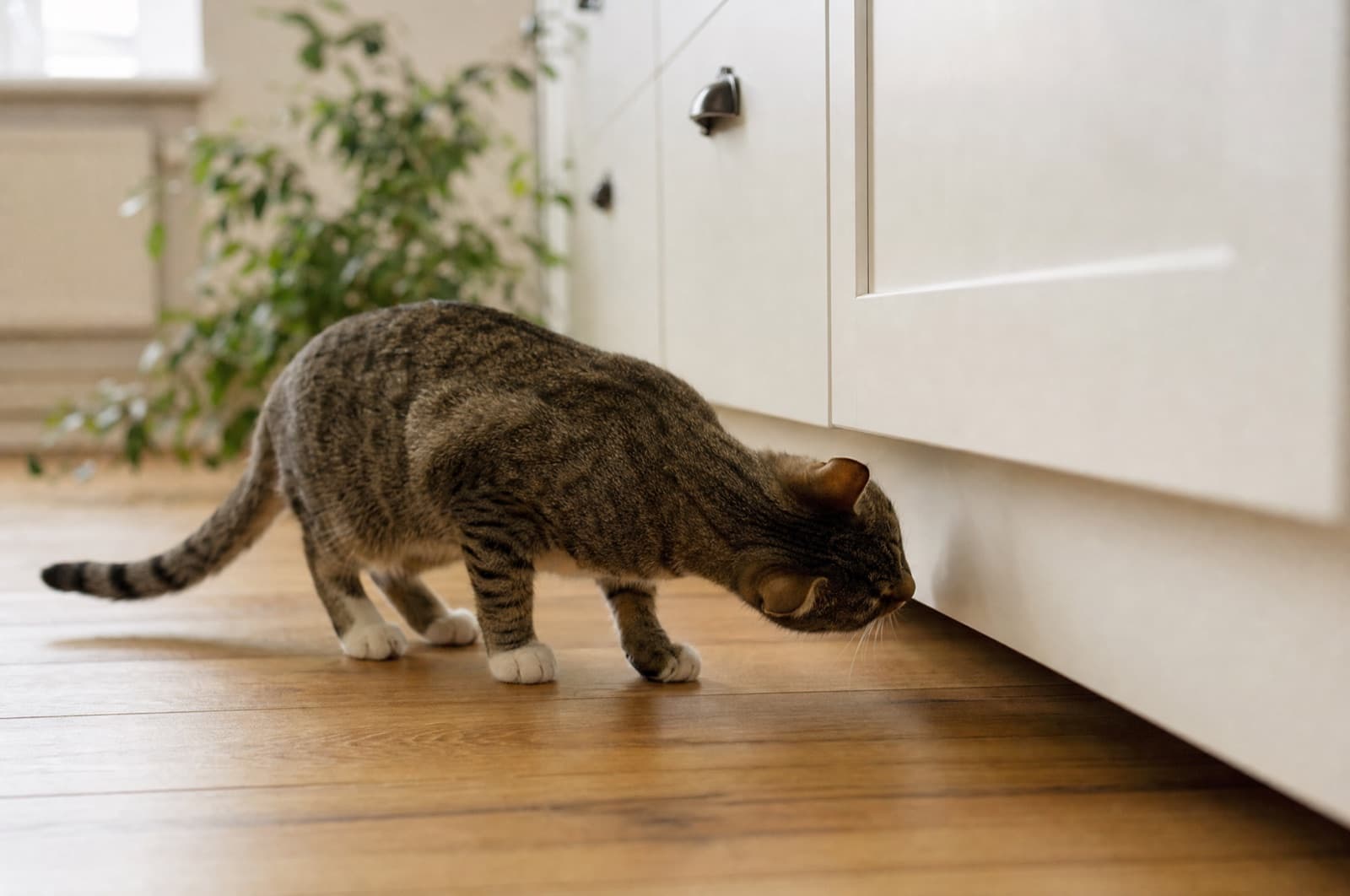
- CatsCaution
- Small mammalsCaution
- BirdsCaution
- FishAvoid
Practically non-toxic per NPIC — but keep dogs off freshly treated turf
NPIC describes hydramethylnon as practically non-toxic to mammals, but corn-grit granules scattered on turf invite grazing, and dogs are the pet most likely to directly ingest scattered granules during normal outdoor time.
National Pesticide Information Center — Hydramethylnon Technical Fact Sheet
Outdoor-access cats face the same exposure as dogs; indoor-only cats have effectively none
Low mammalian toxicity applies to cats too, but outdoor or free-roaming cats can walk and graze treated ground and groom granules off their paws. An indoor-only cat has essentially no exposure to this format.
Anchor Pest Services product research
A realistic ingestion route for any outdoor hutch or run near treated ground
Broadcast granules on accessible ground are a realistic route for small foragers with outdoor access; an outdoor hutch or run situated near a treated lawn area is the scenario to avoid.
Anchor Pest Services product research
Reported practically non-toxic to birds — but keep fresh applications off-limits
American Cyanamid/EXTOXNET data report hydramethylnon as practically non-toxic to birds, but ground-feeding wild birds and any pet bird with supervised outdoor time should still be kept off fresh applications.
EXTOXNET Pesticide Information Profile — Hydramethylnon
Highly toxic to fish — keep away from ponds, gutters, and storm drains
The label warns hydramethylnon is toxic to fish and aquatic invertebrates. Keep granules away from ponds, water gardens, gutters, and storm drains, and never apply if runoff to water is possible.
EPA Registered Product Label (Reg. No. 73342-1)
What's in it — and what it does to pets
Hydramethylnon inhibits mitochondrial complex III, acting as a slow stomach poison that must be eaten to work — which NPIC notes gives it a practically non-toxic acute mammalian profile at labeled use. It is slow-acting rather than an immediate neurotoxin, so effects on a pet that grazes granules would build gradually rather than appear at once. Separately, the EPA has classified hydramethylnon as a possible (Group C) human carcinogen based on lung tumors in female mice — a reason to minimize incidental contact even though acute pet toxicity is low.
National Pesticide Information Center — Hydramethylnon Technical Fact Sheet; EXTOXNET Pesticide Information Profile
How to use it safely around pets
This is a dry corn-grit bait broadcast across lawns and garden beds, not a spray — there's no "wait until dry" marker. The practical rule is excluding pets from the treated area until the bait is taken up or no longer visible.
Keep pets out of the area during application
The label directs keeping people and pets out of the treated area while you're applying the granules.
Apply only to labeled outdoor, non-crop areas
Treat lawns and landscaped or commercial grounds per the label — never scatter granules where a pet can immediately graze the area.
Exclude pets until the bait is taken up or no longer visible
Because there's no dry-time marker with a granular bait, keep pets off the treated zone during and after application until the granules are gone or clearly no longer attractive to ants.
Don't apply if rain is likely within 24 hours
Wet bait becomes unattractive to ants and can wash toward drains or water — time the application around dry weather.
Keep pets off the treated lawn or garden area during application and until the bait is taken up or no longer visible — there's no drying window to watch for with a dry granule.
Varies by ant activity and weather; the label is the legal authority — follow its specific outdoor re-entry directions.
Because granules can resemble kibble or mulch to a grazing dog, err toward a longer exclusion period than you would with a liquid or spray product.
Rather not manage treated-yard exclusion yourself?
Anchor's licensed NH technicians can target ant mounds directly and advise on pet-safe timing.
Symptoms to watch for
A sign, its urgency, and what to do — never a diagnosis. When in doubt, the emergency panel below is one tap away.
- Mild
Salivation
- Moderate
Decreased appetite or weight loss
May appear gradually given hydramethylnon's slow-acting mechanism
- Moderate
Vomiting
- Moderate
Decreased activity or lethargy
- Serious
Difficulty with coordination and balance
Call a hotline promptly if this appears
Act now — call a vet or a pet-poison line
Do not induce vomiting unless told to
If your pet grazed treated turf or ate granules directly, act now — note roughly how much was accessible and bring the product bag or a photo of the label when you call. This page is general information, not veterinary advice — for a suspected exposure, contact your veterinarian or ASPCA Animal Poison Control (888-426-4435) right away.
What each situation calls for
Your pet grazed or walked through a freshly treated lawn area
Because hydramethylnon is slow-acting, monitor for decreased appetite, vomiting, or lethargy over the following days rather than expecting immediate signs, and call your vet or a pet poison hotline if any appear.
Your pet directly ate a noticeable amount of granules
Call your vet or ASPCA Animal Poison Control right away — note roughly how much was consumed and where the treated area is located.
You're not sure whether the treated area is still active
Keep pets off any area where granules are still visible; if unsure, call the hotline for label-specific re-entry guidance or check the product bag.
In the next 60 seconds
- Move your pet away from the treated area.
- Estimate how much of the treated area or how many granules were accessible.
- Do NOT induce vomiting unless a veterinarian or poison expert tells you to.
- Have the product name and EPA registration number (73342-1) ready.
- Call your veterinarian or one of the hotlines below — monitor for delayed signs given hydramethylnon's slow-acting mechanism.
ASPCA Animal Poison Control
(888) 426-4435
24/7; a consultation fee may apply
Pet Poison Helpline
(855) 764-7661
24/7; a per-incident fee applies
Northern New England Poison Center
(800) 222-1222
24/7 human poison control — for household/child exposure context; call a vet or the pet lines above for pet guidance
Safer pet-friendly alternatives
Honest options that reduce or remove pet-toxicity — no affiliate hype, real caveats included.
Targeted mound drench in fenced, pet-excluded zones
SaferTargeted chemical treatment
Treats individual mounds directly rather than broadcasting granules across an entire lawn a pet uses.
Still a pesticide application — fence or otherwise exclude pets from the treated mound area.
Enclosed outdoor bait stations
SaferEnclosed bait
Contains the bait inside a station rather than scattering it loose across open turf, cutting the resemblance-to-kibble exposure route.
Less effective against a large fire ant mound than direct broadcast treatment in some cases.
Physical and cultural control
SaferNon-chemical
Mowing, moisture management, and prompt mound disruption reduce fire ant pressure without any pesticide exposure.
Less effective against an established, aggressive fire ant colony on its own.
Professional exterior ant control (Anchor Pest Services)
SaferLicensed professional service
A licensed applicator can target mounds directly and advise on pet-exclusion timing specific to your yard.
A service, not a product — request a pet-safety-focused plan.
Pet-safe outdoor ant control in New Hampshire
True red imported fire ants aren't established in New Hampshire — the winters are too cold — so a "fire ant" broadcast bait here is really being used against other outdoor ant species like pavement ants. Either way, the corn-grit granules resemble kibble to a dog with yard access. Applying pesticides for hire in NH requires an NHDAMF-licensed applicator under RSA 430; Anchor Pest Services (NH License #782664) manages treated-area exclusion across Manchester, Nashua, Concord, and the surrounding towns.
NH-licensed applicator #782664 (NHDAMF, RSA 430) · NEPMA member · family-owned since 2017.
Service Area Map
Southern New Hampshire
Frequently asked questions
Sources(3)
- [1]EPA Registered Product Label — Amdro Fire Ant Bait (Reg. No. 73342-1)
Verified active (hydramethylnon 0.73%), pet-exclusion directive during application
epa_labelverified 2026-07-13 - [2]National Pesticide Information Center — Hydramethylnon Technical Fact Sheet
Mammalian toxicity profile, EPA carcinogen classification
npicverified 2026-07-13 - [3]EXTOXNET — Hydramethylnon Pesticide Information Profile
Avian toxicity data, mechanism of action
govverified 2026-07-13
Written & reviewed by
VerifiedDaniel Brady
NH-Licensed Pesticide Applicator · License #782664 (NHDAMF, RSA 430)
Daniel Brady is the New Hampshire–licensed applicator behind Anchor Pest Services, a family-owned pest control company serving the Manchester area since 2017.
Last updated 2026-07-13
Pet-Safe Professional Pest Control
Skip the Guesswork — and the Kibble-Look-Alike Risk
DIY broadcast granules put yard-exclusion timing on you. Anchor Pest Services treats outdoor ant colonies with targeted, pet-aware methods across southern and central New Hampshire. Family-owned since 2017, NH license #782664.
- Pet-conscious targeted treatment
- NH-licensed applicators (#782664)
- Free inspection — same-day service across southern NH
NH License #782664 · No obligation · We answer in person
Your next step
- Book a NH pro
Ant Pest Control
Book now - Book a NH pro
Pest Control Services
Licensed, family-owned pest control across southern NH.
Book now - Next step
Where Do Ants Go In The Winter?
Read the answer - What to do next
How to Use Amdro Fire Ant Bait Granules
Read the answer - Also relevant
Chemical Ant Control: Why Bait Beats Spray
Read the answer - Also relevant
Ant Prevention: Moisture Control Stops NH's Top Pest
Read the answer