
Is the Havahart Live Animal Cage Trap Safe for Pets?
At a Glance
- Product: Live Animal Cage Trap for Rats and Squirrels by Havahart · Havahart
- Active ingredient: No chemical toxicant
- Re-entry: Not applicable — no drying or clearance time is needed.
- Cat owners: Cats differ — read the cat card below
The short, honest answer
The score rolls up every per-species verdict below, weighted by the honest exposure that matters — a chewed-open tube, not a hidden dab — and is checked against the EPA label and veterinary toxicology.
No poison, no lethal mechanism — the safest format in this cluster for a home with pets.
The Havahart cage trap is a galvanized wire-mesh live-catch trap with a spring or gravity door and trip plate — there is no chemical toxicant of any kind, and active_ingredients is genuinely empty here, not a research gap. Compared to every rodenticide bait and insect bait station in this hub, this is a physical trap, not a poison: the honest risk profile is entrapment and handling, not toxicology. Used correctly (checked frequently, sited away from where pets roam), it's a genuinely pet-safer option worth recommending on its own merits.
General information, not veterinary advice. For a suspected exposure, contact your veterinarian or a pet-poison hotline. Verdict checked 2026-07-13 against the EPA label and veterinary toxicology.
It's not one answer — it's one per animal
Cats, birds, and fish routinely differ sharply from dogs. That contrast is the whole point of this scorecard, and no manufacturer page draws it.
- DogsSafe
- CatsCaution
- Small mammalsCaution
- BirdsSafe
- FishSafe
No toxicant, and a dog can't fit inside a rat/squirrel-sized trap
There's no chemical exposure route at all, and the trap's dimensions are sized for a rat, squirrel, or similarly small animal — a dog physically cannot enter it, making the practical risk essentially nil.
Havahart manufacturer trap specifications
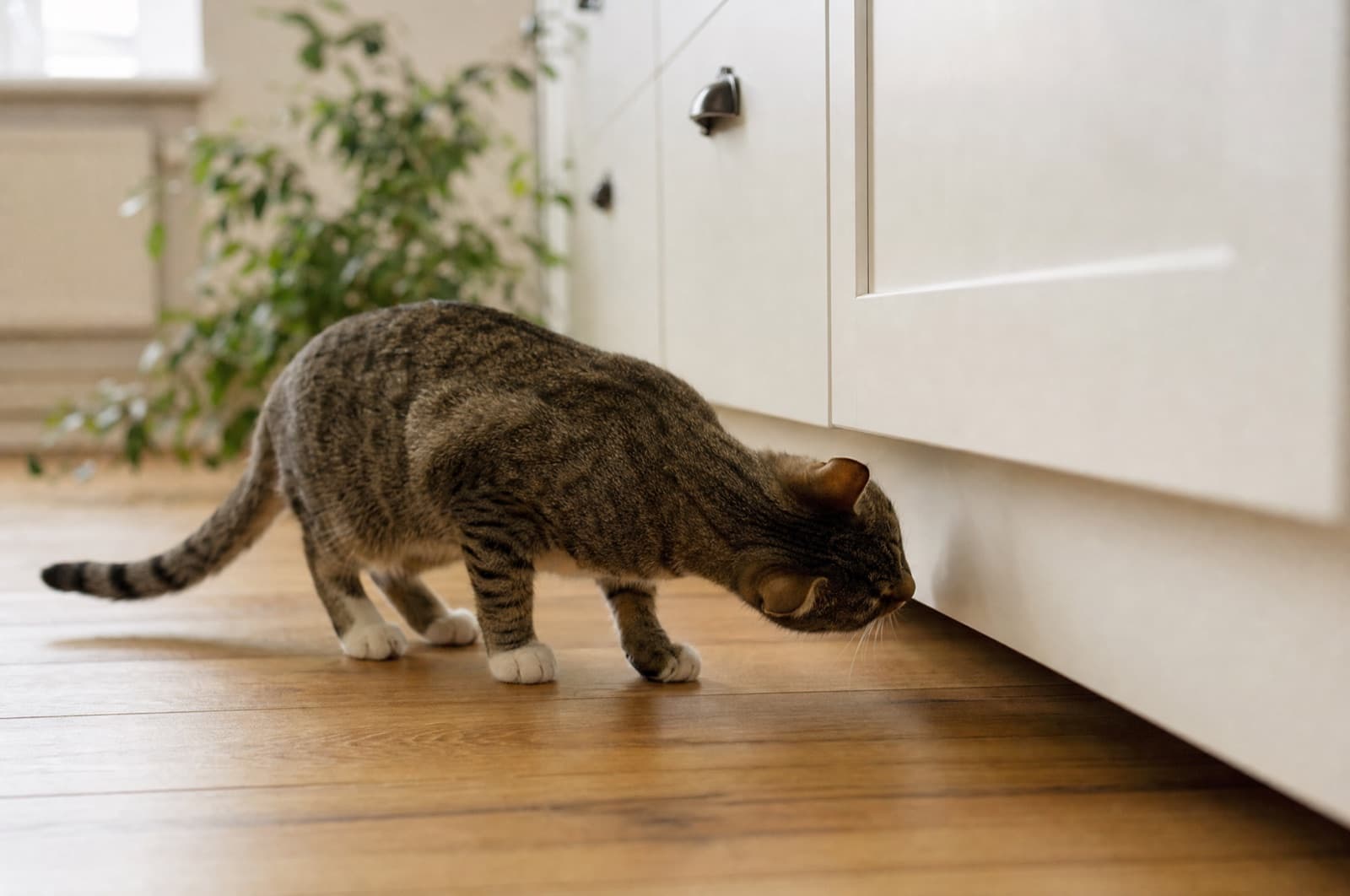
A curious cat or kitten could be lured in or nip at a captured animal
Cats are more likely than dogs to investigate or fit inside a small live trap, and a captured wild animal inside can act defensively. Check traps frequently and site them away from areas cats roam.
Havahart live-trapping guidance
A free-roaming pet could be captured
A loose pet ferret, rabbit, or similar small animal could physically enter and be captured by the trap door, since it isn't selective for wild rodents specifically. Place traps where free-roaming pets don't go.
Havahart manufacturer trap specifications
Not an exposure route in normal use
The trap targets ground-dwelling mammals via a trip plate and food bait; it isn't a realistic capture or exposure risk for a pet bird.
Havahart manufacturer trap specifications
No aquatic exposure route
There is no chemical component and no route by which this trap could affect an aquarium or fish.
Havahart manufacturer trap specifications
What's in it — and what it does to pets
This is a humane live-catch cage trap — it captures a rodent alive behind a spring-loaded door, with no poison, adhesive, or kill mechanism. There is nothing for a pet to be poisoned by. The only realistic risks are physical: a curious cat or small dog could nose the trip plate and startle at the closing door, or a very small pet could briefly be confined.
Havahart product use guidance; general humane-trapping guidance
How to use it safely around pets
Because there's no toxicant, safe use here is about trap placement, frequency of checks, and humane handling — not drying time or re-entry windows.
Bait and set the trap correctly
Bait with peanut butter, seeds, or nuts per the trap's instructions, and set the trip plate so it triggers reliably.
Site it away from areas pets roam
Place the trap along a wall, fence line, or known rodent travel path — not in the middle of a yard or room where a dog or cat spends time.
Check the trap frequently — at least once or twice daily
A trapped animal — target species or otherwise — can become highly stressed and is vulnerable to heat, cold, or injury the longer it's confined. Don't leave a set trap unchecked overnight.
Handle captures safely and legally
Wear gloves when handling the trap, disinfect between captures, and confirm New Hampshire's rules on lawful relocation or disposition before releasing any wildlife.
There is no re-entry restriction for pets around this trap — it's a mechanical device, not a chemical treatment.
Not applicable — no drying or clearance time is needed.
The relevant timing is how often you check the trap, not how long to keep pets away from it.
Have a rat or squirrel problem and want to skip the poison entirely?
Anchor's licensed NH technicians can combine humane trapping with exclusion work — a non-toxicant plan when that's the right fit.
Symptoms to watch for
A sign, its urgency, and what to do — never a diagnosis. When in doubt, the emergency panel below is one tap away.
- Mild
Brief startle or stress if a pet trips the door
No toxicity — a physical/behavioral reaction, not poisoning
- Mild
Minor paw or nose pinch from the door
Check for injury; unlikely with the smooth live-catch door
Act now — call a vet or a pet-poison line
Do not induce vomiting unless told to
This product carries no poisoning risk, so there is no chemical-exposure emergency to watch for. If a pet is physically injured by the trap mechanism or shows unusual distress after contact, treat it as a standard physical-injury situation. This page is general information, not veterinary advice — if your pet is injured or you suspect exposure, contact your veterinarian or ASPCA Animal Poison Control (888-426-4435) right away.
What each situation calls for
Your cat or a small pet was found investigating or caught in the trap
There is no poisoning risk to address. Check the pet for minor cuts, scrapes, or signs of stress from handling the mesh or door mechanism, and contact your veterinarian if you notice any injury or the pet seems unusually distressed.
In the next 60 seconds
- Carefully free any pet caught in or tangled with the trap, using gloves if a wild animal is also present.
- Check for cuts, scrapes, or signs of stress; keep the pet calm and away from the trap.
- Call your veterinarian if you see any injury, limping, or unusual behavior after the incident.
- The hotlines below are for suspected poisoning elsewhere in your pest-control routine — not needed for this trap itself.
ASPCA Animal Poison Control
(888) 426-4435
24/7; a consultation fee may apply — for suspected poisoning, not this product
Pet Poison Helpline
(855) 764-7661
24/7; a per-incident fee applies — for suspected poisoning, not this product
Northern New England Poison Center
(800) 222-1222
24/7 human poison control — for household/child exposure context; call a vet for pet injury guidance
Safer pet-friendly alternatives
Honest options that reduce or remove pet-toxicity — no affiliate hype, real caveats included.
Enclosed electronic traps
SaferElectronic, no toxicant
Another zero-toxicant option; the kill mechanism sits in a recessed chamber sized for the target rodent, generally out of reach for pets.
Lethal rather than live-catch — a different outcome for the animal than this trap.
Exclusion and sanitation
SaferNon-chemical, preventive
Sealing entry points and removing food/water sources reduces rodent activity at the source with zero pet-toxicity, complementing any trap.
Slower than trapping alone and needs consistency.
Professional humane trapping and exclusion (Anchor Pest Services)
SaferLicensed professional service
A licensed technician can combine trapping with exclusion work and advise on lawful wildlife handling, taking the guesswork off a homeowner.
A service, not a product — ask for a pet-safety-focused plan.
Talpirid or Kaput rodenticide baits
SaferChemical toxicant — NOT a safer alternative
Listed here only for contrast: unlike this trap, both are true rodenticides (bromethalin and diphacinone respectively) with real primary and secondary poisoning risk to pets.
Do not substitute a toxicant bait for this trap in a home with pets without professional guidance.
Pet-safe wildlife control in New Hampshire
Gray squirrels, chipmunks, and rats show up around New Hampshire homes near woodpiles, sheds, and foundations, especially as cold weather sets in. Note that in New Hampshire the relocation of live-trapped wildlife is regulated by NH Fish and Game, so lawful release isn't always as simple as driving to the nearest woods. If you'd rather not manage placement, frequent checks, and lawful handling yourself, Anchor Pest Services provides licensed, pet-conscious wildlife and rodent control across Manchester, Nashua, Concord, and the surrounding towns.
NH-licensed applicator #782664 (NHDAMF, RSA 430) · NEPMA member · family-owned since 2017.
Service Area Map
Southern New Hampshire
Frequently asked questions
Sources(4)
- [1]Havahart — Small 2-Door Animal Trap (Model 1025)
Trap design, dimensions, target species
manufacturerverified 2026-07-13 - [2]Havahart — Small 1-Door Animal Trap (Model 1026)
Trap design confirmation
manufacturerverified 2026-07-13 - [3]Home Depot — Havahart Small 2-Door Professional Humane Catch-and-Release Trap Specs
Dimensions, smooth rolled internal edges, target species list
manufacturerverified 2026-07-13 - [4]Havahart — Live-Trapping How-To Guide
Baiting, placement, and check-frequency guidance
manufacturerverified 2026-07-13
Written & reviewed by
VerifiedDaniel Brady
NH-Licensed Pesticide Applicator · License #782664 (NHDAMF, RSA 430)
Daniel Brady is the New Hampshire–licensed applicator behind Anchor Pest Services, a family-owned pest control company serving the Manchester area since 2017.
Last updated 2026-07-13
Pet-Safe Professional Pest Control
A Genuinely Non-Toxicant Option, Done Right
Trap placement, check frequency, and lawful release all take real know-how. Anchor Pest Services handles wildlife and rodent problems with licensed, pet-conscious methods across southern and central New Hampshire. Family-owned since 2017, NH license #782664.
- Pet-conscious humane trapping
- NH-licensed applicators (#782664)
- Free inspection — same-day service across southern NH
NH License #782664 · No obligation · We answer in person
Your next step
- Book a NH pro
Rodent Control
Book now - Book a NH pro
Pest Control Services
Licensed, family-owned pest control across southern NH.
Book now - Next step
Where Do Mice Go in the Winter? NH Mouse Timing Guide
Read the answer - What to do next
How to Use the Live Animal Cage Trap for Rats and Squirrels by Havahart
Read the answer - Also relevant
Mechanical Rodent Control: Snap Traps + Exclusion That Works
Read the answer - Also relevant
Chemical Rodent Control: Rodenticides, Risks & the Rules
Read the answer