
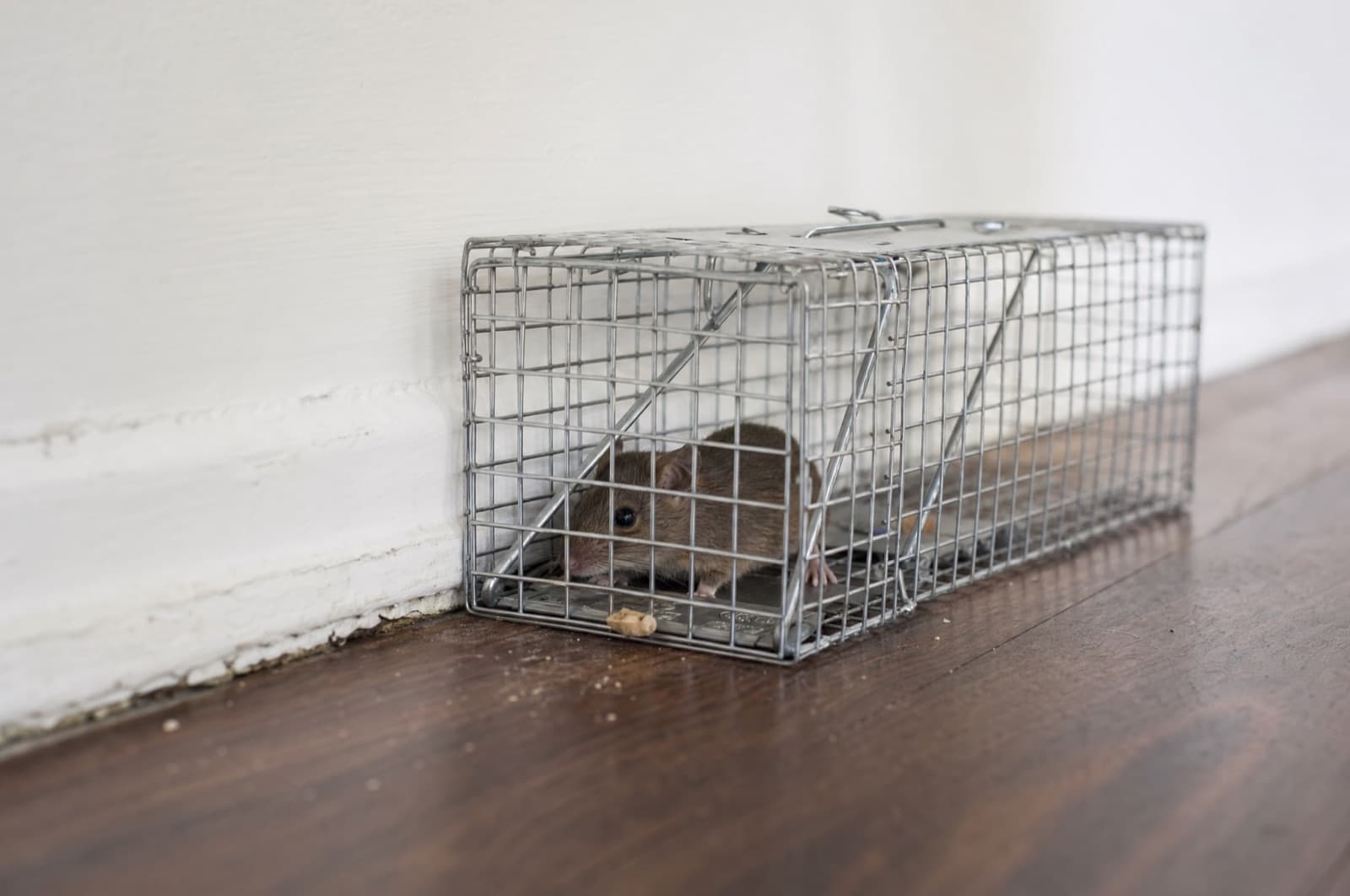
How to Use the Live Animal Cage Trap for Rats and Squirrels by Havahart
At a glance
- Efficacy: Situational
- Best job: Capturing a single confirmed nuisance rat or squirrel on a known travel path when you already have a lawful, humane plan for the animal
- Format: Galvanized wire live catch-and-release cage trap with a gravity/trigger door — no chemistry; sized variants exist for rats vs. squirrels
- Technique: Moderate technique
Does this product actually work?
A genuinely effective way to catch one confirmed animal — but the hardest part of using it is legal, not mechanical, and New Hampshire restricts what you can do with what you catch.
The trap itself is simple, reliable, and humane when sized and baited correctly. What trips people up is what happens after the door closes: New Hampshire Fish & Game states that responsibility for a trapped animal's transport and release falls entirely on the person who set the trap, that department staff generally aren't available to relocate or remove trapped animals, and UNH Extension advises against releasing wild animals miles from home because most die trying to find their way back. Trapping outside the regular season for many species generally requires a licensed Wildlife Control Operator. For an ongoing population rather than a single confirmed nuisance animal, this device is also the wrong scale of tool — it's a one-at-a-time capture method, not population control.
Best for
Capturing an individual rat, squirrel, or chipmunk on a known travel path when you have a lawful disposition plan worked out before you ever set the trap.
Skip it for
An ongoing rodent or squirrel population problem (a live trap catches one animal at a time), or any plan built around 'catch it and drive it to the woods' — New Hampshire Fish & Game places real restrictions on relocating wildlife.
What it is — and what it's really for
The label is the law. Here's the honest read on the format, the one job it does well, and the job people wrongly buy it for.
The technique walkthrough
Where DIY succeeds or fails is in the placement, patience, and the small pro moves the label never mentions. Follow the label; these are the technique details on top of it.
The mechanical part of setting this trap is easy — the technique that actually determines whether this goes well is entirely about planning and legality before the door ever swings shut.
Make a lawful, humane plan before you set anything
Contact NH Fish & Game or check current state guidance to confirm what you're legally allowed to do with whatever this trap catches — including protected species you didn't intend to catch.
CautionNH Fish & Game states that transport and release responsibility falls on the person who sets the trap, and many species are protected by law.Choose a correctly sized trap
Select a trap sized so the target animal fits fully inside before it reaches the trigger — undersized traps miss the catch; oversized traps can injure the animal.
Place it on a stable surface along the travel path
Set the trap on flat, stable ground at the base of a tree, along a wall, or wherever you've observed the animal traveling or causing damage.
Bait beyond the trigger plate
Place bait past the trigger so the animal must fully enter the trap to reach it.
Common mistakeBaiting on or near the trigger plate — a clever animal can steal the bait without tripping the door.Check the trap frequently and provide shade or shelter
Check at least once or twice a day; leaving a trapped animal unchecked for long periods is inhumane and can lead to distress, injury, or death in extreme weather.
Pro moveWire the doors open and pre-bait for a day or two before arming the trap — wary animals enter more readily once they're used to it as a familiar object.
Do & don't
- Plan lawful, humane disposition before you set the trap.
- Size the trap to the target animal.
- Bait behind the trigger plate, not on it.
- Check the trap frequently — at least once or twice a day.
- Provide shade in summer and shelter in winter.
- Don't relocate wildlife without confirmed legal authority and landowner permission at the release site.
- Don't handle a trapped animal directly.
- Don't leave a set trap unchecked overnight or longer.
- Don't assume 'catch and release far away' is automatically humane or legal.
- Don't set it expecting to solve an ongoing infestation with one trap.
Where it works vs. where it fails
No product fixes everything. This is the honest boundary — the situations it genuinely handles, and the ones it simply won't.
Where it works
- You're targeting one confirmed nuisance animal on a known travel path with a lawful disposition plan already in place
- The trap is correctly sized and baited behind the trigger plate
- It's checked frequently and paired with exclusion work afterward to keep new animals from replacing the one removed
- You're prepared for the possibility of catching a non-target animal, including protected or unwelcome species
Where it fails
- You're facing an ongoing population rather than a single nuisance animal — a live trap catches one at a time
- The plan is relocation without confirmed legal authority or a humane release site
- The trap is left unchecked for extended periods
- Bait is placed on the trigger instead of behind it, letting the animal steal it without tripping the door
- A protected species, or an animal with dependent young, is caught without the right response plan
Mistakes that waste the product
Setting the trap with no release plan
You can end up with a live animal in a cage and no lawful, humane place to take it — a legal and welfare problem you created for yourself.
Baiting directly on the trigger plate
A rat or squirrel can often grab bait sitting on the trigger without fully entering the trap, so it steals the food and the trap never fires.
Setting the trap in the open instead of on a travel path
Animals avoid unfamiliar open space and stick to established routes, so an off-path trap sits empty regardless of bait quality.
What to expect — and when
Judge this tool by capture speed on a confirmed path and by how prepared you are for the harder part — lawful disposition — not by whether it 'ends' a wildlife problem.
Hours to a few days
On a genuinely active travel path with correct sizing and bait placement, capture typically happens quickly.
After capture
The real work begins — arranging a lawful, humane disposition for the animal, which is the part most people underestimate.
Ongoing
If you keep catching the same species repeatedly, that points to an un-excluded entry point or food source rather than a trapping problem.
When to stop DIY & call a pro
A live cage trap handles a single confirmed nuisance animal with a lawful plan. These signals mean the job has outgrown DIY trapping:
You keep catching new animals despite repeated trapping
Recurring catches point to an ongoing population or an unaddressed food/entry source that one-at-a-time trapping can't outpace.
You catch a protected species or an animal with dependent young
These situations carry legal and welfare obligations beyond what a homeowner is typically equipped to handle correctly.
You need to trap outside the regular season
Out-of-season trapping for many species generally requires a licensed Wildlife Control Operator under NH rules.
You're not confident you can identify the species you're targeting
Misidentifying the animal can mean using the wrong trap, wrong bait, or running into legal protections you weren't aware of.
When a wildlife problem needs more than a single confirmed capture — recurring activity, a protected species, or an out-of-season situation — Anchor's licensed NH technicians handle wildlife identification, lawful trapping, and exclusion so the problem doesn't just repeat itself. Free inspection, same-day service across southern and central New Hampshire.
Wildlife keeps coming back, or you're not sure what's legal?
Is it safe for pets & kids?
The short version lives here; the full per-species verdict lives on this product's pet-safety page.
This is a mechanical trap with no chemistry, but a trapped wild animal is a genuine bite/scratch and disease risk — never handle it directly. Rabies and other diseases are a real concern with wild rats and squirrels, so any bite or scratch needs medical attention.
Re-entry: No treated-surface wait applies; the safety rule is behavioral — never touch, corner, or reach into the trap with a live animal inside.
Trapping wildlife legally in New Hampshire
New Hampshire's yard 'squirrels' are eastern gray squirrels and eastern chipmunks, and rats are typically Norway rats clustered around structures and food sources — know which animal you're actually dealing with before setting a trap (see /pests for identification). NH Fish & Game is explicit that the person who sets a live trap is responsible for lawfully and humanely handling whatever it catches, and trapping outside the regular season for many species requires a licensed Wildlife Control Operator. If you'd rather not navigate the legal side yourself, or you're facing a recurring wildlife problem, Anchor Pest Services provides licensed wildlife identification, trapping, and exclusion across Manchester, Nashua, Concord, and the surrounding towns.
Service area
Southern New Hampshire
Anchor Pest Services · NH license #782664 · NEPMA member · family-owned since 2017.
Frequently asked
Sources & further reading(4)
- [1]Havahart — How to Trap Squirrels (placement and bait guidance)
Trap sizing, travel-path placement, and bait recommendations (facts only, not the efficacy verdict)
manufacturerverified 2026-07-14 - [2]New Hampshire Fish and Game Department — Nuisance Wildlife: Live Animal Cage Traps (Havahart Traps)
Trap-setter responsibility for lawful, humane transport/release; protected-species restrictions; out-of-season licensing requirements
govverified 2026-07-14 - [3]New Hampshire Fish and Game Department — Cage Trap Guidance
State guidance on cage-trap use and disposition of captured wildlife
govverified 2026-07-14 - [4]DoMyOwn — Havahart Live Trap How-To
General setup and use guidance for live cage traps
independentverified 2026-07-14
Written & reviewed by
VerifiedDaniel Brady
NH-Licensed Pesticide Applicator · License #782664 (NHDAMF, RSA 430)
Daniel Brady is the New Hampshire–licensed applicator behind Anchor Pest Services, a family-owned pest control company serving the Manchester area since 2017.
Last updated July 2026
Related products in this category
Same shelf, different jobs — the dot shows each product's honest efficacy verdict at a glance.
Professional Pest Control
When Trapping Alone Isn't the Whole Answer
A live trap removes one animal at a time and doesn't address the entry points or food sources drawing new ones in — or the legal side of relocation. Anchor Pest Services provides licensed wildlife trapping and exclusion across southern and central New Hampshire. Family-owned since 2017, NH license #782664.
- Licensed wildlife trapping plus exclusion, not just capture
- NH-licensed applicators (#782664)
- Free inspection — same-day service across southern NH
NH License #782664 · No obligation · We answer in person
Your next step
- Book a NH pro
Rodent Control
Book now - Book a NH pro
Pest Control Services
Licensed, family-owned pest control across southern NH.
Book now - What to do next
Is the Havahart Live Animal Cage Trap Safe for Pets?
Read the answer - What to do next
What Is the Most Humane Way to Trap Rats?
Read the answer - Also relevant
Is the Havahart Live Animal Cage Trap Safe for Pets?
Read the answer - Also relevant
Chemical Rodent Control: Rodenticides, Risks & the Rules
Read the answer