
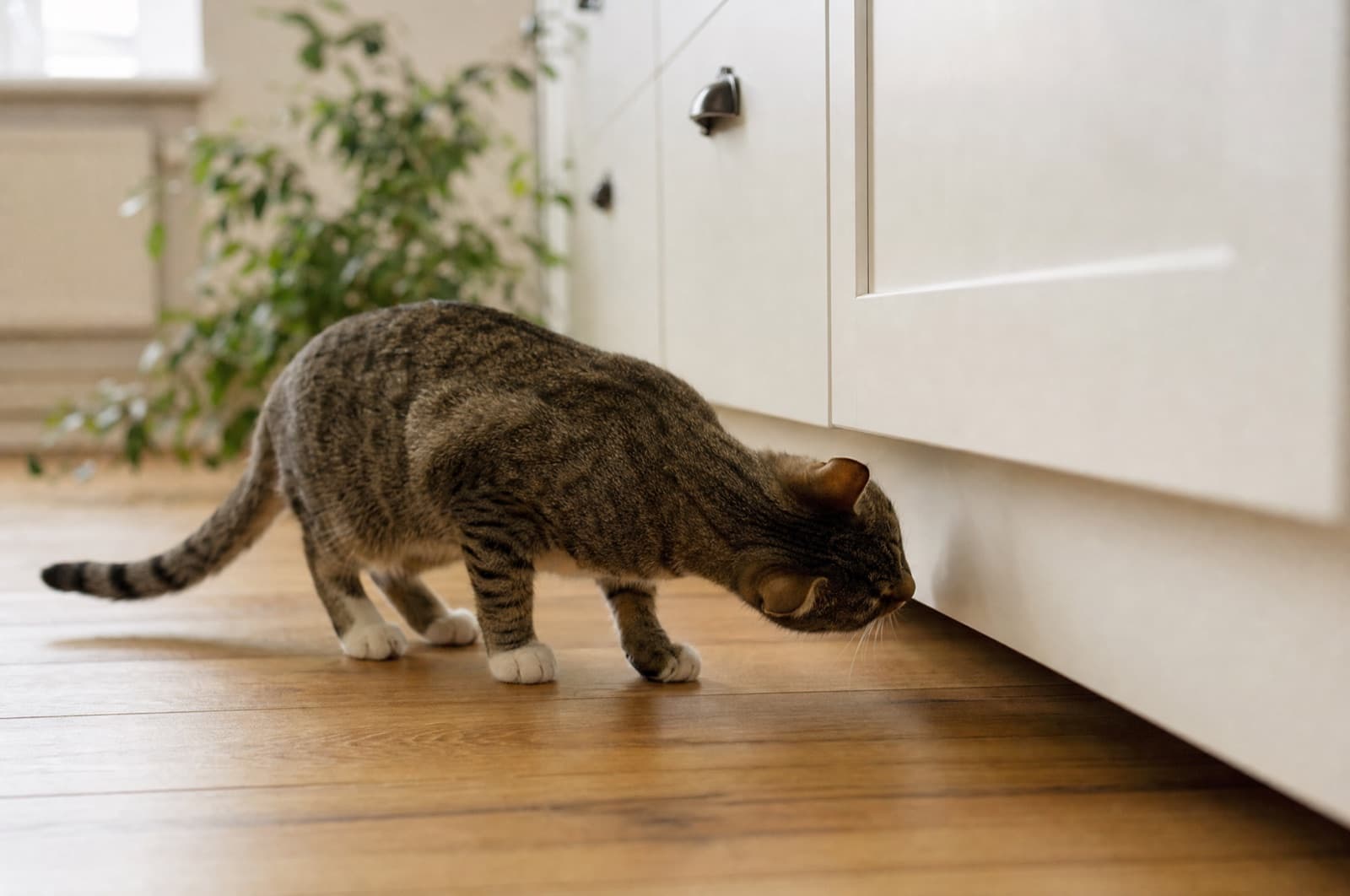
Is Terro Outdoor Ant Killer Granules (T901-6) Safe for Pets?
At a Glance
- Product: Outdoor Ant Killer Granules (T901-6) by Terro · Terro
- Active ingredient: Lambda-cyhalothrin As printed on the current EPA-registered label
- Re-entry: Follow the specific watering-in and drying guidance on the product label, which is the legal authority.
- Cat owners: Cats differ — read the cat card below
The short, honest answer
The score rolls up every per-species verdict below, weighted by the honest exposure that matters — a chewed-open tube, not a hidden dab — and is checked against the EPA label and veterinary toxicology.
This is a pyrethroid contact granule, not the spinosad bait some sources assume — avoid for cats until watered in and dry.
Terro's Outdoor Ant Killer Granules (T901-6) verify to lambda-cyhalothrin, EPA Reg. No. 53883-195-149 — an important correction, since this product is sometimes assumed to be a spinosad bait. It is not: spinosad belongs to a different Terro product (Fire Ant Bait T708), and multiple retailer specs and the manufacturer SDS confirm T901-6 is a lambda-cyhalothrin contact granule, chemically identical in class to Spectracide's Ant Shield product in this same cluster. That means the standard pyrethroid framing applies in full: low mammalian toxicity at label rates, but real, well-documented cat sensitivity and high toxicity to fish and bees. As a broadcast granule rather than a stomach-poison bait, keeping pets off the treated area until watered in and dry is the essential safeguard.
General information, not veterinary advice. For a suspected exposure, contact your veterinarian or a pet-poison hotline. Verdict checked 2026-07-13 against the EPA label and veterinary toxicology.
It's not one answer — it's one per animal
Cats, birds, and fish routinely differ sharply from dogs. That contrast is the whole point of this scorecard, and no manufacturer page draws it.
- DogsCaution
- CatsAvoid
- Small mammalsAvoid
- BirdsCaution
- FishAvoid
Low mammalian toxicity, but watch for licked paws before it's watered in and dry
Contact granules on lawns and foundations can be licked from paws before the treatment is watered in — watch for drooling, vomiting, or tremors, and keep dogs off until watered in and dry.
Terro T901-6 Manufacturer SDS; NPIC Lambda-cyhalothrin Fact Sheet
Feline pyrethroid sensitivity makes treated-surface contact a serious risk
Per the Pet Poison Helpline, pyrethroid toxicity "can be fatal for cats if not treated immediately." Cats metabolize this chemical class poorly, so treated-surface contact is a genuine risk — keep cats off entirely until watered in and fully dry.
Pet Poison Helpline — Cats and Pyrethroids
Keep pet mammals off treated ground entirely
Pyrethroid exposure combined with a small pet's body size raises real concern. Keep pet rabbits, guinea pigs, and rodents entirely off treated ground, watered in or not.
Anchor Pest Services product research
Keep free or ground-feeding birds off fresh applications
Ground-feeding wild birds and any pet bird with supervised outdoor time should stay off freshly applied granules until watered in and dry.
Anchor Pest Services product research
Highly toxic to fish and aquatic invertebrates — avoid runoff to drains and water
Pyrethroids like lambda-cyhalothrin are highly toxic to fish and aquatic invertebrates. Avoid letting granules or runoff reach storm drains, gutters, or water bodies.
NPIC Lambda-cyhalothrin Fact Sheet
What's in it — and what it does to pets
A Type II pyrethroid that modulates sodium channels to overstimulate the insect nervous system, applied here as a band or spot-treatment contact granule rather than a stomach-poison bait. At label rates it carries low mammalian toxicity, but cats are the well-documented exception across this chemical class: they lack efficient glucuronidation, the liver process other mammals use to clear pyrethroids, and the Pet Poison Helpline states toxicity can be fatal for cats without prompt treatment. There is no antidote; early supportive veterinary care is key.
Pet Poison Helpline — Cats and Pyrethroids; VCA Hospitals — Pyrethrin/Pyrethroid Poisoning in Cats
How to use it safely around pets
This is a dry, contact-kill pyrethroid granule applied as a band or spot treatment — not a stomach-poison bait ants carry to a colony — so the practical safeguard is exclusion plus watering-in, not a wait for the surface to dry the way you'd wait out a spray.
Apply as a band along foundations or spot-treat ant hills
Follow the label's specific application pattern — foundation bands or direct ant-hill spot treatment, not broadcast across the entire yard.
Water lightly as directed on the label
Watering in the granules is part of the labeled process and begins the countdown toward the dry re-entry point.
Keep pets off the treated area until watered in and dry
This is a dry granule, not a spray, so the practical rule is exclusion from the treated zone plus watering-in — not a "spray-and-wait" window.
Store the shaker bag resealed and away from pets
Keep unused product in its original container between applications, out of pets' reach.
Keep pets off the treated area until it has been watered in and the surface is dry — treat this the same way you would a spray's re-entry rule, not a bait's exclusion period.
Follow the specific watering-in and drying guidance on the product label, which is the legal authority.
Cats warrant extra time and certainty of dryness given documented pyrethroid sensitivity — when in doubt, keep cats off longer.
Have a cat with outdoor access?
Anchor's licensed NH technicians can choose treatments and timing that account for feline pyrethroid sensitivity.
Symptoms to watch for
A sign, its urgency, and what to do — never a diagnosis. When in doubt, the emergency panel below is one tap away.
- Moderate
Drooling
- Moderate
Vomiting
- Moderate
Lethargy
- Serious
Muscle tremors
- Serious
Incoordination
- Emergency
Twitching, paw-flicking, respiratory distress, or seizures (cats)
No antidote exists; seek emergency veterinary care immediately
Act now — call a vet or a pet-poison line
Do not induce vomiting unless told to
If your pet contacted or ate this product, act now — bring the bag or a photo of the label when you call, and treat any cat exposure as urgent. This page is general information, not veterinary advice — for a suspected exposure, contact your veterinarian or ASPCA Animal Poison Control (888-426-4435) right away.
What each situation calls for
Your pet walked on treated ground before it was watered in and dry
Wipe paws with a damp cloth to reduce grooming ingestion, then monitor closely for drooling, twitching, or tremors and call your vet or a pet poison hotline.
Your cat shows twitching, paw-flicking, or breathing trouble after any contact
Treat as an emergency — call your vet or ASPCA Animal Poison Control immediately. There is no antidote for pyrethroid toxicity; early supportive care improves outcomes.
Your pet ate a noticeable amount of granules directly
Call your vet or a poison hotline right away, note roughly how much was consumed, and don't induce vomiting unless instructed to.
In the next 60 seconds
- Get your pet off the treated area immediately.
- Wipe paws and fur with a damp cloth to reduce grooming ingestion of granule residue.
- Do NOT induce vomiting unless a veterinarian or poison expert tells you to.
- Have the product name and EPA registration number (53883-195-149) ready.
- Call your veterinarian or one of the hotlines below — call immediately for any cat showing tremors or twitching.
ASPCA Animal Poison Control
(888) 426-4435
24/7; a consultation fee may apply
Pet Poison Helpline
(855) 764-7661
24/7; a per-incident fee applies
Northern New England Poison Center
(800) 222-1222
24/7 human poison control — for household/child exposure context; call a vet or the pet lines above for pet guidance
Safer pet-friendly alternatives
Honest options that reduce or remove pet-toxicity — no affiliate hype, real caveats included.
Enclosed outdoor bait stations instead of broadcast pyrethroid granules
SaferEnclosed bait
Contains a stomach-poison bait inside a station rather than scattering a contact-kill pyrethroid across ground pets and cats walk through.
Still contains an insecticide — place where pets can't access the station.
Borax liquid or granular baits kept out of reach
SaferAlternative bait chemistry
A genuinely different chemical class from pyrethroids without the pronounced feline sensitivity issue — still requires careful out-of-reach placement.
Not risk-free; grade and place with the same care as any bait.
Exclusion, trail sanitation, and cultural control
SaferNon-chemical
Reduces ant pressure at entry points without introducing a pyrethroid to any part of the yard.
Less effective against an established outdoor colony on its own.
Professional exterior ant management (Anchor Pest Services)
SaferLicensed professional service
A licensed applicator can choose products and placement that specifically account for cats and other pyrethroid-sensitive pets.
A service, not a product — mention any cats when requesting a plan.
Pet-safe outdoor ant control in New Hampshire
Outdoor granules are a common DIY answer to the pavement-ant and odorous-house-ant trails that ring New Hampshire foundations, but this product's pyrethroid chemistry means real caution around cats. Broadcasting granules that resemble kibble also matters for dogs with yard access. Applying pesticides for hire in NH requires an applicator licensed by NHDAMF under RSA 430; Anchor Pest Services (NH License #782664) handles watering-in timing and pet exclusion across Manchester, Nashua, Concord, and surrounding towns.
NH-licensed applicator #782664 (NHDAMF, RSA 430) · NEPMA member · family-owned since 2017.
Service Area Map
Southern New Hampshire
Frequently asked questions
Sources(5)
- [1]Terro — Ant Killer Plus (T901-6) Product Page
Product format and application pattern (facts only, not the verdict)
manufacturerverified 2026-07-13 - [2]Manufacturer SDS — Terro Ant Killer Plus (EPA Reg. No. 53883-195-149)
Verified active (lambda-cyhalothrin), correcting the spinosad assumption
manufacturerverified 2026-07-13 - [3]NPIC — Lambda-cyhalothrin General Fact Sheet
Pyrethroid mode of action, aquatic and mammalian toxicity
npicverified 2026-07-13 - [4]Pet Poison Helpline — Cats and Pyrethroids
Feline pyrethroid sensitivity, fatality risk without treatment
pet_poisonverified 2026-07-13 - [5]VCA Hospitals — Pyrethrin/Pyrethroid Poisoning in Cats
Clinical signs, no-antidote note
veterinaryverified 2026-07-13
Written & reviewed by
VerifiedDaniel Brady
NH-Licensed Pesticide Applicator · License #782664 (NHDAMF, RSA 430)
Daniel Brady is the New Hampshire–licensed applicator behind Anchor Pest Services, a family-owned pest control company serving the Manchester area since 2017.
Last updated 2026-07-13
Pet-Safe Professional Pest Control
Skip the Guesswork — Especially in Cat Households
DIY pyrethroid granules put watering-in timing and cat exposure on you. Anchor Pest Services treats outdoor ants with targeted, pet-aware methods across southern and central New Hampshire. Family-owned since 2017, NH license #782664.
- Pet-conscious targeted treatment
- NH-licensed applicators (#782664)
- Free inspection — same-day service across southern NH
NH License #782664 · No obligation · We answer in person
Your next step
- Book a NH pro
Ant Pest Control
Book now - Book a NH pro
Pest Control Services
Licensed, family-owned pest control across southern NH.
Book now - Next step
What Attracts Acrobat Ants to Your House?
Read the answer - What to do next
How to Use Outdoor Ant Killer Granules (T901-6) by Terro
Read the answer - Also relevant
Chemical Ant Control: Why Bait Beats Spray
Read the answer - Also relevant
Ant Prevention: Moisture Control Stops NH's Top Pest
Read the answer