
Is Terminate Termite & Carpenter Ant Killer by Spectracide Safe for Pets?
At a Glance
- Product: Terminate Termite & Carpenter Ant Killer by Spectracide · Spectracide
- Active ingredient: Lambda-cyhalothrin 0.05% ready-to-use / 0.5% refill (confirm exact concentration from your specific can's label)
- Re-entry: Follow the product label, which is the legal authority; void and tunnel placements are largely pet-inaccessible once applied.
- Cat owners: Cats differ — read the cat card below
The short, honest answer
The score rolls up every per-species verdict below, weighted by the honest exposure that matters — a chewed-open tube, not a hidden dab — and is checked against the EPA label and veterinary toxicology.
A standard pyrethroid — wall-void and foundation placement lowers pet contact, but cats, birds, and fish still need real caution.
Terminate's active, lambda-cyhalothrin, is a Type II pyrethroid — the same broad chemistry driving most of this hub's cautions. What's distinct about this product is where it's applied: cracks, structural voids, and tunnels in damaged wood indoors, plus an outdoor foundation band, rather than an open indoor surface. That placement genuinely reduces day-to-day pet contact compared to a baseboard spray in a living room, but the label itself flags fish and aquatic-life toxicity, and cats remain the sharp exception among mammals for any surface a pet can actually reach. Confirm the exact concentration on your specific can or refill, since ready-to-use and concentrate versions differ roughly ten-fold.
General information, not veterinary advice. For a suspected exposure, contact your veterinarian or a pet-poison hotline. Verdict checked 2026-07-13 against the EPA label and veterinary toxicology.
It's not one answer — it's one per animal
Cats, birds, and fish routinely differ sharply from dogs. That contrast is the whole point of this scorecard, and no manufacturer page draws it.
- DogsCaution
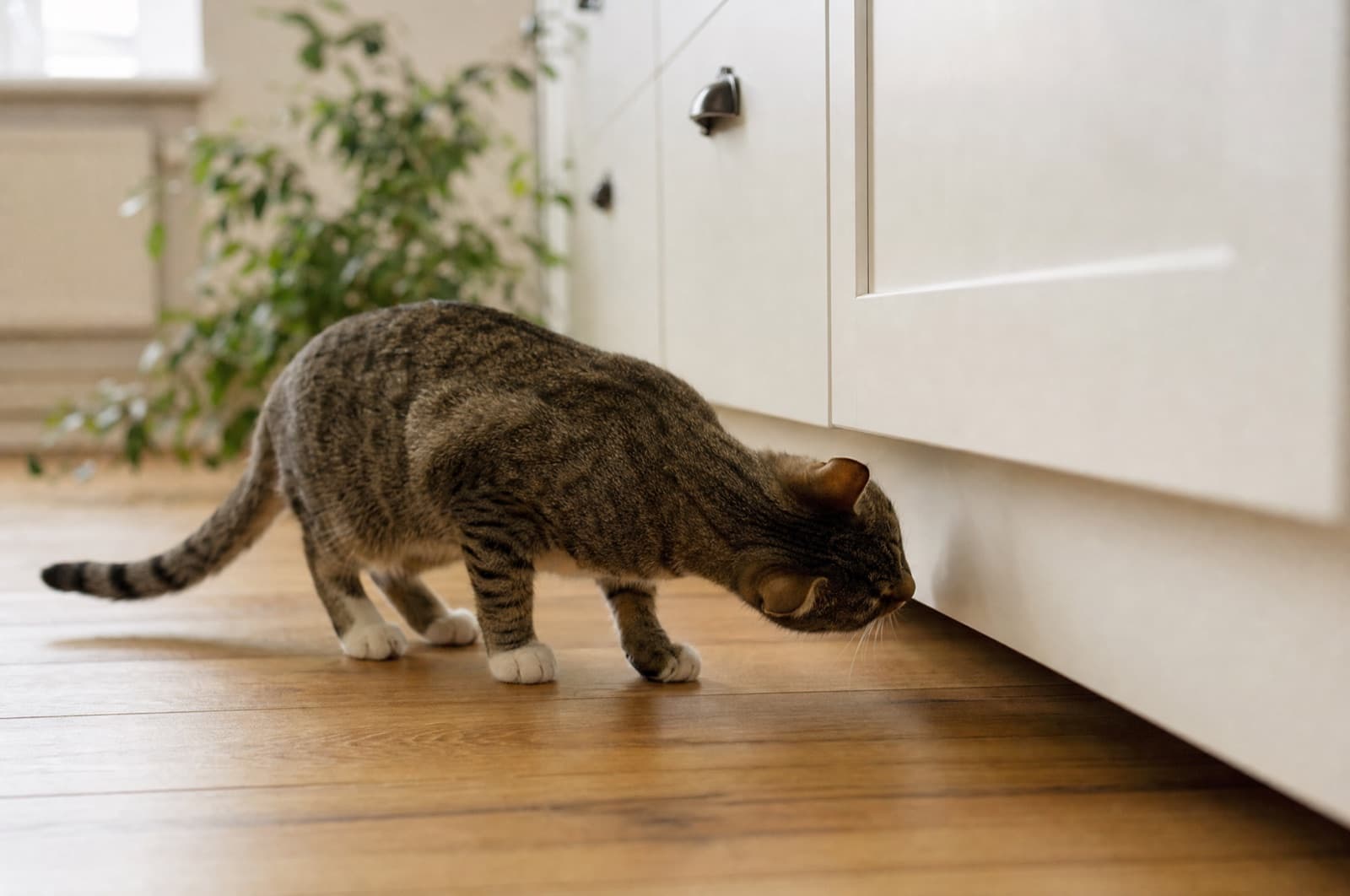
- CatsAvoid
- Small mammalsCaution
- BirdsAvoid
- FishAvoid
Keep off treated bands and surfaces until dry; void injection lowers everyday contact
Lambda-cyhalothrin is a pyrethroid that dogs generally metabolize reasonably well. Because much of this product's application goes into wall voids and tunnels a dog can't reach, day-to-day contact risk is lower than an open-surface spray — but any treated foundation band or accessible crack should stay off-limits until fully dry.
NPIC lambda-cyhalothrin fact sheet
Keep cats off any accessible treated surface until fully dry
Lambda-cyhalothrin is a Type II pyrethroid, and cats lack the efficient liver process that clears these compounds. Even though most application goes into voids and tunnels, any exterior foundation band or accessible crack a cat could walk through should be treated as off-limits until dry.
Merck Veterinary Manual pyrethroid toxicosis
Keep out of treated areas until dry
Small mammals, especially any housed or free-roaming near an outdoor foundation band, should be kept off treated zones until the application is fully dry.
NPIC lambda-cyhalothrin fact sheet
Avoid direct exposure to spray or treated surfaces
Pyrethroid spray application and residue carry an inhalation and contact hazard for birds. Keep birds away from the treatment area during and shortly after application.
NPIC; veterinary avian-toxicology guidance
Keep away from water sources — highly toxic to aquatic life
Lambda-cyhalothrin is highly toxic to fish and aquatic invertebrates. Keep applications, especially the outdoor foundation band, away from ponds, drains, and any path where runoff could reach water.
NPIC lambda-cyhalothrin fact sheet
What's in it — and what it does to pets
A Type II pyrethroid that overstimulates the nervous system at meaningful exposure levels, producing drooling, tremors, and hyperexcitability in sensitive animals — cats most of all, due to limited liver glucuronidation. It's highly toxic to aquatic life. This product's placement into wall voids, tunnels, and an outdoor foundation band reduces routine pet contact compared to an open-surface spray, but any surface a pet can reach should still be treated with the same caution as other pyrethroid products.
NPIC lambda-cyhalothrin fact sheet; Merck Veterinary Manual
How to use it safely around pets
This product is applied differently than a baseboard spray — into structural voids, tunnels in damaged wood, and as an outdoor foundation band — which changes where the pet-contact risk actually sits.
Confirm the concentration on your can
Ready-to-use AccuShot sprays and refill/concentrate versions differ roughly ten-fold in lambda-cyhalothrin concentration — check your specific product's label before treating this as a single formula.
Apply into voids, tunnels, and cracks, not open surfaces
Indoors, treat structural voids and tunnels in damaged wood per label directions rather than broadcasting across open floors or baseboards.
Treat the outdoor foundation band carefully
Apply the foundation band per label directions, avoiding areas where pets dig, roll, or regularly walk close to the house.
Keep pets off any accessible treated surface until dry
Any crack, band, or surface a pet could actually contact should be off-limits until fully dry.
Keep pets off any treated foundation band or accessible crack/surface until fully dry.
Follow the product label, which is the legal authority; void and tunnel placements are largely pet-inaccessible once applied.
This product's void/tunnel application reduces but does not eliminate accessible-surface risk — the outdoor foundation band remains a real pet-contact zone until dry.
Termite activity needs more than a foundation spray
Anchor's licensed NH technicians provide inspection-based termite and carpenter-ant treatment with pet-conscious placement.
Symptoms to watch for
A sign, its urgency, and what to do — never a diagnosis. When in doubt, the emergency panel below is one tap away.
- Moderate
Drooling or hypersalivation
- Moderate
Paw flicking or ear/skin twitching
- Moderate
Vomiting
- Serious
Tremors
- Serious
Hyperexcitability or agitation
- Emergency
Seizures
Most likely in cats with significant exposure — seek emergency care
Act now — call a vet or a pet-poison line
Do not induce vomiting unless told to
If your pet contacted this product, act now — bring the label or container when you call. This page is general information, not veterinary advice — for a suspected exposure, contact your veterinarian or ASPCA Animal Poison Control (888-426-4435) right away.
What each situation calls for
Your pet walked through a wet foundation band or treated crack
Wipe the residue off paws with a damp cloth to stop further grooming ingestion, then call your vet or a pet poison hotline for guidance. Do not induce vomiting unless a professional tells you to.
Your cat is drooling, twitching, or tremoring after outdoor exposure
Treat as urgent — cats are the most pyrethroid-sensitive common pet. Call your vet or ASPCA Animal Poison Control immediately and bring the product label.
Runoff from a treated foundation band may have reached a pond or drain
Keep pets and fish away from that water source and contact a poison hotline or aquatic specialist — lambda-cyhalothrin is highly toxic to aquatic life.
In the next 60 seconds
- Get your pet away from the treated area and any wet product.
- Gently wipe wet residue off paws and fur to stop grooming ingestion.
- Do NOT induce vomiting unless a veterinarian or poison expert tells you to.
- Have the product name and EPA registration number ready.
- Call your veterinarian or one of the hotlines below.
ASPCA Animal Poison Control
(888) 426-4435
24/7; a consultation fee may apply
Pet Poison Helpline
(855) 764-7661
24/7; a per-incident fee applies
Northern New England Poison Center
(800) 222-1222
24/7 human poison control — for household/child exposure context; call a vet or the pet lines above for pet guidance
Safer pet-friendly alternatives
Honest options that reduce or remove pet-toxicity — no affiliate hype, real caveats included.
Professional termite inspection and treatment
SaferLicensed professional service
The product's own label states it is not sole protection against termites and recommends a professional inspection — a licensed termite treatment plan is both more effective and lets a pro control pet-exposure risk directly.
Termite treatment is a specialized service; DIY foundation sprays are not a substitute for inspection-based treatment.
Exclusion and moisture control
SaferNon-chemical
Reducing wood-to-soil contact, fixing moisture issues, and sealing entry points reduces termite and carpenter-ant risk without any insecticide.
Preventive, not curative — won't resolve an active infestation on its own.
Enclosed bait stations
SaferEnclosed bait (kept out of pet reach)
For carpenter ants specifically, a sealed bait station keeps the active away from surfaces pets touch.
Not effective for termites, which typically require a structural treatment plan.
Anchor Pest Services
SaferLicensed professional service
Termite and carpenter-ant issues are exactly the kind of structural pest problem where professional inspection and targeted treatment outperform a DIY foundation spray, with pet-conscious placement built in.
A service, not a product — ask specifically about a pet-safety-focused plan.
Pet-safe termite and carpenter ant control in New Hampshire
Carpenter ants are New Hampshire's most common wood-damaging structural pest, and unlike subterranean termites they're a year-round callout across the state — the exact problem this product targets. The label itself recommends professional inspection over relying on a foundation spray alone, and in New Hampshire any structural pest work done for hire must be performed by an applicator licensed under RSA 430 by the NH Department of Agriculture, Markets & Food (NHDAMF) Division of Pesticide Control. Anchor Pest Services is NH-licensed (#782664) and provides pet-conscious carpenter-ant inspection and treatment across Manchester, Nashua, Concord, and the surrounding towns.
NH-licensed applicator #782664 (NHDAMF, RSA 430) · NEPMA member · family-owned since 2017.
Service Area Map
Southern New Hampshire
Frequently asked questions
Sources(3)
- [1]Spectracide — Terminate Product Pages
Verified active (lambda-cyhalothrin), ready-to-use vs. concentrate distinction, application method (facts only, not the verdict)
manufacturerverified 2026-07-13 - [2]NPIC — Lambda-Cyhalothrin General Fact Sheet
Pyrethroid toxicity, cat sensitivity, aquatic-life hazard
npicverified 2026-07-13 - [3]Merck Veterinary Manual — Pyrethrin and Pyrethroid Toxicosis
Cat glucuronidation deficiency; clinical signs
veterinaryverified 2026-07-13
Written & reviewed by
VerifiedDaniel Brady
NH-Licensed Pesticide Applicator · License #782664 (NHDAMF, RSA 430)
Daniel Brady is the New Hampshire–licensed applicator behind Anchor Pest Services, a family-owned pest control company serving the Manchester area since 2017.
Last updated 2026-07-13
Pet-Safe Professional Pest Control
Even the Label Recommends a Professional Inspection
Termite and carpenter-ant problems call for structural expertise, not just a DIY foundation spray. Anchor Pest Services treats homes across southern and central New Hampshire with pet-aware methods. Family-owned since 2017, NH license #782664.
- Pet-conscious targeted treatment
- NH-licensed applicators (#782664)
- Free inspection — same-day service across southern NH
NH License #782664 · No obligation · We answer in person
Your next step
- Book a NH pro
Ant Pest Control
Book now - Book a NH pro
Pest Control Services
Licensed, family-owned pest control across southern NH.
Book now - Next step
Where Do Ants Go In The Winter?
Read the answer - What to do next
How to Use Terminate Termite & Carpenter Ant Killer by Spectracide
Read the answer - What to do next
How to Use Ant & Roach Killer Spray by Raid
Read the answer - Also relevant
Chemical Ant Control: Why Bait Beats Spray
Read the answer