
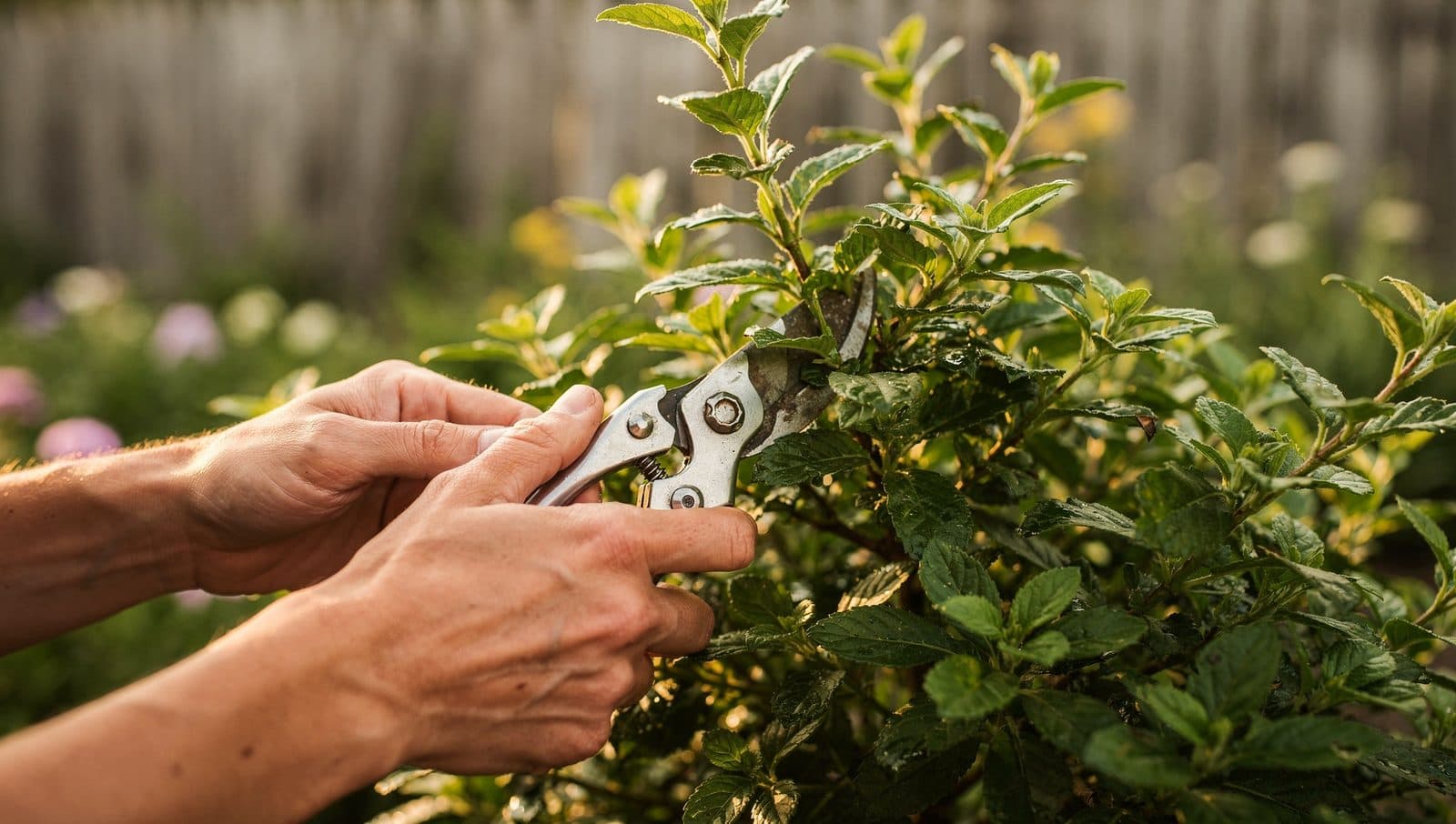
How Often Should I Treat Leaves for Pests?
Contact sprays have no residual effect and don't kill eggs, so treating leaf pests takes repeat applications on a schedule, not a single spray.
At a glance
- The verdict: Needs a plan — repeat on a schedule
- Category: Leaf Treatments & Remedy Myths
The short answer
Plan on repeat treatments, not a one-and-done spray. Contact products like insecticidal soap and horticultural or neem oil have no residual activity and don't kill eggs, so you have to reapply as new pests hatch. For most soft-bodied pests that means roughly every 4–7 days; for spider mites, sources recommend intervals from every 5–7 days up to 10–14 days, continuing until two consecutive checks show no live pests. Always follow the specific product label for maximum applications and intervals.
The details, straight
Identify and scout first
Confirm the pest and check leaf undersides before and between treatments. University of Connecticut IPM notes that "misidentification of pests is a common cause of pest control failure and crop damage" — treating the wrong problem on a schedule just wastes time while the real issue continues unchecked.
Treat, then repeat on the pest's clock
Because soaps and oils have no residual activity and less effect on eggs, Clemson HGIC advises that "repeat applications may be necessary every 4- to 7-days (follow the label directions) until the pests are eliminated." This interval matches how quickly soft-bodied pests like aphids hatch and reach a treatable stage again.
For mites, expect a longer campaign
Colorado State University Extension notes that "because most miticides do not affect eggs, a repeat application at an approximately 10- to 14-day interval is usually needed for control," while other extension sources use tighter 5–7 or 7–10 day intervals depending on temperature and mite species. Warmer conditions speed up mite reproduction, which can shorten the useful interval between treatments.
Don't over-apply, and know when to stop
Repeated soap or oil exposure can accumulate leaf stress, so follow label limits — many soap labels cap the number of sequential applications over a given period — and avoid spraying in heat. Continue the schedule until you see no live pests on two consecutive inspections, then do one more round to catch any late hatchlings before stopping.
Key takeaways
- Contact sprays (soap, oil) have no residual effect and little impact on eggs, so a single application won't finish the job.
- Most soft-bodied pests need retreatment roughly every 4–7 days.
- Spider mites typically need a longer campaign, every 5–14 days depending on the source and conditions.
- Always follow the specific product label for maximum applications and minimum intervals.
- Stop only after two consecutive clean inspections, then do one more round for late hatchlings.
A repeat schedule only works if the ID is right
Treating on the correct interval matters, but only after you've confirmed what pest you're actually dealing with.
See how to identify leaf pestsTiming treatment to New Hampshire's short season
In southern and central New Hampshire the outdoor pest season is compressed — plants are largely dormant under snow from late fall until spring, so any leaf treatment on garden or landscape plants is a warm-season activity from roughly bud-break through the first hard frost (typically the back half of October in the Manchester area). UNH Cooperative Extension's integrated pest management guidance emphasizes identifying the pest and monitoring first rather than treating on a fixed calendar. Anchor Pest Services doesn't treat plant foliage, but for the structural and yard pests around your home we can advise on genuinely seasonal timing.
NH-licensed applicator #782664 (NHDAMF, RSA 430) · NEPMA member · family-owned since 2017.
Related questions
Sources(4)
- [1]Clemson HGIC — Insecticidal Soaps for Garden Pest Control
Repeat every 4-7 days until pests are eliminated
extensionverified 2026-07-14 - [2]Colorado State University Extension — Spider Mites
10-14 day repeat interval for mites since miticides don't affect eggs
extensionverified 2026-07-14 - [3]University of Connecticut Extension — Insecticidal Soaps
No residual activity; coverage and repeat treatment
extensionverified 2026-07-14 - [4]UConn IPM — Integrated Pest Management
Misidentification is a common cause of pest control failure
extensionverified 2026-07-14
Written & reviewed by
VerifiedDaniel Brady
NH-Licensed Pesticide Applicator · License #782664 (NHDAMF, RSA 430)
Daniel Brady is the New Hampshire–licensed applicator behind Anchor Pest Services, a family-owned pest control company serving the Manchester area since 2017.
Last updated 2026-07-14
Your next question
Honest pest help for New Hampshire homes
Leaf Pest Treatment Is Plant Care — But Your Home Is Our Job
Running a repeat-spray schedule on your garden or houseplants is garden work, and we'll always tell you so honestly. Where Anchor Pest Services genuinely helps is the pests around your home — rodents, ants, ticks, and moisture pests drawn to leaf litter and debris against the foundation. Family-owned since 2017, NH license #782664, serving Manchester, Nashua, Concord and nearby towns.
- Honest cadence advice — leaf-plant treatment is garden care, not our service line
- Licensed in NH (#782664) for the recurring pests that actually warrant a schedule: yard and structural
- Ant, rodent, tick, and moisture-pest programs across southern and central New Hampshire
NH License #782664 · No obligation · We answer in person
Your next step
- Book a NH pro
Pest Control Services
Licensed, family-owned pest control across southern NH.
Book now - Related guide
How Often Should I Clean Up Fallen Leaves?
Read the answer - Also relevant
How Often Should You Treat Your Yard for Mosquitoes?
Read the answer - Related guide
How Often Should I Schedule Leaf Cleanup?
Read the answer - Related guide
How Often Should I Inspect Tree Leaves?
Read the answer - Related guide
How Can I Stop Caterpillars From Eating Leaves?
Read the answer