
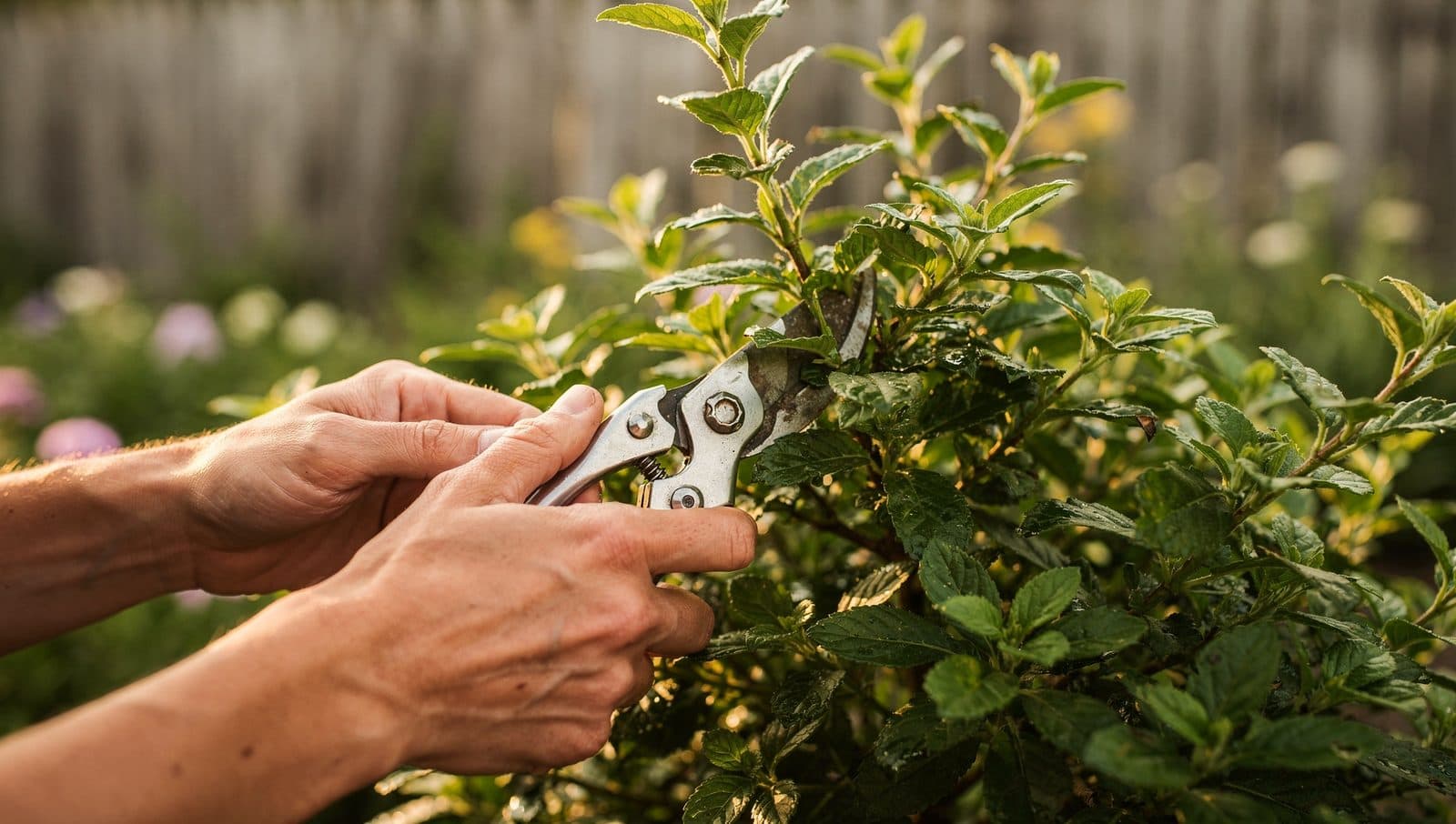
How Often Should I Inspect Tree Leaves?
Inspect tree and shrub leaves about once a week during the growing season, and twice a week in peak summer heat — early detection is the whole game.
At a glance
- The verdict: A simple weekly routine
- Who fixes it: You
- Category: Leaf-Pest ID & Environmental Factors
The short answer
Inspect tree and shrub leaves about once a week during the growing season, and twice a week during peak pest pressure (hot, dry summer weeks and periods of active caterpillar feeding). Early detection is the whole game: spider mites, scale crawlers, and caterpillars are far easier to manage when caught small. Focus on leaf undersides, branch tips, and new growth, and use a hand lens. For large or high-value trees, an ISA-certified arborist should handle diagnosis and any treatment.
Who actually fixes this?
Start here
You
A routine weekly (or twice-weekly, at peak) visual check of leaf undersides, branch tips, and new growth is something any homeowner can do without special equipment.
- Certified arborist — The tree is large, high-value, or the problem is beyond what a homeowner can safely inspect or treat.
- UNH Extension — You spot something during a check and can't identify what it is — UNH Extension's Insect & Arthropod ID service can confirm it.
The details, straight
Weekly during the season, twice weekly at peak
Integrated pest management monitoring guidance calls for checking plants at least once a week during the growing season, stepping up to twice a week during peak pest pressure. Under drought conditions specifically, extension guidance recommends checking garden and landscape plants every three to five days, since heat and dryness are exactly what drives spider mite populations to double in as little as a week.
Catch mites at the stippling stage
A hand lens on a few leaf undersides once a week 'will catch spider mites at the stippling stage — before webbing, before visible damage,' which is when control is most effective and least disruptive to the tree. Waiting until webbing or bronzed foliage is obvious means the population has already had weeks to build, and by then a light touch (a strong water spray or a targeted oil) is less likely to be enough on its own.
Scout undersides and new growth first
Most sap-feeding pests — aphids, whiteflies, scale, spider mites — and the eggs of many caterpillars shelter on leaf undersides, where it's shadier and closer to the plant's veins. Branch tips and tender new growth are the next priority, since that's where aphids and young caterpillars concentrate. A systematic check — flip a leaf, glance at the tip, move to the next branch — covers the highest-yield spots in a couple of minutes per tree.
Time it to the pest, and know when to escalate
Timing matters as much as frequency: caterpillars are easiest to control while still small, and scale insects are only vulnerable to treatment during their brief crawler stage, so a missed week can mean a missed window for a specific pest. The paper-tap test — tapping a branch over white paper and watching for moving specks — confirms mites in seconds, and a 10–20x hand lens settles most identifications on the spot. Send a tricky specimen to UNH Extension's Insect & Arthropod ID service, and bring in an ISA-certified arborist for anything on a large or high-value tree.
Key takeaways
- Check tree and shrub leaves about once a week during the growing season.
- Step up to twice a week, or every three to five days, during hot, dry summer stretches when spider mites build fastest.
- Focus on leaf undersides, branch tips, and new growth — that's where most pests and eggs actually are.
- Catching a problem at the stippling stage, before webbing or visible damage, makes control far easier.
- Use the paper-tap test and a hand lens to confirm mites, and call an ISA-certified arborist for large or high-value trees.
Found something during your inspection?
See how to tell a pest from a disease or a cultural problem before you decide on a treatment.
See the pest-vs-cultural triageA note for New Hampshire tree owners
New Hampshire's growing season runs roughly from spring bud-break to the first hard frost, around October 19 to 29 in the Manchester area based on NOAA climate normals, so a weekly check schedule from spring through early fall covers the full active window. UNH Cooperative Extension's Insect & Arthropod ID service can confirm anything you're unsure about, and an ISA-certified arborist is the right call for mature or high-value trees. Anchor Pest Services handles the structural and yard pests around your home, not tree-canopy pest management, but we're glad to point you to the right resource.
NH-licensed applicator #782664 (NHDAMF, RSA 430) · NEPMA member · family-owned since 2017.
Related questions
Sources(3)
- [1]University of Minnesota Extension — Spider Mites
Spider mite population growth under hot, dry conditions and the value of catching mites at the stippling stage
extensionverified 2026-07-14 - [2]University of Maryland Extension — Spider Mites on Vegetables
Checking leaf undersides for webbing and upper surfaces for stippling as a routine scouting method
extensionverified 2026-07-14 - [3]UNH Cooperative Extension — Insect & Arthropod Identification
Free NH insect/arthropod ID service for confirming a leaf-pest diagnosis found during routine inspection
extensionverified 2026-07-14
Written & reviewed by
VerifiedDaniel Brady
NH-Licensed Pesticide Applicator · License #782664 (NHDAMF, RSA 430)
Daniel Brady is the New Hampshire–licensed applicator behind Anchor Pest Services, a family-owned pest control company serving the Manchester area since 2017.
Last updated 2026-07-14
Your next question
Honest pest help for New Hampshire homes
Tree Inspection Is Plant Care — Your Home Is Our Job
Scouting your trees on a weekly schedule is garden and landscape care, and we'll always tell you so. Where Anchor Pest Services genuinely helps is the pests around your home — rodents, ants, ticks, and moisture pests drawn to leaf litter and debris against the foundation. Family-owned since 2017, NH license #782664, serving Manchester, Nashua, Concord and nearby towns.
- Straight talk — canopy scouting is tree care, and we say so rather than upsell
- NH-licensed team (#782664) for the structural pests that trees can shelter near a home
- Serving southern and central New Hampshire, not selling arborist work we don't do
NH License #782664 · No obligation · We answer in person
Your next step
- Related guide
Why Are Tree Leaves Dropping Early?
Read the answer - Related guide
What Insects Live on Tree Leaves?
Read the answer - Related guide
How Often Should I Clean Up Fallen Leaves?
Read the answer - Related guide
How Often Should I Treat Leaves for Pests?
Read the answer - Related guide
Why Are Leaves on One Side of a Tree Dying?
Read the answer