
Can Owls or Other Predators Help Control Rodent Populations?
At a Glance
- Short answer: Yes, at landscape scale over a season; no, not for rodents already indoors.
- Key fact: A barn owl family can remove roughly 1,000–3,466+ rodents per year, per UC ANR and a Napa vineyard study.
- NH relevance: Owl boxes suit rural NH acreage as a long-term supplement; indoor rodents still need trapping and exclusion.
- Action needed: Support owl habitat as a bonus, and address active indoor infestations with trapping and sealing.
The short of it
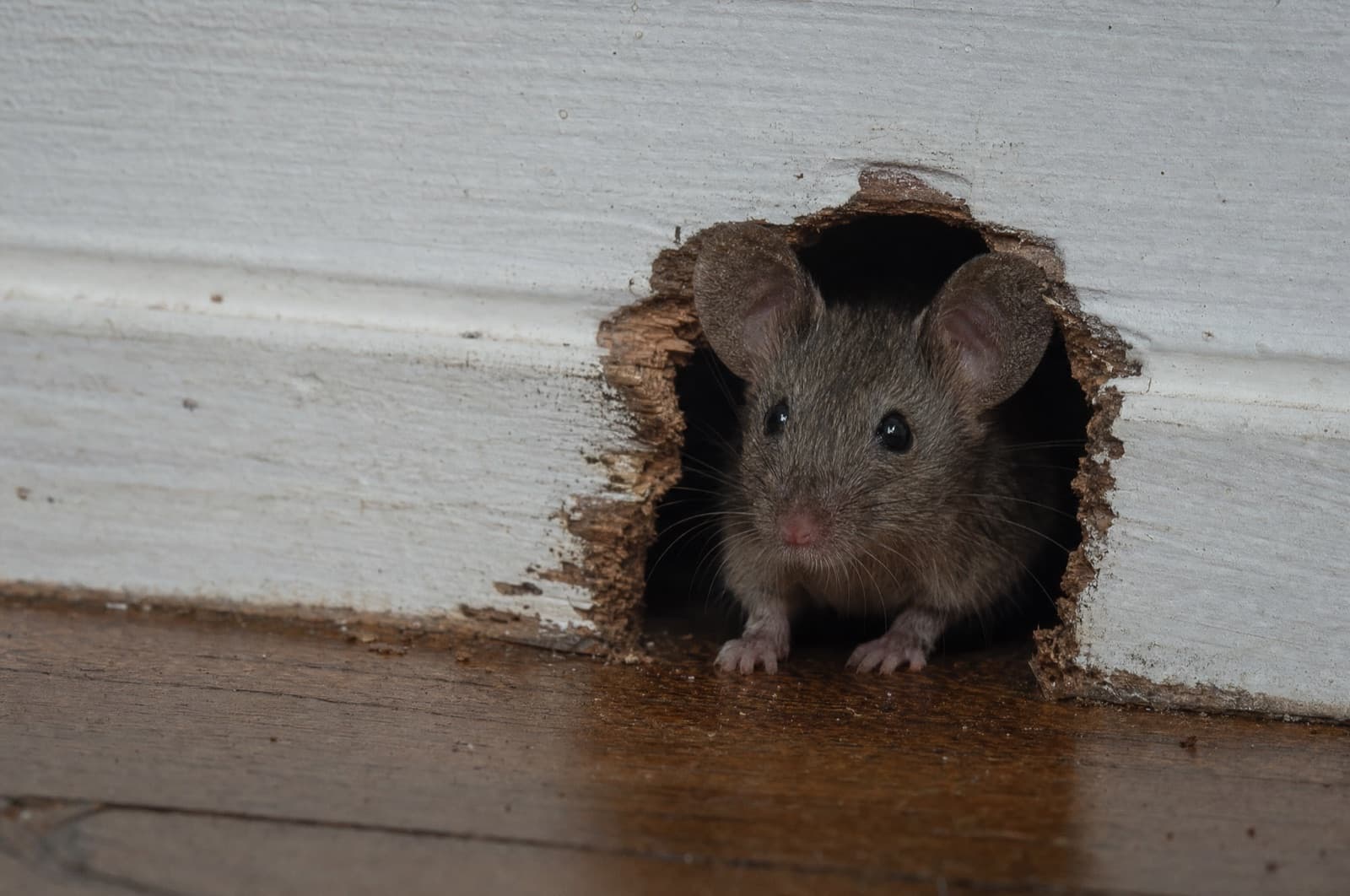
Owls are the one predator with real, citable rodent-control credentials, but the scale matters enormously. In agriculture, barn owl nest-box programs are an established biological-control tool that measurably reduces rodent activity across fields and vineyards over a nesting season. That's genuine and well-documented. But it's an outdoor, acreage-wide, months-long effect — owls can't reach rats nesting in your wall void or mice in your kitchen cabinet, and a nest box won't seal the entry point letting rodents in tonight. Treat owl support as a long-term ecological complement, not urgent pest control.
Can Owls or Other Predators Help Control Rodent Populations — By the Numbers
~1,000
Rodents a barn owl family can eat in a single nesting season, per UC ANR
~3,466
Estimated rodents removed per year by one owl family, Napa vineyard study (range 1,821–7,563)
50–95%
Share of barn owl diet made up of small mammals, depending on region
The honest efficacy verdict
Owls and other natural predators (landscape-scale biological control)
ModerateBarn owls provide genuine, well-documented rodent suppression at landscape/agricultural scale over a nesting season — but are low-effectiveness as a targeted fix for an active indoor infestation, which needs trapping and exclusion instead.
Evidence: UC ANR: a barn owl family eats ~1,000 rodents per nesting season. Johnson & St. George (2020, Journal of Wildlife Management, Napa Valley vineyard study): one owl family removes an estimated ~3,466 rodents/year (range 1,821–7,563). UC Cooperative Extension: owl nest boxes are "not a proven method for sustained rodent control by itself."
- Applied at field/vineyard/acreage scale over a full nesting season as part of a broader IPM plan
- Paired with habitat support (nest boxes, native landscaping) on rural or semi-rural properties
- Viewed as a long-term ecological complement, not an urgent fix
- Used as a substitute for trapping and exclusion on an active indoor infestation
- Rodents are nesting inside wall voids, attics, or cabinets an owl can never reach
- Homeowners attempt to trap or relocate wild predators themselves — NH Fish and Game wildlife law applies
The full picture
The genuine, landscape-scale effect
In agriculture, barn owl nest-box programs are an established biological-control tool. UC ANR notes a family of barn owls eats about 1,000 rodents in a single nesting season, and a Napa Valley vineyard study (Johnson & St. George, 2020, Journal of Wildlife Management) estimated a family removes roughly 3,466 rodents a year, with a range of 1,821 to 7,563. Rodents make up 50–95% of the barn owl diet depending on region, so boosting owl populations with nest boxes can meaningfully reduce rodent pressure across fields, orchards, and vineyards over time. This is genuine, well-documented biological control — not folklore.
Why scale is the catch
UC Cooperative Extension is explicit that owl nest boxes are "not a proven method for sustained rodent control by itself" and belong within a broader integrated pest management plan, not as a standalone measure. Owls hunt outdoors, over acres, across seasons. They can't reach rats nesting inside a wall void, mice in a kitchen cabinet, or rodents sheltering in insulation — and a nest box does nothing to seal the ¼-to-½-inch gap letting rodents into your structure right now.
What this means for a homeowner
If you have an active indoor rat or mouse problem, encouraging owls will not fix it on any useful timeline — the answer there is trapping and exclusion. If you're managing a larger rural or agricultural property in New Hampshire and want to reduce outdoor rodent pressure over the long run, an owl box (paired with native landscaping that supports owl habitat) is a legitimate, well-evidenced complement. Just don't confuse the two goals, and don't attempt to trap or relocate wild predators yourself — New Hampshire Fish and Game wildlife law governs handling of native wildlife.
Bottom line — Owls genuinely suppress rodent populations at landscape and agricultural scale over a season — that's real, citable biological control. They are not a targeted fix for an active indoor infestation. Support owl habitat as a long-term, property-scale complement, and use trapping plus exclusion for rodents already in your home.
Rodents already indoors? Owls won't reach them.
Anchor's licensed NH technicians handle exclusion and monitored trapping across southern and central New Hampshire.
Why this matters in New Hampshire
Rural and semi-rural Southern and Central New Hampshire properties — with fields, barns, or acreage — are a reasonable setting for owl-box habitat support as a long-term outdoor rodent-suppression measure. But as rodents press indoors ahead of Manchester's first hard frost (~Oct 19–29) seeking winter shelter, an owl box does nothing to stop that indoor movement; NH Fish and Game wildlife law also governs any handling of native predators, so trapping or relocating wild owls or other predators yourself is not an option.
Key local data
UNH Cooperative Extension: Norway rats are commonly found in New Hampshire's urban and town settings.
- NH-licensed applicator · #782664
- Same-day service
- Family-owned since 2017
Service Area Map
Southern New Hampshire
Frequently asked
Sources (3)
- [1]
- [2]
- [3]
Written & reviewed by
VerifiedDaniel Brady
NH-Licensed Pesticide Applicator · License #782664 (NHDAMF, RSA 430)
Daniel Brady is the New Hampshire–licensed applicator behind Anchor Pest Services, a family-owned pest control company serving the Manchester area since 2017.
Professional Rodent Control
Great for the Field. Not for Your Walls.
Owls genuinely suppress outdoor rodent populations over time, but they can't reach an active indoor infestation. Anchor Pest Services finds and seals entry points, then traps the rodents already inside. Family-owned since 2017, NH license #782664.
- Same-day service across southern NH
- NH-licensed applicators (#782664)
- Free inspection — no flat-price guesswork
NH License #782664 · No obligation · We answer in person
Your next step
- Book a NH pro
Rodent Control
Book now - Next step
How can I tell if I have rodents in my walls during winter?
Read the answer - What to do next
Chemical Rodent Control: Rodenticides, Risks & the Rules
Read the answer - What to do next
Natural & Organic Rodent Control: What Actually Works in NH
Read the answer - Related guide
Do Dogs Keep Rats Away?
Read the answer - Related guide
Do Cats Really Help Get Rid of Mice?
Read the answer