
Do Cats Really Help Get Rid of Mice?
At a Glance
- Short answer: Situationally — individual catches happen, but cats can't clear an established infestation.
- Key fact: A landmark urban study recorded just 2 successful cat kills across 79 days despite 100+ rats present.
- NH relevance: Barn and outdoor cats add real pressure on rural NH properties, but indoor mice in wall voids are out of reach.
- Action needed: Use a cat as a supplement; seal entry points and trap for a durable fix.
The short of it
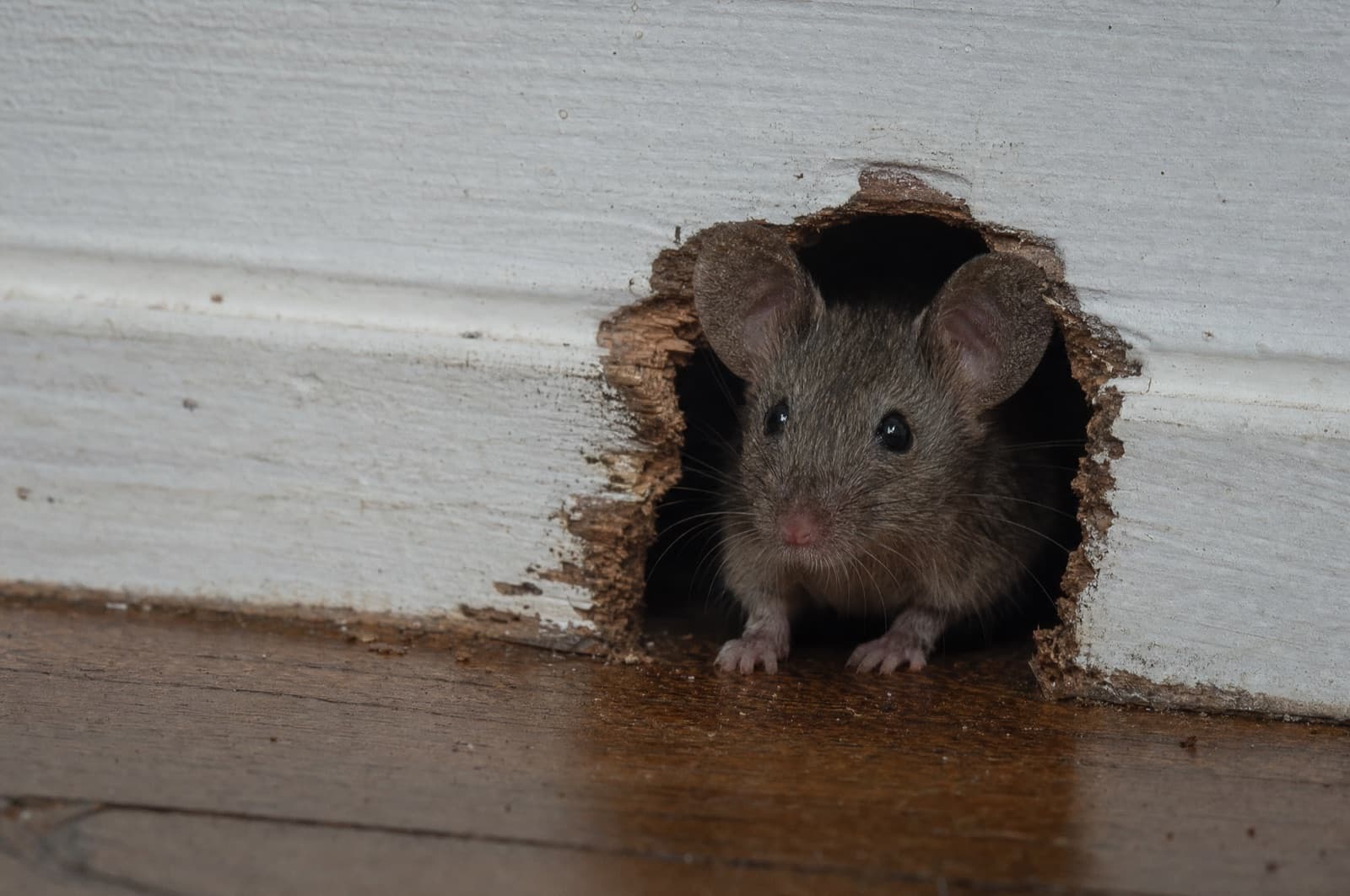
A motivated cat will catch individual mice, and that's genuinely true. But the cat-as-mouser reputation is more folklore than fact: well-fed house cats often don't bother hunting, and no cat — however motivated — can reach mice nesting in wall voids, cabinet bases, or attics, which is where an established infestation actually lives. The best-known urban predator study found cats barely dented a colony of over 100 rats. Treat a cat as a bonus that might catch the occasional mouse crossing the floor, not a plan for clearing an infestation.
Do Cats Really Help Get Rid of Mice — By the Numbers
2
Successful kills recorded across 306 videos of cats near a 100+ rat colony
~337 g
Average adult rat weight in the study — about 10x a mouse's weight, and often skipped by cats
79 days
Length of the camera study observing cat-rat interactions
The honest efficacy verdict
House cats / barn cats as mouse control
SituationalIndividual, motivated cats catch mice crossing open areas, but well-fed house cats often don't hunt, and no cat can access mice nesting in wall voids, cabinet bases, or attics — cats do not reliably control an established infestation.
Evidence: Parsons et al. (2018, Frontiers in Ecology and Evolution) recorded only two successful cat kills across 79 days of camera footage at a site with 100+ rats and daily cat presence — cats' dominant measurable effect was behavioral avoidance in rodents, not population reduction.
- An actively hunting, food-motivated cat encounters mice in open, accessible areas
- Used as outdoor/barn-level supplemental pressure on rural NH properties
- Paired with trapping and exclusion, not relied on alone
- Mice are nesting in wall voids, cabinet bases, or attic insulation the cat can't reach
- The cat is well-fed and has little hunting drive
- Entry points remain unsealed, allowing continuous mouse reinvasion regardless of the cat
The full picture
What the landmark study found
In the most-cited urban predator study on this question, Parsons and colleagues (2018, Frontiers in Ecology and Evolution) watched feral cats at a rat-rich Brooklyn waste-recycling facility over 79 days. Across 306 videos, with a colony of more than 100 microchipped rats and up to three cats present daily, cameras recorded only 20 stalking events, three kill attempts, and just two successful kills. The cats' main measurable effect was making rats warier and more hidden — not fewer in number. That's a striking result given how often cats are recommended as rat control.
Why cats skip the easy target — and the hard one
Cats are energy-economists: they take the easy meal (small birds, insects, the occasional mouse) and generally avoid large, defensive prey. In the study, adult rats averaged about 337 grams — roughly ten times a mouse's weight — which likely explains why cats mostly left them alone. Against mice specifically, a keen individual cat will catch some, but well-fed house cats frequently don't hunt at all, since they're not relying on it for food. Even a highly motivated cat faces a physical limit: mice nest in wall voids, cabinet bases, and attic spaces that no cat can access, so the cat only ever encounters the mice bold enough to cross open floor.
What a cat actually adds
A cat may reduce the occasional mouse crossing the kitchen floor and can add some scent-based deterrence, similar to a dog's presence. That's a real, if modest, benefit — particularly for barn or outdoor cats on rural New Hampshire properties. But it won't eliminate a breeding colony nesting inside your structure, and it won't seal the ¼-inch gaps letting mice in. Use integrated pest management — trapping and exclusion — for the actual fix, and consider the cat a bonus.
Bottom line — Cats situationally catch individual mice but don't reliably clear an infestation: well-fed house cats often don't hunt, and no cat can reach mice nesting in wall voids or attics. The best urban study on record found cats barely dented a much larger rat population. Trapping and sealing entry points are what actually work.
Mice hiding where the cat can't reach?
Anchor's licensed NH technicians trap mice in wall voids and attics, then seal the gaps that let them in — across southern and central New Hampshire.
Why this matters in New Hampshire
Barn cats and outdoor cats on rural NH properties genuinely add outdoor pressure around sheds, woodpiles, and barns — the same kind of landscape-level effect documented in the urban study. But as mice press indoors ahead of Manchester's first hard frost (~Oct 19–29) to escape the cold, they head straight for wall voids and insulation a cat can't reach, which is why indoor mouse problems still need trapping and sealed entry points regardless of how many cats are in the house.
Key local data
Deer mice (Peromyscus) are the hantavirus-relevant species in NH; NH DHHS reports no confirmed case acquired in-state to date.
- NH-licensed applicator · #782664
- Same-day service
- Family-owned since 2017
Service Area Map
Southern New Hampshire
Frequently asked
Written & reviewed by
VerifiedDaniel Brady
NH-Licensed Pesticide Applicator · License #782664 (NHDAMF, RSA 430)
Daniel Brady is the New Hampshire–licensed applicator behind Anchor Pest Services, a family-owned pest control company serving the Manchester area since 2017.
Professional Rodent Control
A Cat Catches What It Sees. We Handle What's Hiding.
Mice nesting in wall voids and attics are out of any cat's reach. Anchor Pest Services traps the population already inside and seals the entry points bringing in more. Family-owned since 2017, NH license #782664.
- Same-day service across southern NH
- NH-licensed applicators (#782664)
- Free inspection — no flat-price guesswork
NH License #782664 · No obligation · We answer in person
Your next step
- Book a NH pro
Rodent Control in New Hampshire
Mice and rats move indoors every fall. We trap, seal entry points and keep them out.
Book now - Next step
Do rodents nest in walls during autumn?
Read the answer - Related guide
Do Dogs Keep Rats Away?
Read the answer - Related guide
Can Owls or Other Predators Help Control Rodent Populations?
Read the answer - Related guide
What Home Remedies Actually Work Against Mice?
Read the answer - Related guide
What Smell Drives Mice Away?
Read the answer