
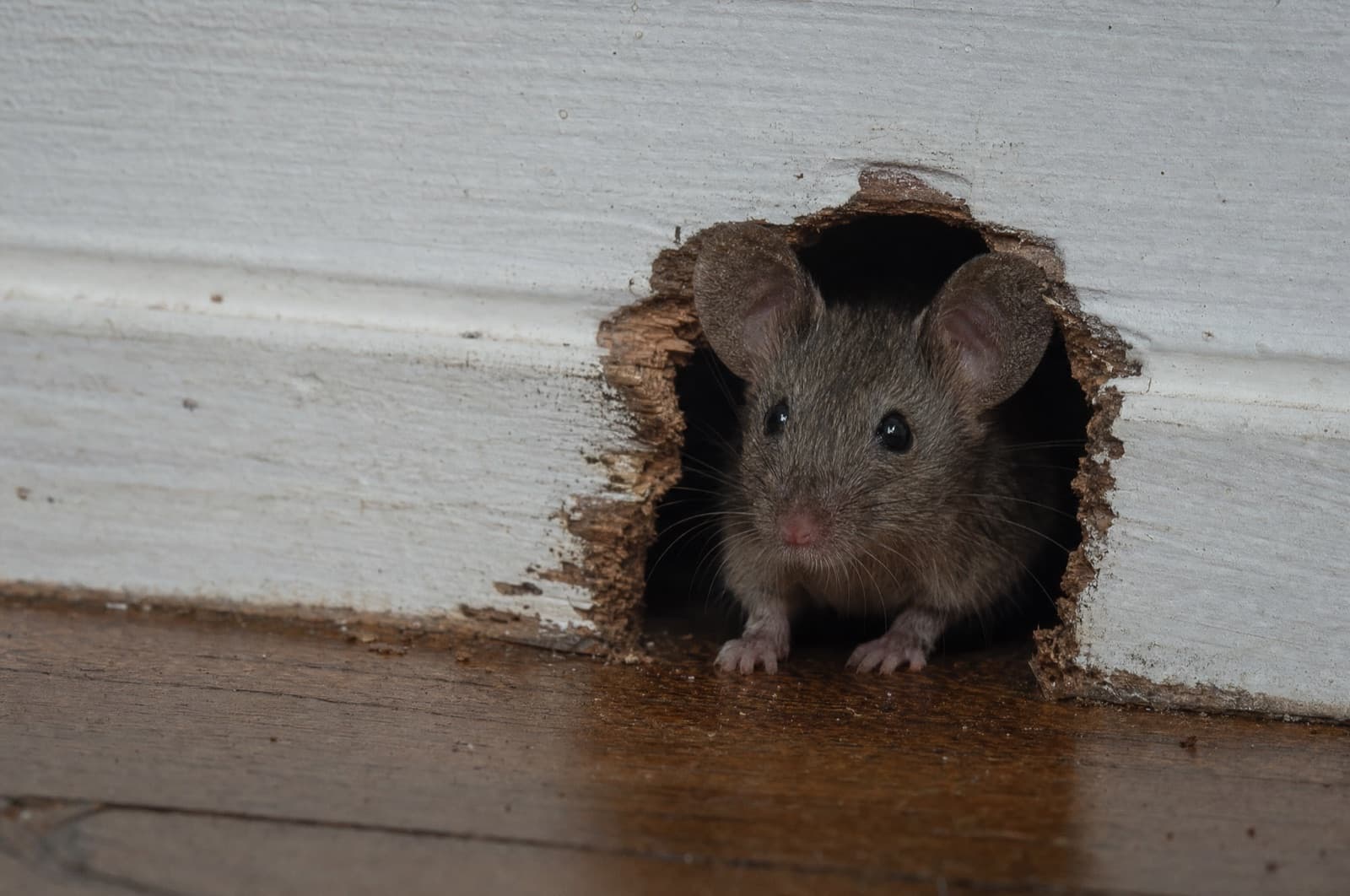
Can Rats Learn to Avoid Traps?
At a Glance
- Short answer: Yes — rats develop real, individual trap-shyness from neophobia and their own bad experiences, not from watching others.
- Key fact: A rat may take about five days to accept a new object versus overnight for a mouse.
- NH relevance: NH's cautious, established Norway rat populations in basements and crawlspaces are exactly where uncorrected neophobia stalls a DIY trap line for weeks.
- Action needed: Pre-bait unset traps for several days on confirmed runways before arming them; don't rely on a single set-and-forget attempt.
The short of it
Rats are strongly neophobic — wary of any new object suddenly present in their territory — and can develop genuine, lasting avoidance of a specific trap or bait after their own bad experience: a near-miss with a snap trap, or a sublethal dose of bait that made them sick ('bait shyness'). This is individual, associative learning, not the debunked idea of a rat watching a colony-mate get caught and 'warning' others. It's also markedly more pronounced in rats than in mice, which is why the same trap that catches a mouse overnight can sit untouched by a rat for a week.
Can Rats Learn to Avoid Traps — By the Numbers
~5 days
Typical time for a rat to accept a new object in its territory
Overnight
Typical time for a mouse to accept the same new object
Weeks
How long bait-shyness from a sublethal dose can persist
Several days
Recommended unset pre-baiting period for rats
The honest efficacy verdict
Rats learning to avoid traps from individual experience (neophobia + bait shyness)
WorksWell-documented and considerably more pronounced in rats than in mice — this is real behavior, not a myth.
Evidence: Rats show a measurable 'new object reaction' to any novel item in their runway, and conditioned bait/poison aversion after a sublethal dose is documented to persist for weeks and generalize to similar foods.
- A rat has a near-miss with a trap or survives a sublethal bait dose
- A new object appears in an established runway with no acclimation period
- Traps or bait stations are pre-baited and left unset until the rat feeds confidently, which overcomes most of the caution
The full picture
Neophobia: fear of the new, not the observed
Rats travel fixed runways along walls, pipes, and edges, and react to any new object suddenly present in that path by avoiding it — sometimes for days. Extension sources note a rat may need roughly five days to accept a new trap or bait station, where a mouse often accepts one overnight. Classic research on black rats found this 'new object reaction' is triggered specifically by an object's presentation — something new appearing where nothing was before — rather than by any social cue.
Bait shyness: learning from a rat's own near-miss
The second mechanism is associative learning from personal experience. A rat that nibbles bait and narrowly escapes a snap, or eats a sublethal amount of toxic bait and gets sick, forms a durable aversion — bait shyness or poison shyness, a conditioned taste aversion that can persist for weeks and even generalize to similar-smelling foods. This behavior is documented to be considerably more pronounced in rats than in mice, which is the core reason the two species' trap-avoidance pages are answered differently on this site — see our mouse trap-avoidance page for that contrast.
The fix: pre-baiting, not a stronger trap
The professional countermeasure for rat neophobia is pre-baiting: place traps or bait stations unset for several days — often about a week — until rats are feeding confidently on the runway, then arm them. For poison specifically, partial or sublethal dosing is counterproductive, since it teaches survivors to avoid that bait; this is one reason a complete, professionally managed program outperforms casual DIY baiting.
Bottom line — Yes, rats learn to avoid traps — but from their own near-misses and bait shyness, driven by strong neophobia, not from watching other rats get caught. Pre-baiting unset traps for several days is the standard, effective countermeasure.
Rat gone trap-shy after a failed DIY attempt?
Once a rat has had a near-miss, it can avoid that trap type for weeks. Anchor's technicians pre-bait and rotate placements as part of a monitored rat-control program.
Why this matters in New Hampshire
Norway rats that establish themselves in NH basements, crawlspaces, and foundations ahead of winter become the most trap-cautious version of themselves — settled, familiar with their territory, and quick to flag anything new. That's why a single unsuccessful DIY snap-trap attempt often means the rat is now genuinely trap-shy, not that trapping doesn't work; a monitored, pre-baited professional program is built around exactly this behavior.
Key local data
Norway rats are established across New Hampshire's cities and towns (UNH Cooperative Extension); roof rats are essentially absent from the Northeast (Cornell).
- NH-licensed applicator · #782664
- Same-day service
- Family-owned since 2017
Service Area Map
Southern New Hampshire
Frequently asked
Sources (5)
- [1]
- [2]
- [3]
- [4]
- [5]
Written & reviewed by
VerifiedDaniel Brady
NH-Licensed Pesticide Applicator · License #782664 (NHDAMF, RSA 430)
Daniel Brady is the New Hampshire–licensed applicator behind Anchor Pest Services, a family-owned pest control company serving the Manchester area since 2017.
Professional Rodent Control
A Trap-Shy Rat Needs Patience — and a Different Plan
One failed set can make a rat wary for weeks. Anchor Pest Services pre-baits, maps runways, and adjusts placement so trap-shyness doesn't stall your results. Family-owned since 2017, NH license #782664.
- Same-day service across southern NH
- NH-licensed applicators (#782664)
- Free inspection — no flat-price guesswork
NH License #782664 · No obligation · We answer in person
Your next step
- Book a NH pro
Rodent Control
Book now - Next step
How can I protect my attic from mice and rats during winter?
Read the answer - What to do next
Mechanical Rodent Control: Snap Traps + Exclusion That Works
Read the answer - Related guide
Do Mice Avoid Traps After Seeing Others Caught?
Read the answer - Related guide
What Is the Best Bait for Rat Traps?
Read the answer - Related guide
Are Electronic Traps Effective for Rats?
Read the answer