
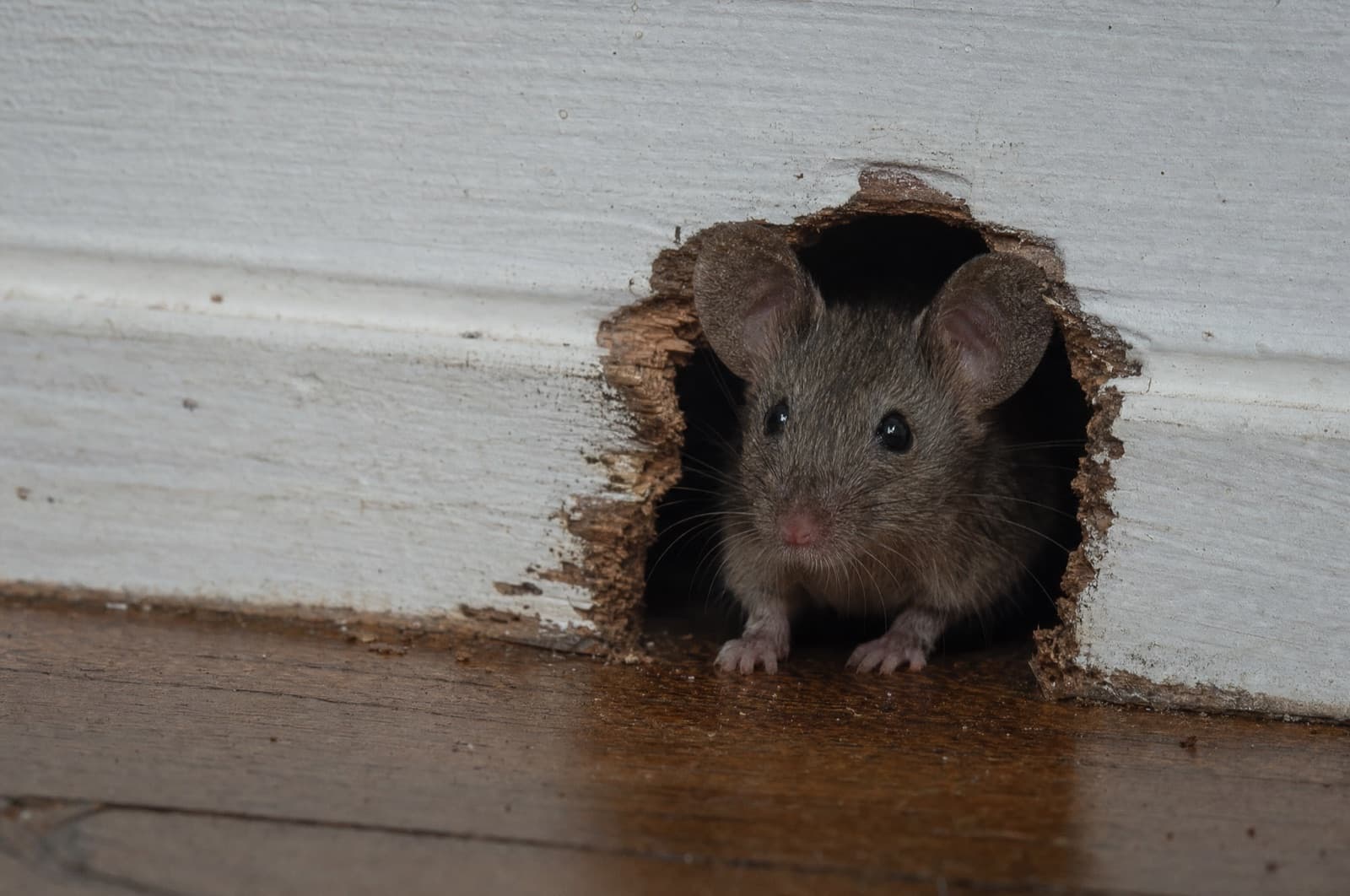
Do Mice Avoid Traps After Seeing Others Caught?
At a Glance
- Short answer: No — 'watching and learning' is a myth; individual trap-shyness from a mouse's own experience is real.
- Key fact: No study has ever shown a mouse avoiding a trap because it watched another mouse get caught.
- NH relevance: Fall's indoor mouse influx means multiple mice often share the same runways — scent management, not hiding traps, is what keeps a trap line working.
- Action needed: Remove caught mice and clean or discard fouled traps promptly; wear gloves and pre-bait new traps for 2–3 days.
The short of it
There's no published evidence that a mouse watches another mouse get caught and then avoids that trap. The real rodent social-learning literature covers social transmission of food preference and observational fear learning from foot-shock in lab settings — neither is trap avoidance, and when researchers directly tested whether rats learn avoidance by watching conspecifics get shocked or poisoned, they did not. What homeowners actually see is explained by three real mechanisms: neophobia (innate wariness of a new object), scent contamination from blood, urine, or human handling, and a mouse's own prior near-miss with a trap.
Do Mice Avoid Traps After Seeing Others Caught — By the Numbers
0
Published studies showing mice avoid traps by watching others caught
~1 day
Typical time for a mouse to accept a new, unfouled trap
2–3 days
Recommended unset pre-baiting period to overcome neophobia
3
Real drivers of apparent 'avoidance': neophobia, scent, individual near-miss
The honest efficacy verdict
Mice learning to avoid traps by watching another mouse get caught
MythNo published research demonstrates this kind of social observational learning around traps in mice.
Evidence: Rat avoidance-learning studies found no avoidance transmitted by watching conspecifics get shocked or by contact with poisoned conspecifics; documented mouse social learning is limited to food-preference transmission and observational fear (freezing), not object avoidance.
- Never demonstrated for trap avoidance in any published study
- The apparent 'avoidance' is really neophobia, scent contamination from blood/urine/handling, or the individual mouse's own prior near-miss — not observation of another mouse
The full picture
What the research actually shows
Documented rodent social learning covers the social transmission of food preference (a rodent smells food residue on a conspecific's breath and becomes more willing to eat that food) and observational fear learning in lab paradigms, where an observer mouse watches a cagemate receive a foot-shock and shows freezing behavior. Neither involves learning to avoid an object like a trap. When researchers directly tested whether rats learn avoidance socially — by watching conspecifics get shocked or by contact with poisoned conspecifics — the rats did not acquire avoidance that way.
The three real mechanisms behind 'wised-up' mice
What homeowners interpret as social learning is better explained by neophobia (a mouse's innate wariness of a new object suddenly in its runway), scent contamination (a trap fouled with blood, urine, stress odor, or heavy human handling repels other mice — a scent effect, not observation), and individual experience (a mouse that nibbled bait and felt the bar snap without being caught learns from its own near-miss, becoming genuinely trap-shy).
What this means for your trap line
You don't need to hide traps from 'witnesses' — you need to manage scent and placement. Remove caught mice promptly, clean or discard fouled traps, wear gloves when handling traps, and pre-bait unset traps for 2–3 days to let mice feed confidently before you arm them. Because mice are far less neophobic than rats, they usually accept a clean new trap within a day once scent isn't a factor — a sharp contrast to the individual trap-shyness rats develop (see our rat trap-avoidance page).
Bottom line — Mice don't avoid traps because they watched another mouse get caught — that's a myth with no supporting evidence. What's real is neophobia, scent, and an individual mouse's own near-miss. Manage scent and placement, and most mice accept a new trap within a day.
Traps not working the way you expected?
If a DIY trap line has stalled, it's usually scent or placement — not a 'smart' mouse. Anchor's licensed NH technicians map runways and run a monitored trap program that gets it right.
Why this matters in New Hampshire
As mice move indoors ahead of Manchester's first hard frost (~Oct 19–29, NOAA), a single home can host several mice sharing the same wall-void runways — which is exactly when homeowners assume a trap has been 'made' and stop resetting it. The fix isn't hiding the trap; it's cleaning fouled traps and pre-baiting new ones so scent, not visibility, stays on your side.
Key local data
NH DHHS: no confirmed hantavirus case acquired in New Hampshire to date; the deer mouse (Peromyscus) is the regional reservoir species.
- NH-licensed applicator · #782664
- Same-day service
- Family-owned since 2017
Service Area Map
Southern New Hampshire
Frequently asked
Sources (5)
- [1]
- [2]
- [3]
- [4]
- [5]
Written & reviewed by
VerifiedDaniel Brady
NH-Licensed Pesticide Applicator · License #782664 (NHDAMF, RSA 430)
Daniel Brady is the New Hampshire–licensed applicator behind Anchor Pest Services, a family-owned pest control company serving the Manchester area since 2017.
Professional Rodent Control
Mice Aren't Outsmarting You — Your Trap Line Just Needs a Reset
Scent contamination and poor placement stall more DIY trap lines than any mouse's 'learning.' Anchor Pest Services maps active runways and runs monitored trapping across southern and central New Hampshire. Family-owned since 2017, NH license #782664.
- Same-day service across southern NH
- NH-licensed applicators (#782664)
- Free inspection — no flat-price guesswork
NH License #782664 · No obligation · We answer in person
Your next step
- Book a NH pro
Rodent Control
Book now - Next step
Rodent Mites After Mice or Rats Are Removed
Read the answer - What to do next
Mechanical Rodent Control: Snap Traps + Exclusion That Works
Read the answer - Related guide
Can Rats Learn to Avoid Traps?
Read the answer - Related guide
What Is the Best Bait for Mouse Traps?
Read the answer - Related guide
How Often Should I Check Traps for Mice?
Read the answer