
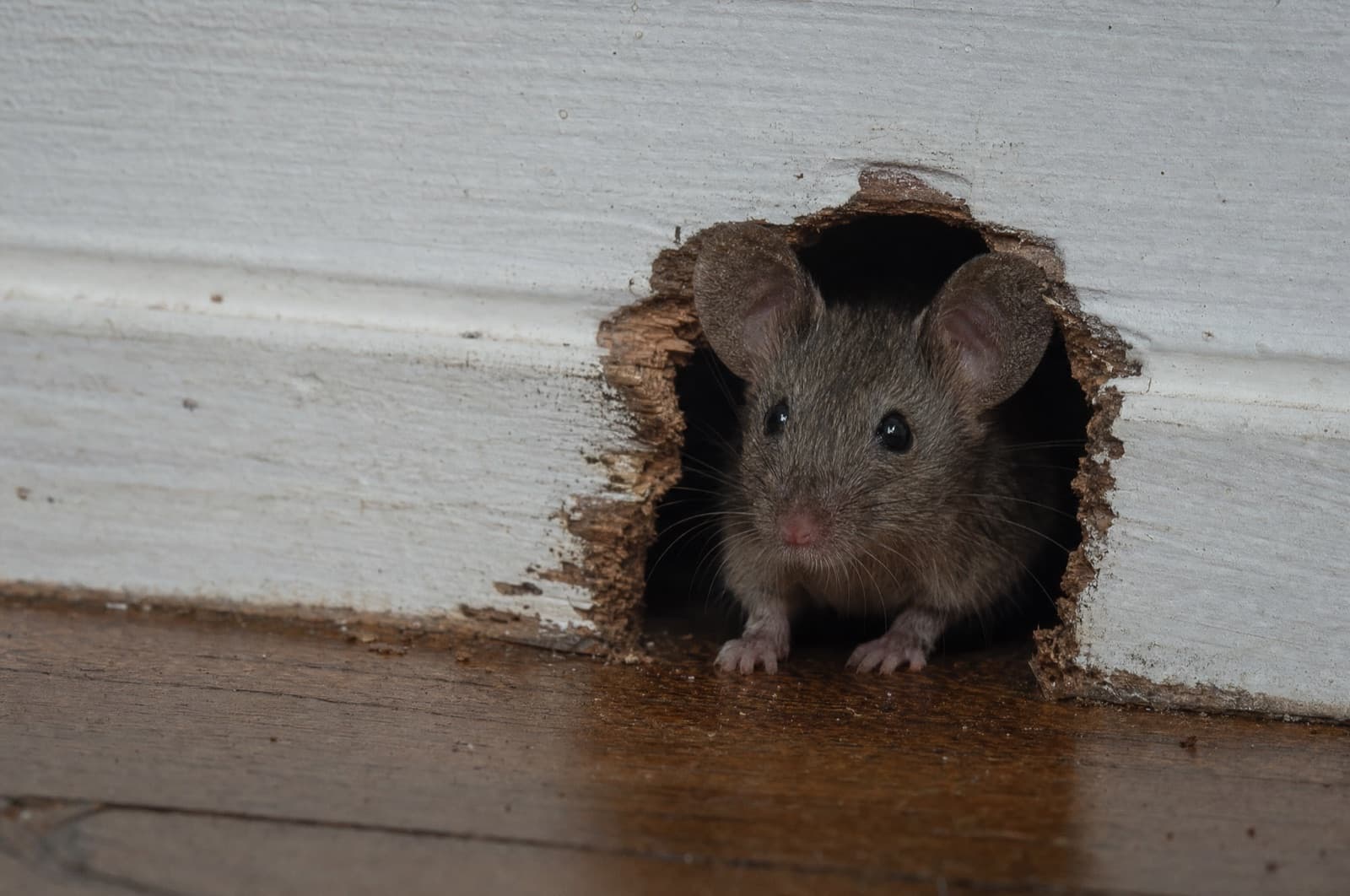
What Smell Drives Mice Away?
At a Glance
- Short answer: No — mice tolerate strong smells if food and shelter remain; nothing reliably drives them out.
- Key fact: Mice adapt to peppermint, ammonia, and mothball smells within days if resources remain.
- NH relevance: A ¼-inch gap is all a NH mouse needs to get past any scent barrier before winter.
- Action needed: Seal ¼-inch entry points and trap; skip mothballs entirely for safety reasons.
The short of it
Mice, like rats, will tolerate strong smells — peppermint, ammonia, mothballs, vinegar — as long as food and shelter remain available, and pest-industry myth-busting is consistent that none of these work as a long-term mouse solution. The effect is temporary and localized at best. Mothballs deserve a specific warning: naphthalene isn't labeled or intended as a rodent repellent and is a genuine safety hazard, not just an ineffective one. Sealing the ¼-inch gaps mice use to enter is what actually keeps them out.
What Smell Drives Mice Away — By the Numbers
~¼ in
Gap size a mouse can squeeze through, regardless of any scent nearby
0
Scents proven to reliably drive mice out of a structure
Toxic
Naphthalene mothballs' status when used against rodents — not a labeled repellent
The honest efficacy verdict
Natural/scent-based mouse repellents (peppermint, ammonia, mothballs, vinegar)
LowNo scent reliably drives mice away: peppermint, ammonia, and vinegar offer only brief, localized deterrence that mice habituate to, and mothballs are not a legitimate or safe option against rodents.
Evidence: Pest-industry myth-busting guidance finds peppermint, mothballs, ammonia, and vinegar all fail as long-term mouse solutions; naphthalene mothballs are not EPA-labeled as a rodent repellent and are a documented toxicity/poisoning hazard; FTC scrutiny of "scent-free" ultrasonic marketing claims underscores the broader pattern of overstated rodent-repellent marketing.
- As a brief, localized supplement in one specific spot while sealing is arranged
- Never for mothballs — no legitimate use case exists against rodents in or near an occupied home
- Food or shelter remains accessible nearby, since mice habituate quickly
- Used instead of sealing ¼-inch entry points and trapping
- Mothballs are used at all — this is a safety hazard, not a low-efficacy option
The full picture
Peppermint, ammonia, and vinegar — temporary at best
Pest-industry myth-busting guidance is clear that peppermint oil, mothballs, ammonia, and vinegar generally do not work as long-term mouse solutions. Each provides only temporary, localized deterrence, and mice quickly adapt when food and shelter remain available nearby. Ammonia's predator-urine mimicry is the same story as with rats: briefly annoying, short-lived, and the concentration needed to matter is unsafe to sustain in an occupied living space.
Mothballs — not a legitimate option, and a safety hazard
Naphthalene mothballs are not intended or labeled as a rodent repellent, and they are genuinely toxic — this is a safety issue, not just an efficacy one. Mothballs release harmful vapors indoors and pose a real poisoning risk to children and pets, who may mistake them for candy. Never use mothballs against mice. If ingestion is suspected, contact the Northern New England Poison Center at 1-800-222-1222 immediately.
Why exclusion beats every scent option
A mouse needs only about a ¼-inch gap — roughly the diameter of a pencil — and a small, reliable food source to stay indoors indefinitely. No scent addresses either of those drivers. "Scent-free" ultrasonic gadgets marketed as mouse repellents fare no better, for related reasons (see the dedicated ultrasonic page). The reliable approach is physical: seal every ¼-inch-plus gap with steel or copper wool and caulk, remove accessible food, and trap the mice already inside.
Bottom line — No smell reliably drives mice away — peppermint, ammonia, and vinegar are weak and temporary, and mothballs are an outright safety hazard that should never be used against rodents. Sealing ¼-inch entry points and trapping is what actually works.
No smell is sealing your mouse problem out.
Anchor's licensed NH technicians find and seal ¼-inch entry points, then trap the mice already inside — across southern and central New Hampshire.
Why this matters in New Hampshire
New Hampshire mice press hardest to get indoors from fall through winter, well before and after Manchester's first hard frost (~Oct 19–29). A mouse motivated by cold and scarce outdoor food will tolerate an unpleasant smell far more readily than it will pass up a ¼-inch gap into a warm structure — which is exactly why NH fall prep should focus on sealing, not fragrance.
Key local data
Deer mice (Peromyscus) are the hantavirus-relevant species in NH; NH DHHS reports no confirmed case acquired in-state to date.
- NH-licensed applicator · #782664
- Same-day service
- Family-owned since 2017
Service Area Map
Southern New Hampshire
Frequently asked
Written & reviewed by
VerifiedDaniel Brady
NH-Licensed Pesticide Applicator · License #782664 (NHDAMF, RSA 430)
Daniel Brady is the New Hampshire–licensed applicator behind Anchor Pest Services, a family-owned pest control company serving the Manchester area since 2017.
Professional Rodent Control
Skip the Scents. Seal the Gaps.
Peppermint, ammonia, and mothballs all fail as standalone mouse control — and mothballs are unsafe to use at all. Anchor Pest Services seals real entry points and traps mice already inside. Family-owned since 2017, NH license #782664.
- Same-day service across southern NH
- NH-licensed applicators (#782664)
- Free inspection — no flat-price guesswork
NH License #782664 · No obligation · We answer in person
Your next step
- Book a NH pro
Rodent Control
Book now - Next step
Where Do Mice Go in the Winter? NH Mouse Timing Guide
Read the answer - Related guide
What Smells Repel Rats Naturally?
Read the answer - Related guide
Do Peppermint Oil or Natural Repellents Keep Rats Away?
Read the answer - Related guide
What Home Remedies Actually Work Against Mice?
Read the answer - Related guide
How Do I Store Food to Keep Mice Away?
Read the answer