
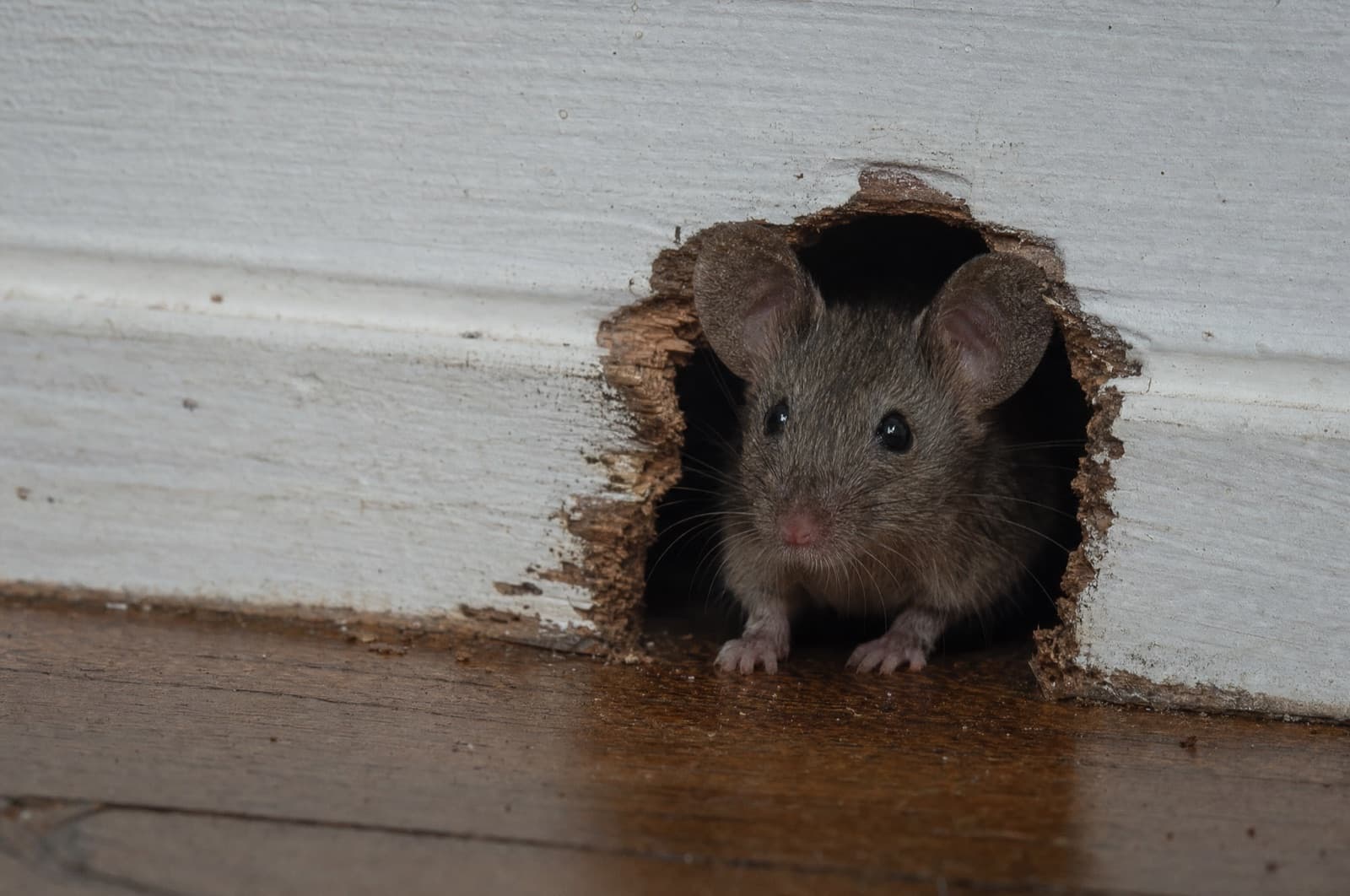
What Home Remedies Actually Work Against Mice?
At a Glance
- Short answer: Sealing, sanitation, and traps work. Scents, gadgets, and pets are supplements at best.
- Key fact: Sealing ¼-inch gaps is the single most effective, permanent mouse-control measure.
- NH relevance: NH's fall mouse pressure (ahead of the ~Oct 19–29 frost) rewards sealing over any scent or gadget.
- Action needed: Trap, remove food, and seal entry points — treat everything else as optional extras.
The short of it
Almost none of the popular "home remedy" mouse repellents work as standalone fixes. Peppermint oil, ammonia, mothballs, ultrasonic gadgets, cats, and dogs range from weakly situational to outright myth — and mothballs are a genuine safety hazard, not just an ineffective one. The remedies that actually work are the unglamorous, structural ones: sealing entry points, removing food and harborage, and trapping. Everything else on this page is, at best, a minor supplement.
What Home Remedies Actually Work Against Mice — By the Numbers
¼ in
Gap size that must be sealed to stop mouse reinvasion
1
Genuinely permanent fix among the popular remedies: exclusion
5+
Popular remedies graded low/myth here: peppermint, ammonia, mothballs, ultrasonic, cats/dogs alone
The honest efficacy verdict
Popular mouse home remedies (sealing/sanitation/traps vs. peppermint/ammonia/mothballs/ultrasonic/pets)
LowStructural measures — sealing entry points, sanitation, and trapping — genuinely work; scent, gadget, and pet-based remedies range from weak/situational to outright myth, and mothballs are a distinct safety hazard rather than merely ineffective.
Evidence: University extension sources consistently identify exclusion as the most effective, permanent mouse-control measure; pest-industry myth-busting and FTC enforcement history document the weak-to-nonexistent evidence for scent and ultrasonic remedies; naphthalene mothballs are not EPA-labeled for rodent use and carry documented toxicity/poisoning risk.
- Sealing, sanitation, and trapping are combined — this is the one combination with strong evidence
- Scents/gadgets are used only as minor, temporary supplements alongside the structural fixes
- Any single "remedy" (scent, gadget, or pet) is used alone instead of sealing and trapping
- Entry points remain unsealed, since mice reinvade through any ¼-inch-plus gap
- Mothballs are used at all — a safety hazard regardless of intent
The full picture
What actually works
Exclusion — packing ¼-inch-plus gaps with steel or copper wool and caulk, screening vents, and sealing utility penetrations — is repeatedly identified as the single most effective and permanent measure, because it stops reinvasion rather than just reducing numbers temporarily. Snap traps set along walls where mice travel remove the mice already inside. Sanitation (sealed food containers, no pet food left out overnight) lowers how many mice a home can support, though it won't eliminate an established population on its own. These three, done together, are the actual protocol.
What mostly doesn't work
Peppermint and other essential oils fade within days and mice adapt to them if food and shelter remain. Ammonia mimics predator urine but the effect is brief, and effective concentrations are hazardous to sustain indoors. Ultrasonic and electromagnetic devices have drawn direct FTC scrutiny for unsupported effectiveness claims and are quickly ignored by rats and mice alike. Cats and dogs are genuine but situational supplements — see their dedicated pages — not solutions on their own.
The one that's more than just ineffective
Mothballs deserve a separate, stronger warning. Naphthalene is not EPA-labeled or intended as a rodent repellent, and using mothballs against mice is a genuine safety hazard — not just a weak remedy. They release toxic vapors indoors and pose a real poisoning risk to children and pets. Never use mothballs against rodents; if ingestion is suspected, contact the Northern New England Poison Center at 1-800-222-1222.
The honest home protocol
Trap aggressively at wall-hugging travel routes, remove accessible food and water, and seal every ¼-inch-plus gap at the same time. If mouse activity persists past a few weeks of consistent effort, or you're dealing with wall/attic nesting, it's time to call a professional. Anchor Pest Services builds full exclusion-and-trapping programs for NH homes.
Bottom line — The remedies that work are structural: sealing entry points, sanitation, and trapping. Peppermint, ammonia, and ultrasonic devices are weak supplements at best; mothballs are a genuine safety hazard and should never be used. Everything on this list except the structural three is optional — the structural three are not.
Tried the remedies? Still seeing mice?
Anchor's licensed NH technicians handle exclusion and trapping across southern and central New Hampshire — the fix that actually works.
Why this matters in New Hampshire
New Hampshire mice press hardest to get indoors in the weeks around Manchester's first hard frost (~Oct 19 at 50% probability, Oct 29 at 80%, NOAA 1991–2020), when outdoor food and cover disappear. That seasonal urgency is exactly why fall is the highest-leverage time to seal entry points rather than experiment with scents or gadgets that a motivated, cold mouse will simply route around.
Key local data
NH DHHS: no confirmed hantavirus case acquired in New Hampshire to date; the deer mouse (Peromyscus) is the regional reservoir species.
- NH-licensed applicator · #782664
- Same-day service
- Family-owned since 2017
Service Area Map
Southern New Hampshire
Frequently asked
Sources (7)
- [1]
- [2]
- [3]
- [4]UC IPM — House Mouse(2024)
- [5]
- [6]
- [7]
Written & reviewed by
VerifiedDaniel Brady
NH-Licensed Pesticide Applicator · License #782664 (NHDAMF, RSA 430)
Daniel Brady is the New Hampshire–licensed applicator behind Anchor Pest Services, a family-owned pest control company serving the Manchester area since 2017.
Professional Rodent Control
Skip the Myths. Get the Structural Fix.
Scents, gadgets, and pets are supplements — not solutions. Anchor Pest Services seals real entry points and traps the mice already inside. Family-owned since 2017, NH license #782664.
- Same-day service across southern NH
- NH-licensed applicators (#782664)
- Free inspection — no flat-price guesswork
NH License #782664 · No obligation · We answer in person
Your next step
- Book a NH pro
Rodent Control
Book now - Next step
Where Do Mice Go in the Winter? NH Mouse Timing Guide
Read the answer - Related guide
Do Dogs Keep Rats Away?
Read the answer - Related guide
Do Cats Really Help Get Rid of Mice?
Read the answer - Related guide
Do Peppermint Oil or Natural Repellents Keep Rats Away?
Read the answer - Related guide
What Smells Repel Rats Naturally?
Read the answer