
Do Exterminators Get Rid of Mice Permanently?
At a Glance
- Short answer: No single treatment is permanent — elimination plus exclusion plus maintenance is what lasts.
- Key fact: Extension research confirms rodents reinvade through unsealed openings after control programs.
- NH relevance: NH's fall shelter-seeking mice test the same gaps every year, so a treated home stays permanently susceptible without upkeep.
- Action needed: Ask any provider what exclusion work and follow-up monitoring are included — not just what's sprayed or trapped.
The short of it
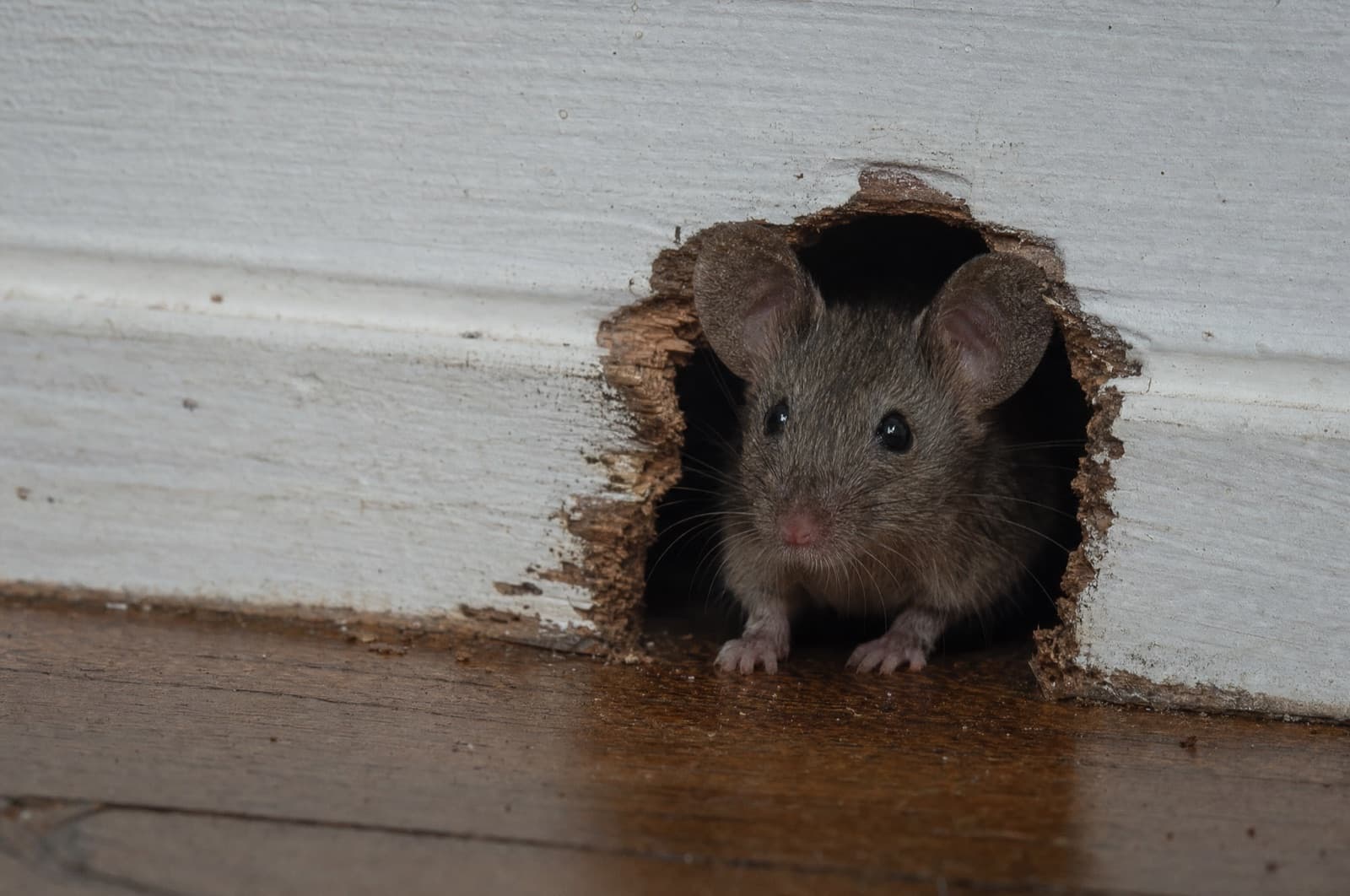
University of Nebraska Extension's rodent-proofing guidance is direct: rodent-proofing "will not guarantee rodent-free buildings," because mice can gnaw new entrances or be carried in inside a box or appliance. What a licensed exterminator can honestly deliver isn't a lifetime guarantee — it's elimination of the current population, exclusion of the entry points that let them in, and ongoing maintenance that keeps new mice from replacing them. That combination gets close to permanent, but a home stays permanently susceptible, not permanently immune.
Do Exterminators Get Rid of Mice Permanently — By the Numbers
3 steps
Eliminate, exclude, maintain — the real formula for lasting control
¼ in+
Gap size mice reuse to reinvade a treated home
Ongoing
Inspection needed to keep a treated home mouse-free
New
Entry points mice gnaw or hitchhike in on after treatment
The full picture
What "permanently" gets wrong
University of Nebraska Extension's rodent-proofing guidance says outright that effective rodent-proofing "will help stop the control-reinfestation cycle, but property owners must understand that rodent-proofing will not guarantee rodent-free buildings. Rodents may gnaw new entrances or even be carried into a structure in a box or appliance." It also cites research showing rodents reinvade through unsecured openings following control programs. Utah State University Extension adds the companion point: killing rodents without removing the conditions that let them thrive just results in outside rodents moving in to replace the dead ones. Neither source supports a "permanent" claim — both point toward durable, maintained control instead.
What a professional treatment actually delivers
A responsible program has three real components. First, elimination: trapping (and, where appropriate, label-directed baiting) to remove the mice currently inside. Second, exclusion: sealing the ¼-inch-plus gaps mice use to enter, with gnaw-resistant materials rather than foam or caulk alone — the CDC and extension sources agree this is the single highest-leverage long-term measure. Third, maintenance: periodic inspection and monitoring, because the conditions that let mice in change over time. Deliver all three and a home stays effectively mouse-free for a long stretch — that's the realistic, evidence-backed version of "permanently."
Why mice come back even after good work
New gaps open as a house ages, settles, or gets renovated. Mice gnaw fresh entrances at soft points like sill plates and trim. They can also be carried in — inside a delivered package, a piece of furniture, or a bag of birdseed. None of that reflects a failed treatment; it reflects that exclusion is a maintained state, not a permanent one. That's why reputable providers build in re-inspection rather than treat the first visit as the finish line.
Bottom line — No treatment makes a home permanently mouse-proof — extension research is explicit that rodents reinvade unsealed openings. What lasts is elimination of the current population, exclusion of the gaps that let them in, and ongoing maintenance. Judge a provider on that combination, not on the word "permanent."
Want control that actually lasts?
Anchor builds every mouse job around elimination, exclusion, and follow-up monitoring — not a single spray-and-hope visit.
Why this matters in New Hampshire
Every fall, as Manchester's first hard frost approaches (~Oct 19 at 50% probability, ~Oct 29 at 80%, NOAA 1991–2020), outdoor mice test every gap in a home's envelope looking for winter shelter. A seal that held all summer gets pressure-tested again each year, which is exactly why NH homes benefit from a fall re-inspection rather than a one-and-done treatment.
Key local data
Deer mice (Peromyscus) are the hantavirus-relevant species in NH; NH DHHS reports no confirmed case acquired in-state to date.
- NH-licensed applicator · #782664
- Same-day service
- Family-owned since 2017
Service Area Map
Southern New Hampshire
Frequently asked
Written & reviewed by
VerifiedDaniel Brady
NH-Licensed Pesticide Applicator · License #782664 (NHDAMF, RSA 430)
Daniel Brady is the New Hampshire–licensed applicator behind Anchor Pest Services, a family-owned pest control company serving the Manchester area since 2017.
Professional Rodent Control
"Permanent" Is a Maintenance Plan, Not a Promise
Anchor Pest Services eliminates the mice you have now, seals the gaps that let them in, and checks back so new activity gets caught early. Family-owned since 2017, NH license #782664.
- Same-day service across southern NH
- NH-licensed applicators (#782664)
- Free inspection — no flat-price guesswork
NH License #782664 · No obligation · We answer in person
Your next step
- Book a NH pro
Rodent Control
Book now - Next step
Do rodents nest in walls during autumn?
Read the answer - Related guide
How Do Professionals Remove Rat Infestations?
Read the answer - Related guide
Can I Handle a Large Mouse Infestation on My Own?
Read the answer - Related guide
Can Mice Infestations Return After Treatment?
Read the answer - Related guide
Do Rats Come Back After Being Removed?
Read the answer