
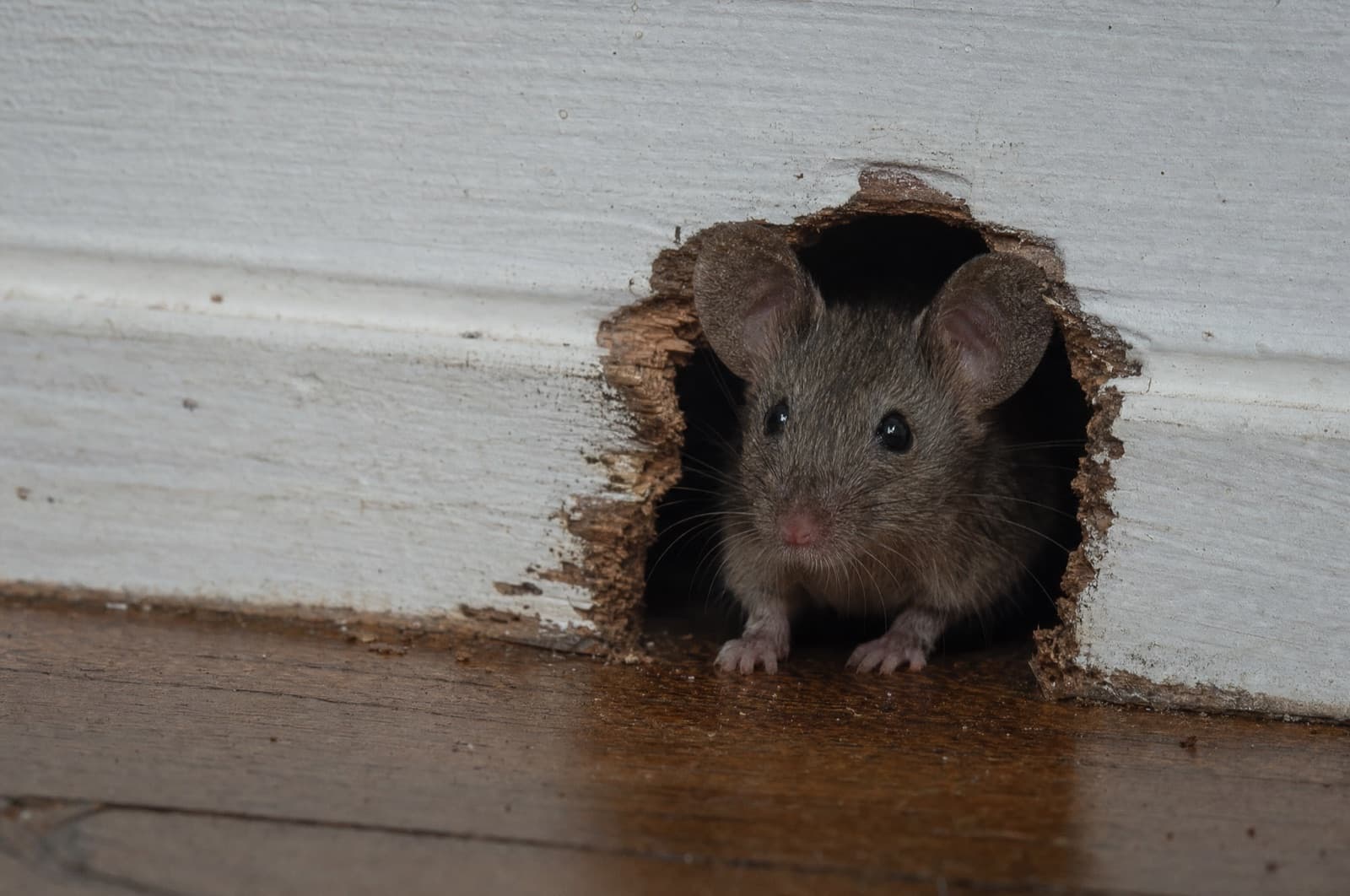
Can Mice Infestations Return After Treatment?
At a Glance
- Short answer: Yes — recurrence is the default unless treatment includes sealing and sanitation.
- Key fact: A ¼-inch gap is all a mouse needs to undo a treatment that skipped exclusion.
- NH relevance: Homes with a prior NH infestation remain higher-risk for renewed entry each fall.
- Action needed: Insist exclusion and sanitation are part of any treatment plan, not a follow-up option.
The short of it
Recurrence is the default outcome when treatment stops at trapping or baiting. University of Nebraska Extension research confirms rodents reinvade through openings left unsealed after a control program, and both UC IPM and Illinois public-health guidance note that even excellent sanitation won't eliminate mice on its own, because they persist on very little food and shelter. Since a mouse needs only about a ¼-inch gap to enter, an unsealed home is effectively still open for business. Treat sealing and sanitation as part of the treatment itself, not a separate upsell that comes after — that framing is the difference between a fix and a recurring cost.
Can Mice Infestations Return After Treatment — By the Numbers
¼ inch
Gap size that reopens a treated home to mice
Reinvades
Documented outcome of unsealed openings after control programs
Higher-risk
Status of previously infested homes without exclusion done
2 parts
Exclusion + sanitation — both required, not optional
The full picture
What trapping and baiting actually fix — and don't
Trapping or baiting removes the current population, which is a real and necessary step. But it does nothing about the gaps and openings that let mice in to begin with, so the structural vulnerability survives the treatment untouched. University of Nebraska Extension research states plainly that rodents reinvade through openings left unsealed after control efforts.
Why sanitation alone isn't the fix either
UC IPM and Illinois public-health guidance both note that mice persist on very little food and shelter, so even a genuinely clean home doesn't eliminate an established or returning population on its own. Sanitation reduces how many mice a home can support, which matters, but it's a suppressant working alongside exclusion — not a substitute for it.
The ¼-inch reality
Since a mouse only needs a gap of about ¼ inch to enter, the list of vulnerable spots in a typical home is longer than most homeowners expect: foundation cracks, utility and pipe penetrations, gaps around door sweeps, and vents. An unsealed home after treatment is, functionally, still available to any mouse in the neighborhood.
Bottom line — Prevent return by treating exclusion and sanitation as part of the treatment, not as a follow-up sold separately. Seal every gap larger than ¼ inch, keep food in sealed containers, and maintain monitoring — especially in a home with a prior infestation.
Treated before and mice still came back?
That usually means exclusion was skipped. Anchor pairs trapping with sealing every ¼-inch gap, so treatment actually holds.
Why this matters in New Hampshire
A New Hampshire home that had mice once tends to stay attractive to mice again, especially as Manchester's first hard frost approaches — about October 19 at 50% probability, October 29 at 80% (NOAA 1991–2020) — and outdoor mice look for the easiest indoor option. If last season's entry points were never sealed, this season's mice will likely use the same ones.
Key local data
NH DHHS: no confirmed hantavirus case acquired in New Hampshire to date; the deer mouse (Peromyscus) is the regional reservoir species.
- NH-licensed applicator · #782664
- Same-day service
- Family-owned since 2017
Service Area Map
Southern New Hampshire
Frequently asked
Sources (4)
- [1]
- [2]
- [3]
- [4]
Written & reviewed by
VerifiedDaniel Brady
NH-Licensed Pesticide Applicator · License #782664 (NHDAMF, RSA 430)
Daniel Brady is the New Hampshire–licensed applicator behind Anchor Pest Services, a family-owned pest control company serving the Manchester area since 2017.
Professional Rodent Control
Treatment That Includes the Sealing Work
A treatment that only traps mice is half a plan. Anchor Pest Services seals entry points and addresses sanitation as part of every program — not a separate upsell. Family-owned since 2017, NH license #782664.
- Same-day service across southern NH
- NH-licensed applicators (#782664)
- Free inspection — no flat-price guesswork
NH License #782664 · No obligation · We answer in person
Your next step
- Book a NH pro
Rodent Control
Book now - Next step
How can I tell if I have rodents in my walls during winter?
Read the answer - Related guide
Do Mice Ever Leave on Their Own?
Read the answer - Related guide
Do Exterminators Get Rid of Mice Permanently?
Read the answer - Related guide
What Steps Prevent Mice From Entering a Home?
Read the answer - Also relevant
What do I do if fall invaders return after treatment?
Read the answer