
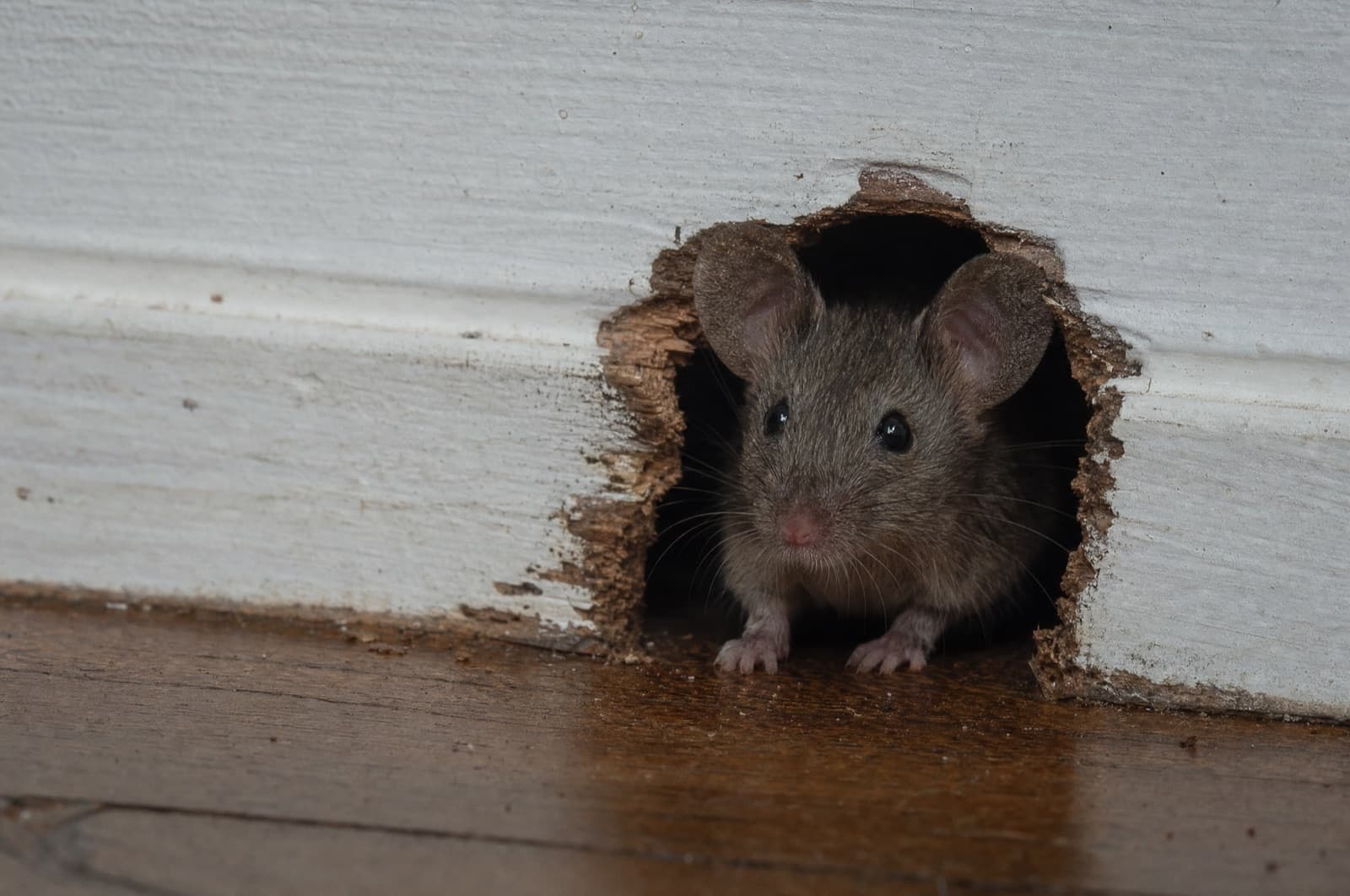
Can I Handle a Large Mouse Infestation on My Own?
At a Glance
- Short answer: DIY-viable for light, single-room activity; escalate for multi-room spread, daytime sightings, or wall-void nesting.
- Key fact: UC IPM calls trapping "the preferred method" where only a few house mice are present.
- NH relevance: A "large" NH infestation often reflects a fall influx that bred through winter behind walls before being noticed.
- Action needed: Try DIY for light, contained activity; escalate at any multi-room, daytime, or wall-void signal, or after ~2 weeks without improvement.
The short of it
UC IPM is encouraging about DIY for limited problems: trapping is "the preferred method in homes, garages, and other structures where only a few house mice are present." A light, single-room mouse problem with an identifiable entry point is genuinely DIY-viable. The honest thresholds for escalating: multi-room activity, daytime sightings, suspected wall-void nesting, or no improvement after about two weeks of proper trapping and sealing.
Can I Handle a Large Mouse Infestation on My Own — By the Numbers
10–30 ft
Typical mouse range from nest — why single-room DIY works
~10 ft
UC IPM's recommended trap spacing in active areas
2 weeks
Reasonable DIY trial before reassessing
¼ in+
Entry gap size that must be sealed alongside trapping
The full picture
Where DIY genuinely works
UC IPM is direct about this: for most situations, trapping "works well and is a great first step in controlling house mice… the preferred method in homes, garages, and other structures where only a few house mice are present." Because mice keep to a small home range — normally 10 to 30 feet from the nest and food supply — a problem confined to one room or one wall is targetable. UC IPM's practical guidance: set enough snap traps tight against walls where droppings appear, spaced no more than about 10 feet apart, and seal the ¼-inch-plus entry gaps at the same time, or new mice simply replace the ones you catch.
Where the thresholds shift to escalation
Several signals mean DIY has reached its limit. Activity appearing in multiple rooms suggests several nests, not one contained problem. Daytime sightings indicate population pressure — mice are primarily nocturnal, so daylight activity is a stronger signal than a single night sighting. Suspected nesting inside wall voids or other inaccessible cavities you can't safely open limits how much a homeowner can actually treat. And if diligent trapping and sanitation haven't reduced activity after about two weeks, EPA-aligned IPM guidance flags large infestations and inaccessible-area activity as clear cases for professional intervention.
The health caveat for New Hampshire
Deer mice and white-footed mice, both present in the region, can carry hantavirus, and the CDC advises never sweeping or vacuuming droppings — heavy dropping accumulation from a genuinely large infestation is itself a reason to bring in professionals who can handle bulk cleanup and control together rather than repeated, piecemeal DIY cleanup.
Bottom line — DIY-viable: light, single-room activity with an identifiable entry point. Escalate: multi-room activity, daytime sightings, suspected wall-void nesting, heavy droppings, or no improvement after about two weeks of proper trapping and sealing.
Past the single-room stage?
Multi-room activity, daytime sightings, or wall-void nesting are Anchor's cue — licensed NH technicians take it from here.
Why this matters in New Hampshire
A "large" infestation in an NH home often reflects a fall influx — mice that entered ahead of Manchester's first hard frost (~Oct 19 at 50% probability, ~Oct 29 at 80%, NOAA 1991–2020) and bred undetected through winter behind walls. That's why a problem that looks sudden in February may actually be several months established, which is itself a reason to lean toward professional inspection rather than a fresh two-week DIY trial.
Key local data
NH DHHS: no confirmed hantavirus case acquired in New Hampshire to date; the deer mouse (Peromyscus) is the regional reservoir species.
- NH-licensed applicator · #782664
- Same-day service
- Family-owned since 2017
Service Area Map
Southern New Hampshire
Frequently asked
Sources (3)
- [1]
- [2]
- [3]
Written & reviewed by
VerifiedDaniel Brady
NH-Licensed Pesticide Applicator · License #782664 (NHDAMF, RSA 430)
Daniel Brady is the New Hampshire–licensed applicator behind Anchor Pest Services, a family-owned pest control company serving the Manchester area since 2017.
Professional Rodent Control
Know Your Threshold Before You Keep DIY-ing
Anchor Pest Services steps in when a mouse problem outgrows a homeowner's traps — multi-room spread, daytime activity, or nesting you can't reach. Family-owned since 2017, NH license #782664.
- Same-day service across southern NH
- NH-licensed applicators (#782664)
- Free inspection — no flat-price guesswork
NH License #782664 · No obligation · We answer in person
Your next step
- Book a NH pro
Rodent Control
Book now - Next step
Are rodents more likely to breed indoors during winter?
Read the answer - Related guide
What Are the Signs of a Mouse Infestation?
Read the answer - Related guide
Do Exterminators Get Rid of Mice Permanently?
Read the answer - Related guide
How Long Does It Take to Get Rid of a Mouse Problem?
Read the answer - Related guide
How Can I Get Rid of Mice in My House Fast?
Read the answer