
Do Peppermint Oil or Natural Repellents Keep Rats Away?
At a Glance
- Short answer: No — brief, localized avoidance at best; scent fades in days and rats habituate.
- Key fact: UC master gardeners state there are no truly effective rat repellents available.
- NH relevance: Peppermint won't stop a NH rat pressing indoors ahead of the Oct frost — sealed entry points will.
- Action needed: Use peppermint as a minor supplement only; rely on exclusion and trapping for actual control.
The short of it
Peppermint oil and similar essential oils can produce short-term, localized avoidance while the scent is fresh and strong, but that's the extent of it. The scent evaporates within days, rats habituate to it if food and shelter remain, and no research shows it eliminates or prevents an established infestation. University of California master gardeners state plainly that there are no truly effective rat repellents available — exclusion, not scent, is what actually keeps rats out.
Do Peppermint Oil or Natural Repellents Keep Rats Away — By the Numbers
Days
How long peppermint oil's deterrent scent lasts before fading
0
Plants scientifically proven to deter rats, per UC IPM
~½ in
Gap size a rat can enter through — scent doesn't seal it
The honest efficacy verdict
Peppermint oil / natural essential-oil repellents
LowPeppermint oil and similar essential oils cause only brief, localized avoidance; the scent evaporates within days and rats habituate to it as long as food and shelter remain — no evidence it eliminates or prevents an infestation.
Evidence: UC master gardeners (via UCANR) state there are "no truly effective rat repellents available in California"; UC IPM's Dr. Niamh Quinn adds that no plants have been proven to deter rats and that predator-scent products like coyote urine also fail to repel them.
- As a short-term, localized nuisance near a specific gap while permanent sealing is arranged
- Reapplied constantly, since the scent fades within days
- Used as a standalone strategy instead of exclusion and trapping
- Food, water, or shelter remain available, since rats simply habituate and route around the smell
- Applied outdoors or in drafty/ventilated spaces, where the scent dissipates fastest
The full picture
What the evidence actually shows
Pest-industry myth-busting and extension-aligned guidance agree that peppermint oil's strong scent may briefly irritate rats or mask other odors, but it evaporates quickly, requires constant reapplication, and is rapidly ignored once rats habituate to it. Critically, it does nothing about the food, water, and entry points that actually drive an infestation. UC master gardeners go further, stating flatly that "there are no truly effective rat repellents available in California," noting even chili powder — another popular DIY repellent — only works for a short time before rats route around it. UC IPM's rodent specialist Dr. Niamh Quinn reinforces this: no plants have been proven to deter rats from an area, high-frequency sounds are ineffective, and even predator-scent products like coyote urine don't repel rats.
Why a fading scent can't compete with shelter and food
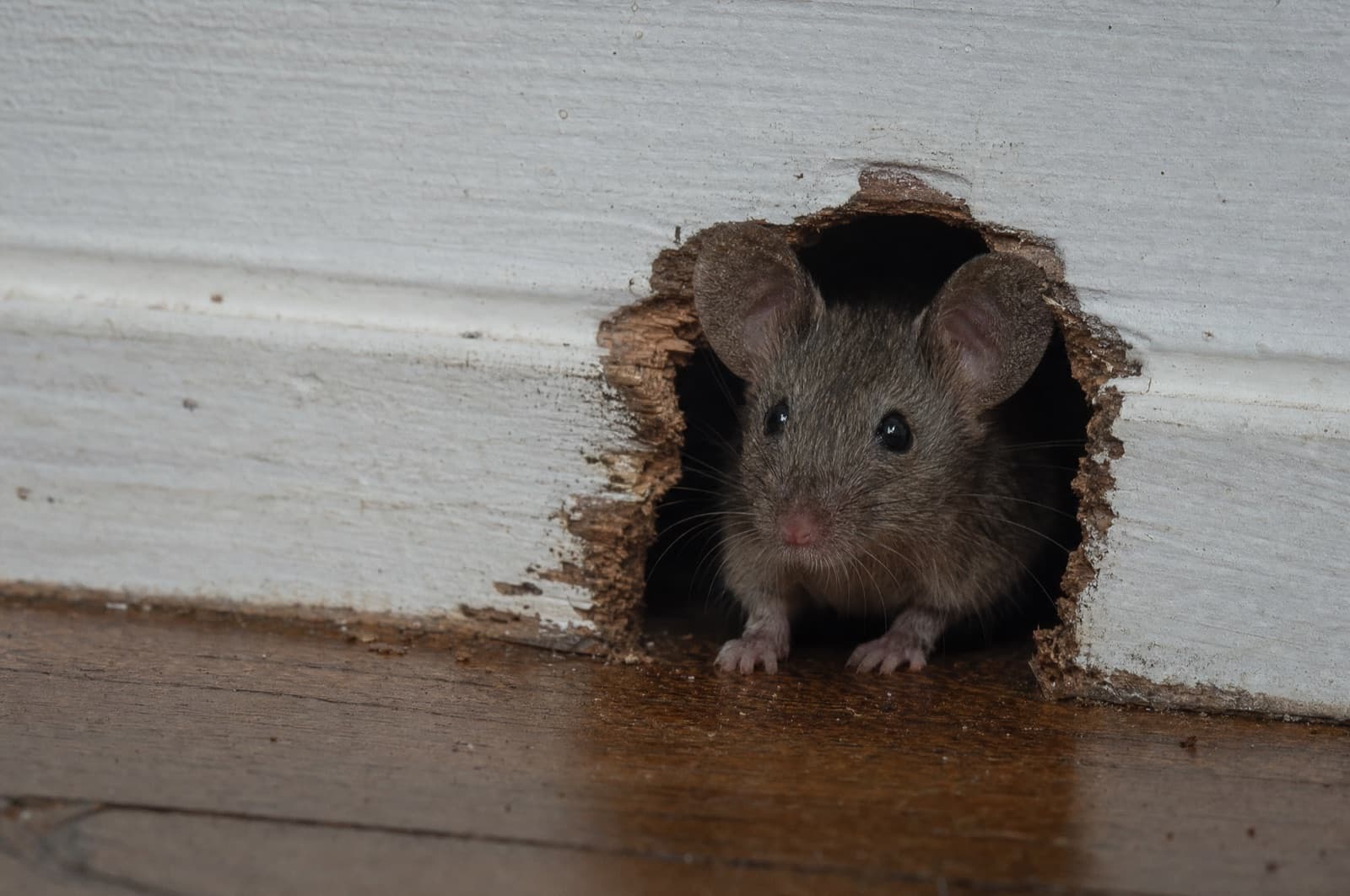
Rats reinvade through any unsealed opening, university extension research shows — so a scent that fades within days stands no chance against a warm, food-rich structure a rat can access at will. Once the peppermint smell weakens, and it does quickly in open air or drafty spaces, there's no barrier left. This is the core reason scent-based repellents fail as standalone solutions: they don't change the underlying conditions (food, water, harborage, entry points) that make a home attractive to rats in the first place.
Where peppermint oil actually fits
As a minor supplement — say, a temporary deterrent near a known gap while you arrange permanent sealing — peppermint oil is harmless and might buy a few days of reduced activity in that specific spot. It should never be presented, sold, or relied on as a standalone rat-control method. The dependable defense against rats is the same regardless of what scent you add: seal entry points larger than about ½ inch, remove food and water access, and trap the rats already inside.
Bottom line — Peppermint oil produces brief, localized avoidance at best — it fades within days and rats habituate to it if food and shelter remain. No credible source treats it as a standalone rat control method. Use it as a minor, temporary supplement only; exclusion and trapping are what actually work.
Peppermint not cutting it?
If rats are still active, scent alone won't fix it. Anchor's licensed NH technicians handle exclusion and trapping across southern and central New Hampshire.
Why this matters in New Hampshire
As Manchester's first hard frost approaches (~Oct 19–29), NH rats are under real pressure to find warmth indoors — and a fading peppermint scent is a poor match for that motivation. A rat that needs shelter for a New Hampshire winter will simply wait out a few days of unpleasant smell, or find the next unsealed gap. Fall is exactly when permanent exclusion — not scent — pays off most.
Key local data
Norway rats are established across New Hampshire's cities and towns (UNH Cooperative Extension); roof rats are essentially absent from the Northeast (Cornell).
- NH-licensed applicator · #782664
- Same-day service
- Family-owned since 2017
Service Area Map
Southern New Hampshire
Frequently asked
Written & reviewed by
VerifiedDaniel Brady
NH-Licensed Pesticide Applicator · License #782664 (NHDAMF, RSA 430)
Daniel Brady is the New Hampshire–licensed applicator behind Anchor Pest Services, a family-owned pest control company serving the Manchester area since 2017.
Professional Rodent Control
When the Scent Fades, Rats Come Back — Sealing Doesn't
Peppermint oil buys you a few days at best. Anchor Pest Services finds and seals the entry points that actually keep rats out, then traps the population already inside. Family-owned since 2017, NH license #782664.
- Same-day service across southern NH
- NH-licensed applicators (#782664)
- Free inspection — no flat-price guesswork
NH License #782664 · No obligation · We answer in person
Your next step
- Book a NH pro
Rodent Control in New Hampshire
Mice and rats move indoors every fall. We trap, seal entry points and keep them out.
Book now - Next step
Do rodents count as fall invaders too?
Read the answer - What to do next
Natural & Organic Rodent Control: What Actually Works in NH
Read the answer - Related guide
What Smells Repel Rats Naturally?
Read the answer - Related guide
What Smell Drives Mice Away?
Read the answer - Related guide
What Home Remedies Actually Work Against Mice?
Read the answer