
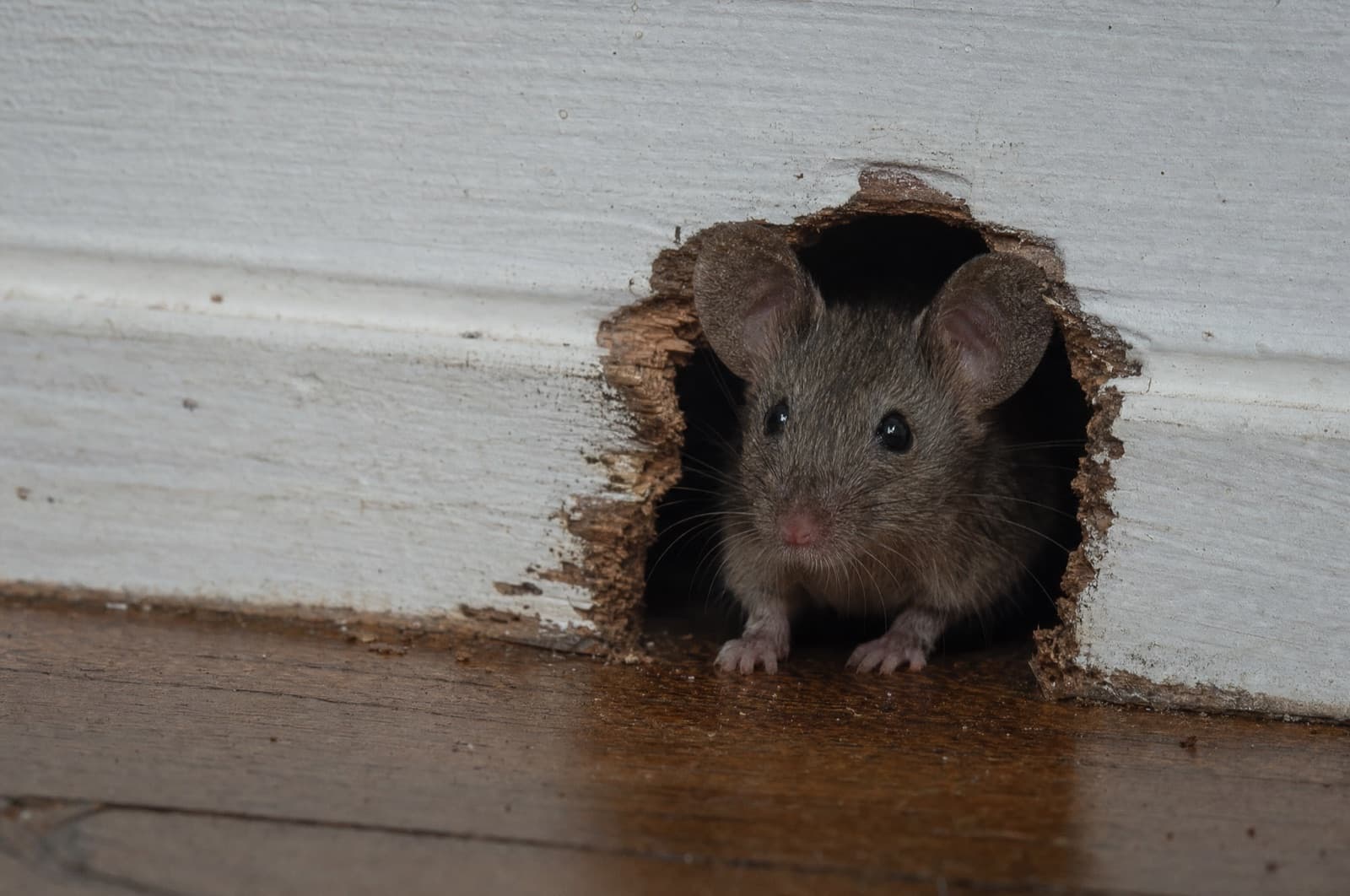
What Smells Repel Rats Naturally?
At a Glance
- Short answer: No — every popular "repellent smell" is weak, short-lived, or unsafe.
- Key fact: UC master gardeners: "there are no truly effective rat repellents available."
- NH relevance: None of these scents seal the ~½-inch gaps NH rats use to get indoors before winter.
- Action needed: Skip the scents; seal entry points and trap. Never use mothballs against rodents.
The short of it
There is no scent that reliably repels rats, and homeowners are better served by an honest, smell-by-smell grading than a blanket "natural repellents work" claim. Peppermint and other essential oils cause brief, localized avoidance that fades within days. Ammonia mimics predator urine and may deter briefly, but the effect is short-lived and the fumes are a health hazard to sustain indoors. Mothballs are the worst offender: naphthalene is not labeled or intended as a rodent repellent, and using it against wildlife is both illegal misuse and a genuine poisoning risk. University of California master gardeners put it plainly: there are no truly effective rat repellents.
What Smells Repel Rats Naturally — By the Numbers
0
Scents proven to reliably repel rats, per UC master gardeners
Hours
Typical duration of ammonia's predator-scent deterrent effect
Illegal
Status of using mothballs outdoors or against wildlife per EPA/label law
The honest efficacy verdict
Natural/scent-based rat repellents (peppermint, ammonia, mothballs)
LowNo scent reliably repels rats: peppermint and ammonia offer brief, fading avoidance at best, and mothballs are not a legitimate repellent — they're a genuine safety hazard and should never be used against rodents.
Evidence: UC master gardeners state there are no truly effective rat repellents available; UC IPM's Dr. Niamh Quinn confirms no plants or predator-scent products (including coyote urine) reliably deter rats; naphthalene mothballs are not EPA-labeled for rodent repellent use and outdoor/wildlife use is illegal misuse.
- Peppermint/ammonia: brief, localized deterrence in a specific spot while permanent sealing is arranged
- Never for mothballs — there is no legitimate use case against rodents in or around an occupied home
- Used as a standalone strategy instead of exclusion and trapping
- Food, water, or shelter remain accessible, since rats habituate to any of these scents
- Mothballs are used at all against rodents — this is unsafe and illegal misuse, not a graded-low option
The full picture
Peppermint and essential oils — low
Peppermint and similar essential oils create at most a brief, localized nuisance before evaporating and being ignored. Rats tolerate the scent while food and shelter remain available, and there is no evidence it eliminates or prevents an infestation. Useful only as a minor, temporary supplement, never a standalone fix.
Ammonia (predator-urine mimic) — low/situational
Ammonia is sold on the theory that it mimics predator urine and triggers avoidance behavior. That effect, where it exists, is short-lived — rats habituate — and sustaining an effective concentration indoors means air quality bad enough to bother your own household. UC IPM's rodent specialist Dr. Niamh Quinn adds that human or coyote urine and scent products generally do not repel rats either.
Mothballs (naphthalene) — myth and safety hazard
Mothballs are the category's worst offender, and the distinction matters: this isn't just an ineffective repellent, it's a genuine health risk. Naphthalene is not EPA-labeled or intended as a rodent repellent, and using mothballs outdoors or against wildlife is illegal pesticide misuse. They also pose a real poisoning risk to children and pets, since they can resemble candy, and release toxic vapors when used in occupied or enclosed spaces. Do not use mothballs against rats. If a child or pet may have ingested one, contact the Northern New England Poison Center at 1-800-222-1222 immediately.
The bottom line, per UC master gardeners
UC master gardeners summarize the entire category bluntly: "there are no truly effective rat repellents available in California" — and that finding generalizes, since the underlying biology (habituation, scent fading, rats prioritizing food and shelter) isn't unique to one region. Exclusion and trapping remain the only dependable defense.
Bottom line — No smell reliably repels rats. Peppermint and ammonia are weak and short-lived; mothballs are an outright safety hazard, not just ineffective, and should never be used against rodents. Put your effort into sealing entry points and trapping instead.
No smell is sealing your rat problem out.
Anchor's licensed NH technicians find and seal the real entry points, then trap the rats already inside — across southern and central New Hampshire.
Why this matters in New Hampshire
As Manchester's first hard frost approaches (~Oct 19–29), rats pressing indoors for winter shelter are motivated enough that a fading scent barrier won't stop them. NH homeowners are better served spending fall prep time sealing foundation gaps and utility penetrations than shopping for scent-based repellents — and mothballs should never be part of that plan given the vapor and poisoning risk in an occupied home.
Key local data
UNH Cooperative Extension: Norway rats are commonly found in New Hampshire's urban and town settings.
- NH-licensed applicator · #782664
- Same-day service
- Family-owned since 2017
Service Area Map
Southern New Hampshire
Frequently asked
Sources (5)
- [1]
- [2]
- [3]
- [4]
- [5]
Written & reviewed by
VerifiedDaniel Brady
NH-Licensed Pesticide Applicator · License #782664 (NHDAMF, RSA 430)
Daniel Brady is the New Hampshire–licensed applicator behind Anchor Pest Services, a family-owned pest control company serving the Manchester area since 2017.
Professional Rodent Control
Skip the Scents. Seal the Gaps.
Peppermint, ammonia, and mothballs all fail as standalone rat control — and mothballs are a safety hazard, not just ineffective. Anchor Pest Services seals real entry points and traps rats already inside. Family-owned since 2017, NH license #782664.
- Same-day service across southern NH
- NH-licensed applicators (#782664)
- Free inspection — no flat-price guesswork
NH License #782664 · No obligation · We answer in person
Your next step
- Book a NH pro
Rodent Control
Book now - Next step
Rodent Mites After Mice or Rats Are Removed
Read the answer - Related guide
Do Peppermint Oil or Natural Repellents Keep Rats Away?
Read the answer - Related guide
What Smell Drives Mice Away?
Read the answer - Related guide
What Home Remedies Actually Work Against Mice?
Read the answer - Related guide
Do Dogs Keep Rats Away?
Read the answer