
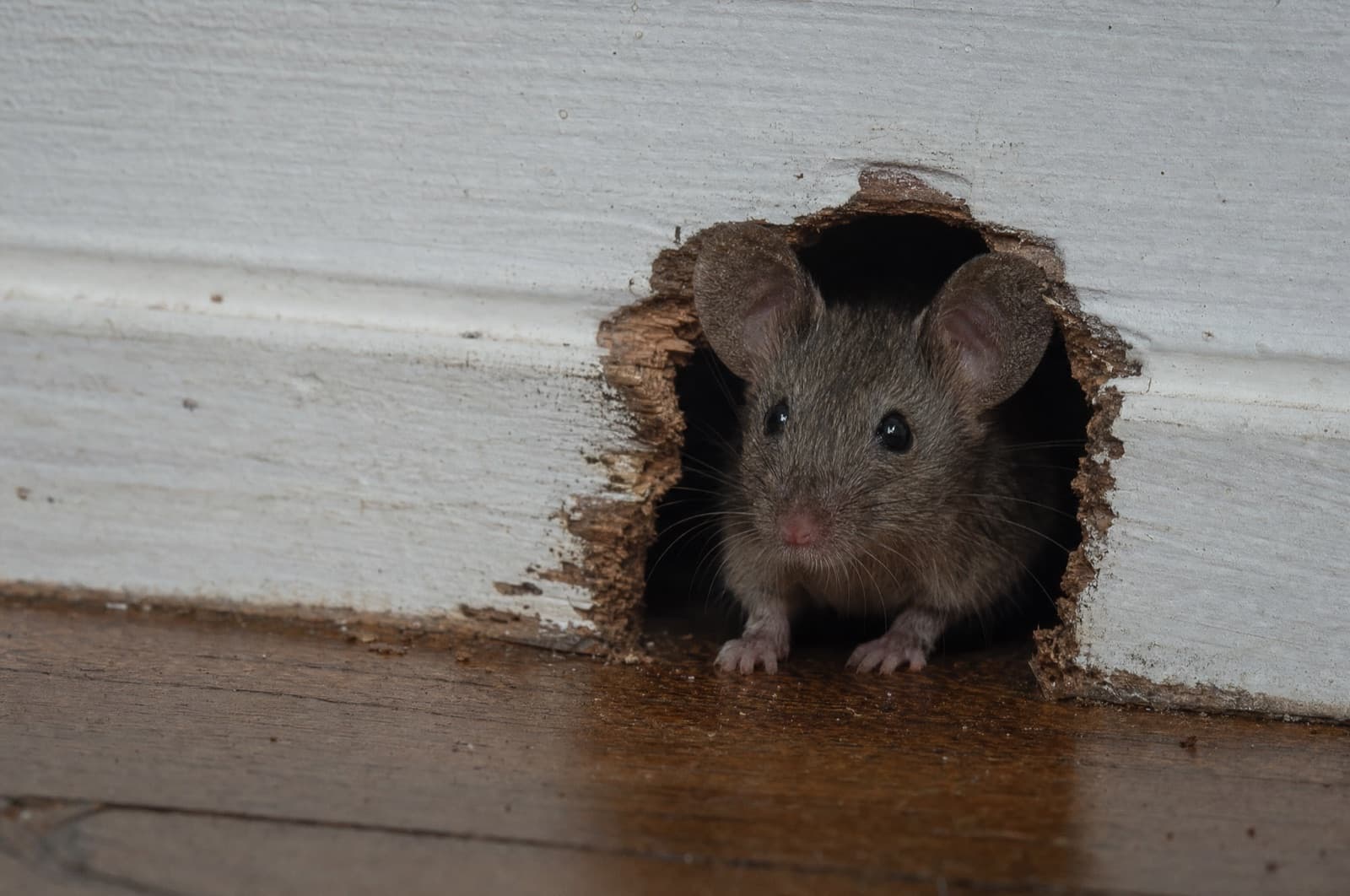
How Can I Get Rid of Mice in My House Fast?
At a Glance
- Short answer: First catches within days; full resolution in 1–2 weeks (small) to several weeks (larger).
- Key fact: Mice breed roughly every three weeks — 'fast and permanent' without sealing is a contradiction.
- NH relevance: Fall entry pressure in NH means unsealed homes keep refilling even after a fast initial knockdown.
- Action needed: Trap, remove food, and seal ¼-inch gaps simultaneously — not in sequence — for the fastest durable result.
The short of it
You can see real progress quickly: properly placed snap traps along walls often catch the first mice within days. But 'fast and complete' is a contradiction if entry points stay open, because mice breed roughly every three weeks and the University of Nebraska Extension confirms rodents reinvade through any unsealed opening. Anything promising instant, permanent results without exclusion is overselling what's realistically possible. The genuinely fastest durable route is trapping aggressively, removing food, and sealing every ¼-inch gap at the same time, rather than sequencing them.
How Can I Get Rid of Mice in My House Fast — By the Numbers
Days
Typical time to first catches with well-placed snap traps
19–21 days
Mouse gestation period — the reproductive clock working against you
1–2 wks
Realistic resolution time for a small, early mouse problem
¼ in
Smallest gap that must be sealed for a fast fix to hold
How long it actually takes
Here's the honest, staged version of 'fast' — what actually happens week by week when you trap, remove food, and seal at the same time.
Days 1–5
Snap traps placed flush against walls near droppings and gnaw marks typically produce the first catches.
Expect: You'll see real progress fast — but this is the population thinning out, not full elimination.
Week 1–2
Continued trapping plus food removal and initial gap-sealing knock the visible population down substantially for a light, early infestation.
Expect: Small problems can be effectively resolved in this window if sealing keeps pace with trapping.
Week 3–6
Larger populations, or homes with unsealed entry points, keep producing new mice as the roughly three-week breeding cycle continues.
Expect: Moderate infestations typically need this full window, especially where wall or attic access complicates trapping.
Ongoing
Monitoring after activity appears to stop, confirming no new droppings or catches.
Expect: Skipping this step is how homeowners mistake a lull for 'done' and get surprised weeks later.
- Unsealed ¼-inch-or-larger entry points that let new mice replace trapped ones
- Ongoing food access (open pet food, spilled birdseed, unsecured pantry items)
- Wall or attic nesting that limits trap placement and visibility
- Multi-unit or connected-structure spread from neighboring units
Bottom line — Fast first catches are realistic; fast total elimination isn't, unless sealing and food removal happen at the same time as trapping. Treat any single-visit 'guaranteed overnight' promise with skepticism.
The full picture
What's genuinely fast: first catches
Snap traps set correctly — flush against walls, along the routes mice actually travel, baited with peanut butter rather than cheese — commonly produce catches within the first few days. This is real progress and worth doing immediately, but it's the leading edge of the problem, not the whole thing.
What isn't fast: breaking the breeding cycle
House mice have a gestation period of just 19–21 days, and a female can conceive again within roughly 24 hours of giving birth, producing 5–10 litters a year indoors. That means an active population keeps producing new mice on a rolling basis until you outpace reproduction with trapping and cut off the conditions that let it continue — which takes longer than a single weekend of trap-setting for anything beyond a light, early problem.
Why unsealed entry points reset the clock
The University of Nebraska Extension confirms rodents reinvade through openings left unsealed after control efforts. A genuinely fast knockdown of the current population does nothing to stop new mice from entering through the same ¼-inch gaps that let the first ones in — so 'fast' without exclusion is temporary by definition, not a real fix.
The fastest route that actually holds
Do all three at once rather than in sequence: set traps immediately, remove food access (secure the pantry, store pet food and birdseed in sealed containers), and seal ¼-inch-or-larger gaps the same week. Doing these in parallel, rather than trapping first and sealing 'eventually,' is what compresses the honest timeline as much as physically possible. For larger or wall/attic-nesting populations, a professional can run all three simultaneously with equipment and access most homeowners don't have.
Bottom line — First catches come fast; full, lasting resolution doesn't happen overnight, especially without sealing entry points. Run trapping, food removal, and exclusion in parallel for the fastest result that actually sticks.
Want mice gone as fast as realistically possible?
Anchor runs trapping, food-source removal, and exclusion at the same time — the only way to compress the timeline honestly.
Why this matters in New Hampshire
Homeowners searching for a fast fix are often reacting to the fall push of mice into NH homes ahead of Manchester's first hard frost — about October 19 at 50% probability, October 29 at 80% (NOAA 1991–2020) — when outdoor pressure is highest and new mice keep testing unsealed gaps. Doing exclusion at the same time as trapping matters even more during that window, since a fast knockdown alone won't hold against continued fall entry pressure.
Key local data
NH DHHS: no confirmed hantavirus case acquired in New Hampshire to date; the deer mouse (Peromyscus) is the regional reservoir species.
- NH-licensed applicator · #782664
- Same-day service
- Family-owned since 2017
Service Area Map
Southern New Hampshire
Frequently asked
Written & reviewed by
VerifiedDaniel Brady
NH-Licensed Pesticide Applicator · License #782664 (NHDAMF, RSA 430)
Daniel Brady is the New Hampshire–licensed applicator behind Anchor Pest Services, a family-owned pest control company serving the Manchester area since 2017.
Professional Rodent Control
The Honest Fast Fix: All Three Steps at Once
Anchor Pest Services traps, secures food access, and seals entry points simultaneously — no overnight miracle claims, just a compressed, realistic timeline. Family-owned since 2017, NH license #782664.
- Same-day service across southern NH
- NH-licensed applicators (#782664)
- Free inspection — no flat-price guesswork
NH License #782664 · No obligation · We answer in person
Your next step
- Book a NH pro
Rodent Control in New Hampshire
Mice and rats move indoors every fall. We trap, seal entry points and keep them out.
Book now - Next step
Do rodents nest in walls during autumn?
Read the answer - What to do next
How to Get Rid of House Mice
Read the answer - Related guide
How Long Does It Take to Get Rid of a Mouse Problem?
Read the answer - Related guide
Do Mice Ever Leave on Their Own?
Read the answer - Related guide
Can Mice Infestations Return After Treatment?
Read the answer