
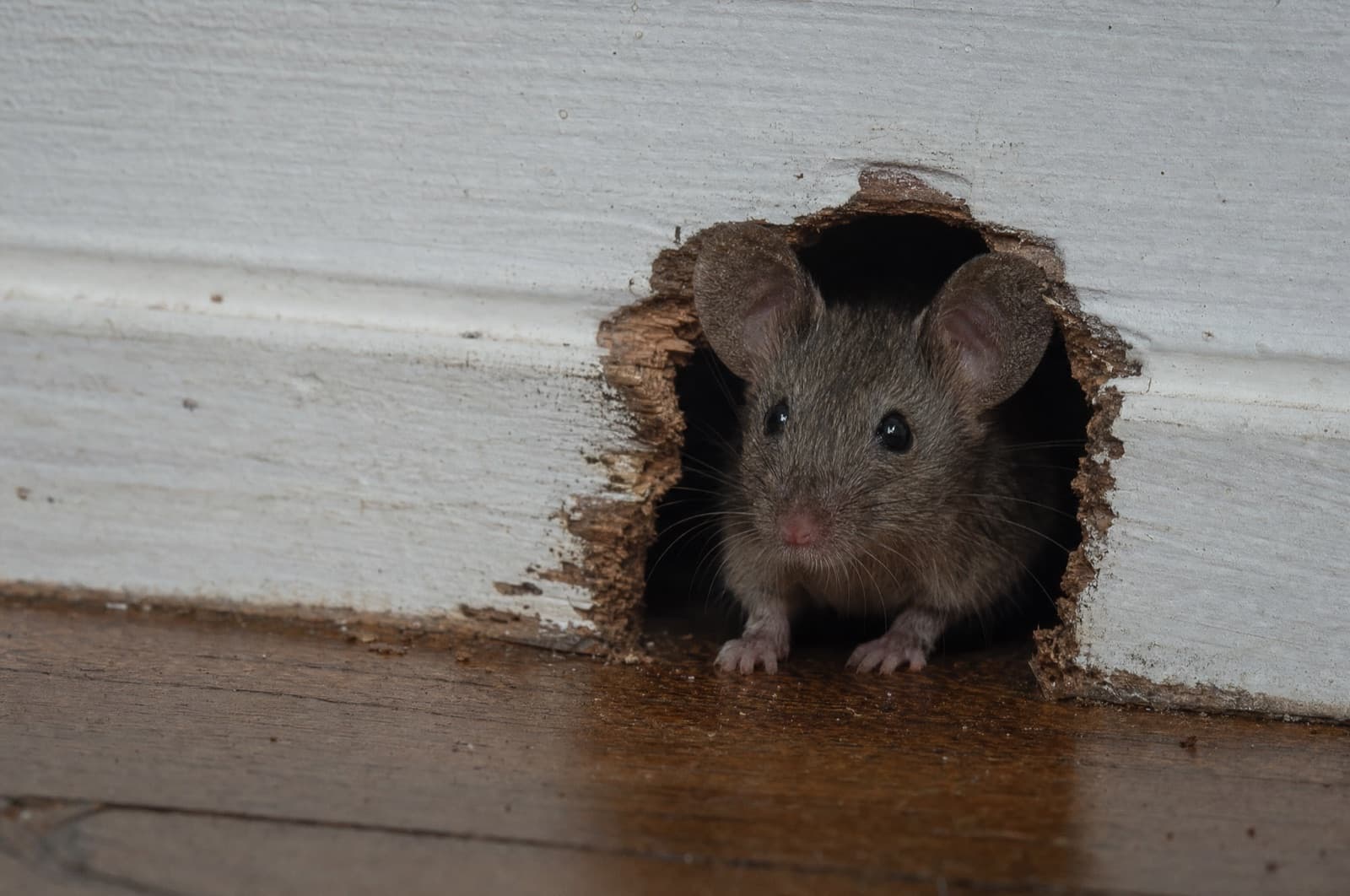
How Long Does It Take to Get Rid of a Mouse Problem?
At a Glance
- Short answer: Usually 1–2 weeks for small problems, 3–6 weeks for moderate ones, longer for wall/attic colonies.
- Key fact: Mouse gestation is only 19–21 days, so an unsealed home keeps producing new mice.
- NH relevance: Mice press to re-enter NH homes from October through March as outdoor temperatures drop.
- Action needed: Combine trapping with sealing ¼-inch gaps — trapping alone can't outpace unchecked breeding.
The short of it
Mouse removal is usually faster than rat removal, but it still isn't instant — and the reason is biological. A few mice caught early with well-placed snap traps can be resolved in 1–2 weeks; moderate infestations often take 3–6 weeks; colonies nesting in walls or attics can take longer. Because mouse gestation is only 19–21 days and a female can conceive again within 24 hours of giving birth, new pups keep appearing until the breeding cycle is broken and entry points are sealed — that's the variable that decides which end of the range you land on.
How Long Does It Take to Get Rid of a Mouse Problem — By the Numbers
1–2 weeks
Typical timeline for a small, early-caught mouse problem
3–6 weeks
Typical timeline for a moderate infestation
19–21 days
Mouse gestation period — the clock you're racing
¼ inch
Gap size that must be sealed to stop new mice replacing trapped ones
How long it actually takes
Because mice breed roughly every three weeks, a mouse-removal timeline is really a race between trapping and reproduction — here's what to realistically expect at each stage.
Days 1–7 (early trapping)
Snap traps set flush to walls and behind appliances where mice travel; first catches typically happen quickly since mice are less trap-shy than rats.
Expect: A small population (a handful of mice) can show real reduction within this first week.
Week 1–2 (small problems resolve)
Continued trapping alongside sealing ¼-inch entry points and removing food access.
Expect: Light, recently-started infestations often reach resolution by the end of this window.
Week 3–6 (moderate infestations)
Ongoing trapping addresses both the original mice and any pups born before entry points were sealed.
Expect: Most moderate household infestations land in this range — activity should be steadily declining, not flat.
Beyond 6 weeks (wall/attic colonies)
Larger populations nesting in wall voids or attics require sustained trapping and, often, professional access to hidden spaces.
Expect: If activity hasn't meaningfully dropped after about three weeks of consistent effort, hidden nests or unsealed entry points are the likely cause.
- Entry points left unsealed while trapping — new mice replace trapped ones
- Nesting inside wall voids or attics, out of reach of standard trap placement
- Continued food access (open pantry items, pet food, crumbs)
- Delayed action after the first sighting, which lets a litter mature before traps go out
- Fall-through-winter outside pressure pushing new mice toward entry points
Bottom line — Expect 1–2 weeks for a small, early-caught problem, 3–6 weeks for a moderate one, and longer for wall or attic colonies. Sealing ¼-inch gaps is what stops the breeding cycle from resetting your progress.
The full picture
The clock you're actually racing
With gestation of only 19–21 days and females able to conceive again within a day of giving birth, a mouse colony continuously produces new juveniles. That means control has to outpace reproduction, not just remove the mice you've directly seen — which is why 'a few days' is rarely realistic for anything beyond a very early, very small problem.
What a realistic case actually looks like
A handful of mice caught quickly with well-placed snap traps at walls can clear in a week or two. Larger populations nesting in walls or attics run several weeks and require more patience, since trap placement in those spaces is harder and juveniles born before entry points were sealed keep the population going a little longer.
Why sealing decides the range you land in
The single biggest variable is exclusion. Seal every ¼-inch gap or new mice from outside simply replace the ones you trap, keeping the count flat instead of falling. In New Hampshire, mice press to re-enter from October through March as temperatures drop, so a home left unsealed during that window fights a constant refill from outside on top of any indoor breeding.
Bottom line — Plan for inspection, then trapping, then sealing, then follow-up — not a single visit. Small problems can resolve in 1–2 weeks; moderate ones typically take 3–6; wall or attic colonies take longer, and exclusion is what keeps the timeline from resetting.
Still seeing mice after a week of traps?
Breeding and unsealed gaps are the usual reasons. Anchor's licensed NH technicians find the entry points and put you on a realistic timeline to zero.
Why this matters in New Hampshire
Outside pressure from mice trying to get in runs heaviest from October through March, ramping up around Manchester's first hard frost — about October 19 at 50% probability, October 29 at 80% (NOAA 1991–2020). A mouse-removal effort that starts trapping but delays sealing during that window can see its timeline extended simply by new arrivals from outside, on top of any indoor breeding already underway.
Key local data
NH DHHS: no confirmed hantavirus case acquired in New Hampshire to date; the deer mouse (Peromyscus) is the regional reservoir species.
- NH-licensed applicator · #782664
- Same-day service
- Family-owned since 2017
Service Area Map
Southern New Hampshire
Frequently asked
Sources (4)
- [1]
- [2]
- [3]
- [4]
Written & reviewed by
VerifiedDaniel Brady
NH-Licensed Pesticide Applicator · License #782664 (NHDAMF, RSA 430)
Daniel Brady is the New Hampshire–licensed applicator behind Anchor Pest Services, a family-owned pest control company serving the Manchester area since 2017.
Professional Rodent Control
Real Timelines, Not Overnight Promises
Mouse removal is a race against a 19–21 day breeding cycle. Anchor Pest Services traps aggressively and seals ¼-inch gaps so the population can't outpace your progress. Family-owned since 2017, NH license #782664.
- Same-day service across southern NH
- NH-licensed applicators (#782664)
- Free inspection — no flat-price guesswork
NH License #782664 · No obligation · We answer in person
Your next step
- Book a NH pro
Rodent Control in New Hampshire
Mice and rats move indoors every fall. We trap, seal entry points and keep them out.
Book now - Next step
Where Do Mice Go in the Winter? NH Mouse Timing Guide
Read the answer - Related guide
How Can I Get Rid of Mice in My House Fast?
Read the answer - Related guide
Do Mice Ever Leave on Their Own?
Read the answer - Related guide
Can Mice Infestations Return After Treatment?
Read the answer - Related guide
How Long Does It Take to Get Rid of a Rat Problem?
Read the answer