
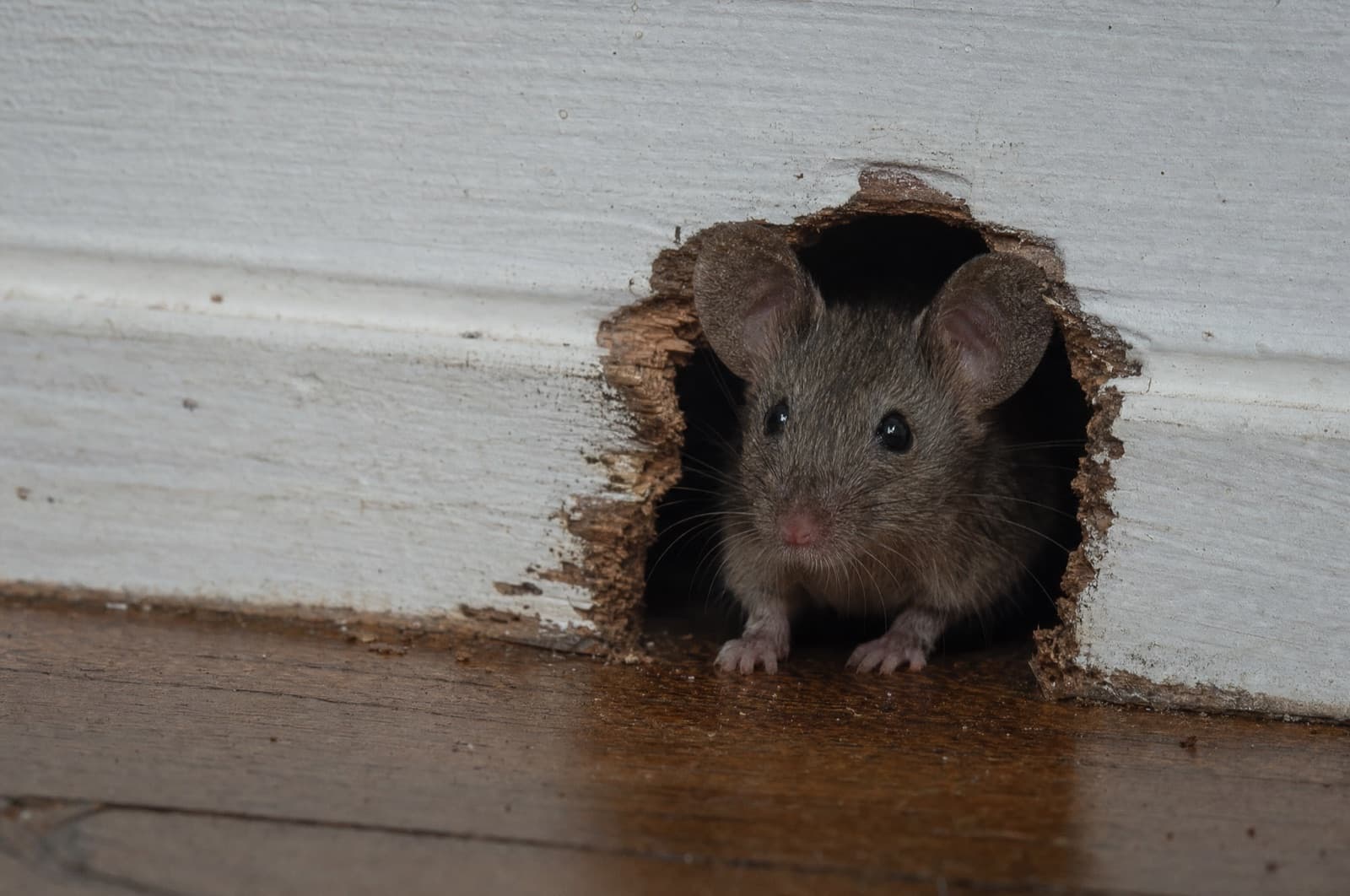
How Do I Clean Up After Mice Safely?
At a Glance
- Short answer: Ventilate 30 minutes, glove up, wet-clean with disinfectant or 1:9 bleach, never dry-sweep or vacuum.
- Key fact: CDC: "Don't vacuum or sweep rodent urine, droppings, or nesting materials."
- NH relevance: Deer mice, New Hampshire's hantavirus reservoir, commonly nest in attics, sheds, camps, and cabins statewide — treat all droppings as potentially infectious.
- Action needed: Air out first, then wet-clean in the exact CDC order below — skipping steps is the main safety risk.
The short of it
Safe mouse cleanup isn't about scrubbing harder — it's about sequence. CDC's protocol reverses normal cleaning habits: ventilate an enclosed space for 30 minutes first, then wear gloves and wet droppings and urine thoroughly with disinfectant or fresh 1:9 bleach solution before ever touching them. Sweeping or vacuuming dry droppings first is the single most dangerous mistake, because it aerosolizes virus-carrying particles. Porous materials like insulation, fabric, and books need different handling than hard surfaces.
How Do I Clean Up After Mice Safely — By the Numbers
30 min
Air-out time before entering an enclosed space
1:9
CDC bleach-to-water ratio (1.5 cups per gallon)
5 min
Soak time before wiping up droppings
The CDC rodent-cleanup protocol
This is the CDC's complete step-by-step for cleaning up after mice — the order matters as much as the products used.
Air out the space
For any closed-up room, attic, shed, or camp, open all doors and windows for 30 minutes before cleaning to ventilate the space, and leave the area during that time.
Do not vacuum, sweep, or otherwise disturb droppings during this step.
Glove up and wet the material
Return wearing rubber or plastic gloves. Spray droppings, urine, and nesting material until very wet with a general-purpose household disinfectant or a fresh 1:9 bleach solution (1.5 cups household bleach per gallon of water).
Soak, wipe, dispose
Let the solution soak about 5 minutes (or per the disinfectant label), then wipe up with paper towels and discard them in a covered garbage can that's emptied regularly.
Disinfect hard surfaces
Mop or sponge all hard surfaces — floors, countertops, cabinets, drawers — with disinfectant. Move potentially contaminated storage boxes outside into sunlight to sort.
Handle porous materials separately
Launder contaminated bedding, clothing, and stuffed animals in hot water and detergent; shampoo or steam-clean carpets and upholstery; leave books and papers in sunlight for several hours or in a rodent-free space for at least three weeks.
Bag contaminated exposed insulation for removal rather than trying to disinfect it in place.
Wash up
Wash gloved hands with soap and water or disinfectant before removing gloves, then wash your bare hands thoroughly.
- Never vacuum or sweep rodent droppings, urine, or nesting material.
- Never skip the 30-minute air-out step for enclosed spaces.
- Never try to disinfect contaminated insulation in place — bag and remove it instead.
Calibrated from: CDC, "How to Clean Up After Rodents" (last reviewed April 8, 2024).
The full picture
Ventilation comes before anything else
For any closed-up room, attic, shed, or camp, CDC directs you to "open all doors and windows for 30 minutes before cleaning to ventilate the space" and to leave the area during that time. This step exists because stale, enclosed air can carry aerosolized virus particles from droppings, urine, or nesting material that have already been disturbed.
Wet-clean, never dry
Once ventilated, put on rubber or plastic gloves and spray droppings and urine until very wet with a general-purpose household disinfectant or a fresh 1:9 bleach solution (1.5 cups bleach per gallon of water, made fresh before use). Let it soak about 5 minutes, then wipe up with paper towels and discard them in a covered trash can. CDC is explicit that you should never vacuum or sweep dry droppings, urine, or nesting material, because doing so can send tiny virus-carrying droplets into the air.
Porous materials need different treatment
Hard surfaces like floors, counters, and cabinets get mopped or wiped with disinfectant after the droppings are removed. Fabrics, bedding, and stuffed animals should be laundered in hot water; carpets and upholstery shampooed or steam-cleaned; books and papers sunned for several hours or isolated in a rodent-free space for at least three weeks. Contaminated exposed insulation should be bagged for removal rather than cleaned in place, since it can't be reliably disinfected.
Bottom line — Air out the space for 30 minutes, then wet-clean droppings and surfaces with disinfectant or 1:9 bleach — never sweep or vacuum dry material. Handle porous items like insulation, fabric, and books separately from hard surfaces, and wash your hands thoroughly when finished.
Cleaning up mouse droppings regularly?
That usually points to an active population, not a one-time visitor. Anchor's licensed NH technicians find and seal entry points so you're not cleaning up after mice every week.
Why this matters in New Hampshire
New Hampshire's deer mice are the regional hantavirus reservoir, and they commonly nest in attics, sheds, camps, and cabins across the state — not just in heavily infested homes. That makes the CDC wet-clean protocol relevant to routine seasonal cleaning of camps and outbuildings, not only active infestations.
Key local data
NH DHHS: no confirmed hantavirus case acquired in New Hampshire to date; deer mice are the regional reservoir species.
- NH-licensed applicator · #782664
- Same-day service
- Family-owned since 2017
Service Area Map
Southern New Hampshire
Frequently asked
Sources (3)
- [1]
- [2]CDC — About Hantavirus(2024)
- [3]NH DHHS — Hantavirus(2024)
Written & reviewed by
VerifiedDaniel Brady
NH-Licensed Pesticide Applicator · License #782664 (NHDAMF, RSA 430)
Daniel Brady is the New Hampshire–licensed applicator behind Anchor Pest Services, a family-owned pest control company serving the Manchester area since 2017.
Professional Rodent Control
Safe Cleanup Doesn't Stop Mice From Coming Back
Following the CDC protocol protects your health today, but it won't seal the gaps mice are using to get in. Anchor Pest Services finds entry points and removes the mice already inside. Family-owned since 2017, NH license #782664.
- Same-day service across southern NH
- NH-licensed applicators (#782664)
- Free inspection — no flat-price guesswork
NH License #782664 · No obligation · We answer in person
Your next step
- Book a NH pro
Rodent Control
Book now - Next step
Rodent Mites After Mice or Rats Are Removed
Read the answer - Related guide
What Cleaning Products Kill Rodent Bacteria and Viruses?
Read the answer - Related guide
Can Vacuuming Spread Mouse Droppings?
Read the answer - Related guide
How Do I Disinfect Areas Where Mice Were Active?
Read the answer - Related guide
Are Mouse Droppings Dangerous to Touch?
Read the answer