
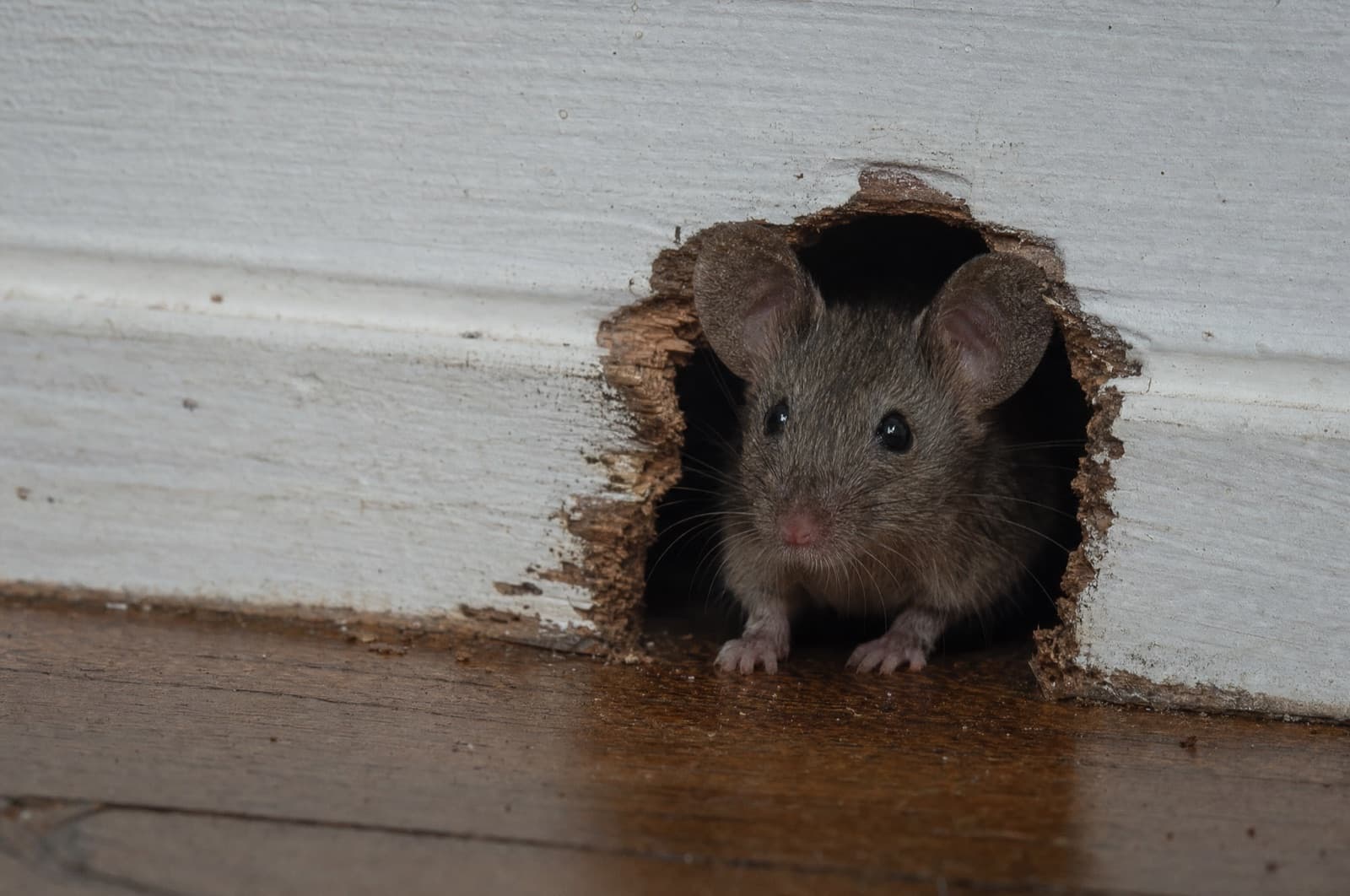
Should I Use Poison to Kill Mice?
At a Glance
- Short answer: Depends — traps and exclusion are the recommended first line; poison is situational.
- Key fact: A poisoned mouse often dies inside a wall void, causing odor and secondary-poisoning risk rather than a clean removal.
- NH relevance: UNH's own necropsy testing found rodenticide exposure in the large majority of NH animals sampled, including poisoned bald eagles in recent years.
- Action needed: Try exclusion and trapping first; if you use poison, use only tamper-resistant stations, and consider professional application for large infestations.
The short of it
Poison does kill mice, but UNH Cooperative Extension states plainly that trapping is preferred: it avoids accidentally poisoning children and pets and lets you retrieve and remove dead mice, whereas a poisoned mouse may die out of sight inside a wall, causing odor or being eaten by another animal that gets sickened in turn. That secondary-poisoning risk is documented in New Hampshire specifically — necropsies by the UNH-based NH Veterinary Diagnostic Laboratory found rodenticide exposure in the large majority of animals tested statewide, and several NH bald eagles have been poisoned in recent years. The recommended sequence is exclusion plus trapping first; poison is a situational, ideally professionally-applied tool for large or inaccessible infestations, used only in tamper-resistant stations.
Should I Use Poison to Kill Mice — By the Numbers
Exclusion → Trap → Poison
UNH- and CDC-endorsed order of operations for mouse control
Widespread
Rodenticide exposure found in NH wildlife necropsy testing (UNH Veterinary Diagnostic Laboratory)
Several
NH bald eagles poisoned by rodenticides in the past five years, per NH Audubon
Required
Tamper-resistant bait stations wherever kids, pets, or wildlife may be present (EPA)
Rodenticide risks you need to know
If you're weighing poison against traps for a mouse problem, here's how the risk breaks down.
pets
High riskRisk: Pets can be poisoned directly if bait is accessible, or secondarily by eating a poisoned mouse before it retreats into a wall to die.
Guidance: Favor trapping, which removes the mouse entirely; if poison is used, place it only in tamper-resistant stations pets can't reach, and remove any dead rodents you do find promptly.
children
High riskRisk: Food-flavored bait can attract young children the same way it attracts mice.
Guidance: Avoid loose bait entirely; use only locked, tamper-resistant stations placed out of reach, or skip poison in favor of traps in homes with young kids.
wildlife
Moderate riskRisk: NH necropsy testing has found rodenticide exposure widespread in animals statewide, including several poisoned bald eagles in recent years — a mouse that eats bait and is then caught by a hawk, owl, or fox passes the poison along.
Guidance: Choose trapping over poison where practical; if poison is warranted, professional application with tamper-resistant stations reduces (but doesn't eliminate) the pathway to wildlife.
general
Moderate riskRisk: A poisoned mouse frequently dies inside a wall void, producing odor and fly problems that may require opening the wall to resolve — an outcome traps avoid entirely.
Guidance: Read and follow the label — the label is the law. Prefer trapping when retrieval matters, and never place bait outside an approved station.
- Seal entry points larger than about ½ inch first — the mice you keep out never need trapping or poisoning
- Use snap or electronic traps sized for mice, placed on runways and checked daily, to physically remove the problem
- Reserve poison for large or inaccessible infestations, ideally with professional, tamper-resistant-station application
In New Hampshire, the most hazardous second-generation anticoagulant rodenticides are restricted to licensed applicators under RSA 430 via the NHDAMF Division of Pesticide Control; some over-the-counter consumer products remain legal for homeowner use, but only in EPA-mandated tamper-resistant bait stations.
Bottom line — Trapping lets you retrieve the mouse and sidesteps the odor and secondary-poisoning risks that come with an in-wall poison death. Save poison for cases traps genuinely can't handle.
The full picture
Why extension guidance favors traps first
UNH Cooperative Extension states plainly that trapping is preferred over rodenticides for most homes: trapping eliminates the risk of accidentally poisoning children and pets and lets you account for and physically remove the dead mouse. A poisoned mouse, by contrast, may die out of sight inside a wall void or ceiling, where it can cause days to weeks of odor and attract flies, with no way to retrieve it without opening the cavity — or it may be eaten by another animal, sickening it.
Secondary poisoning is a documented NH problem
This isn't a hypothetical concern. Necropsies by the NH Veterinary Diagnostic Laboratory at UNH found the large majority of animals tested from around the state had been exposed to rodenticides, often long-acting second-generation anticoagulants, and NH Audubon has documented several poisoned bald eagles in the past five years. The EPA restricts these second-generation anticoagulants to professional and agricultural use and requires tamper-resistant bait stations wherever children, pets, or wildlife may be present specifically because of risks like these.
When poison is genuinely appropriate
Extension guidance reserves rodenticides for large or inaccessible infestations where trapping alone can't keep up, and advises against using toxicants at all where young, elderly, or medically vulnerable people live. In those cases, a licensed applicator can select the right product and place it in a tamper-resistant station, minimizing odor, secondary poisoning, and non-target exposure — a meaningfully different risk profile than a homeowner scattering loose bait.
The recommended sequence
UNH Extension and the CDC's 'Seal Up, Trap Up, Clean Up' guidance both point the same direction: seal entry points, trap the mice already inside, then clean up safely. Poison sits at the end of that sequence, not the front — a situational tool for cases traps and exclusion genuinely can't solve, ideally applied by a professional.
Bottom line — Poison works, but it's rarely the right first move for a home mouse problem. Traps let you retrieve the mouse and avoid the odor and secondary-poisoning risks of an in-wall death. Reserve poison for large or inaccessible infestations, use tamper-resistant stations, and lean on a licensed applicator when it's genuinely warranted.
Not sure if poison is the right call?
Anchor's licensed NH technicians default to exclusion and monitored trapping, and only recommend rodenticide — in proper tamper-resistant stations — when it's genuinely warranted.
Why this matters in New Hampshire
New Hampshire has direct evidence of how far rodenticide exposure spreads: necropsies performed by the NH Veterinary Diagnostic Laboratory at UNH found the large majority of animals sampled from around the state — many species, not just target rodents — had been exposed to rodenticides, often the long-acting second-generation anticoagulants. NH Audubon has documented several poisoned bald eagles in the past five years. That's the practical case for leading with exclusion and trapping in NH homes, and for treating poison as a professionally-managed, situational tool rather than a default.
Key local data
NH Veterinary Diagnostic Laboratory (UNH) necropsy testing: widespread rodenticide exposure found in animals sampled statewide; several NH bald eagle poisonings documented by NH Audubon in the past five years
- NH-licensed applicator · #782664
- Same-day service
- Family-owned since 2017
Service Area Map
Southern New Hampshire
Frequently asked
Sources (5)
- [1]
- [2]
- [3]
- [4]
- [5]
Written & reviewed by
VerifiedDaniel Brady
NH-Licensed Pesticide Applicator · License #782664 (NHDAMF, RSA 430)
Daniel Brady is the New Hampshire–licensed applicator behind Anchor Pest Services, a family-owned pest control company serving the Manchester area since 2017.
Professional Rodent Control
Traps and Exclusion First — Poison Only When It's Warranted
Anchor Pest Services follows the extension-endorsed sequence: seal entry points, trap the mice already inside, then decide whether poison is genuinely necessary. When it is, our NH-licensed applicators use tamper-resistant stations to limit odor, secondary poisoning, and risk to pets and wildlife. Family-owned since 2017, NH license #782664.
- Same-day service across southern NH
- NH-licensed applicators (#782664)
- Free inspection — no flat-price guesswork
NH License #782664 · No obligation · We answer in person
Your next step
- Book a NH pro
Rodent Control
Book now - Next step
Rodent Mites After Mice or Rats Are Removed
Read the answer - What to do next
Chemical Rodent Control: Rodenticides, Risks & the Rules
Read the answer - Related guide
Is Rat Poison Safe to Use Around Children or Pets?
Read the answer - Related guide
Are Electronic Traps Better Than Snap Traps for Mice?
Read the answer - Related guide
What Is the Safest Way to Dispose of a Dead Mouse?
Read the answer