
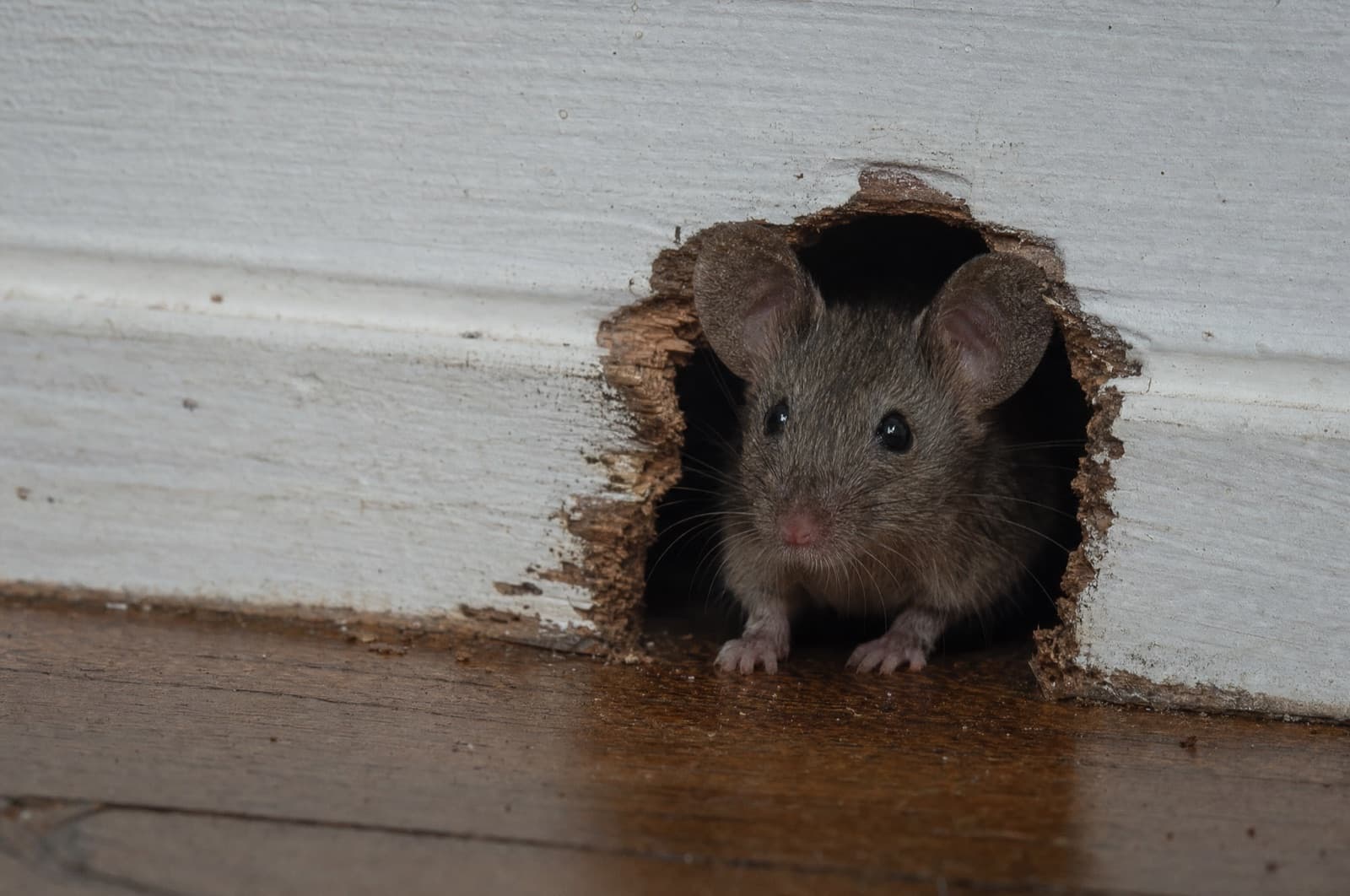
What Is the Safest Way to Dispose of a Dead Mouse?
At a Glance
- Short answer: Glove up, spray and soak 5 minutes, double-bag, and discard in a covered trash can.
- Key fact: CDC recommends spraying the dead mouse and surrounding area with disinfectant before handling — never pick one up dry.
- NH relevance: House mice and deer mice both overwinter in New Hampshire homes; deer mice are the state's hantavirus reservoir, so the wet-first rule matters even for a single mouse.
- Action needed: Spray, soak 5 minutes, double-bag, dispose in covered trash, disinfect the area, wash hands.
The short of it
The CDC's dead-mouse protocol mirrors its dead-rat protocol but is worth stating on its own, since mice are far more common inside New Hampshire homes than rats. Never pick up a dead mouse dry or bare-handed: wear gloves, spray the mouse, its nest, and the surrounding area with disinfectant, let it soak 5 minutes, then double-bag it before disposal. If the mouse may have died from rodenticide, handle and dispose of it the same way, and keep it away from pets and children.
What Is the Safest Way to Dispose of a Dead Mouse — By the Numbers
5 min
Disinfectant soak time before handling the mouse
2×
Bags required — double-bagging is the CDC standard
1:9
CDC bleach-to-water dilution for spraying the mouse and area (1.5 cups per gallon)
The CDC rodent-cleanup protocol
This protocol mirrors the dead-rat steps but applies specifically to mice, which are the more common indoor rodent encounter in New Hampshire.
Glove up and repel fleas
Put on rubber or plastic gloves before any contact. Because fleas readily leave a cooling rodent, consider an EPA-registered repellent on hands and clothing first.
Spray and soak
Spray the dead mouse, its nest, and the surrounding surface with a disinfectant or fresh 1:9 bleach solution. Let it soak 5 minutes, or per the disinfectant label.
Do not handle the mouse before it has soaked.
Double-bag
Place the mouse — and any single-use snap trap you're discarding — into a plastic bag, tie it, place that bag inside a second bag, and tie again.
Dispose
Put the double-bagged mouse into a covered garbage can that's emptied regularly, or contact NH DHHS for alternative disposal guidance.
Disinfect and wash
If keeping a reusable trap, submerge the trap and mouse in disinfectant for 5 minutes before removing the mouse. Wash gloved hands, remove gloves, and wash bare hands with soap and warm water.
- Never pick up a dead mouse dry or bare-handed.
- Never skip double-bagging before disposal.
Calibrated from: Steps quoted and paraphrased from CDC, "How to Clean Up After Rodents" (last reviewed April 8, 2024).
The full picture
Prepare before you touch it
Never pick up a dead mouse dry or bare-handed. Put on rubber or plastic gloves, and because fleas readily leave a cooling rodent, CDC suggests using DEET or another EPA-registered repellent on hands and clothing first.
Spray, soak, then handle
Spray the mouse, its nest, and the surrounding surface with a disinfectant or the CDC's fresh 1:9 bleach solution, and let it soak 5 minutes to inactivate any virus before you touch it. This soak step matters just as much for a single mouse as it does for a larger rodent.
Double-bag and dispose
Place the mouse — and any single-use snap trap you're discarding along with it — into a plastic bag, knot it, drop that bag into a second bag, and knot that one too. Put the double-bagged mouse into a covered garbage can that's emptied regularly, or contact NH DHHS for alternative disposal guidance. If you're keeping a reusable trap, submerge the trap and mouse in disinfectant for 5 minutes before removing the mouse. Finish by washing gloved hands with soap and water, removing the gloves, and washing bare hands again.
Bottom line — Glove up, spray the mouse and surrounding area with disinfectant, soak 5 minutes, double-bag it, discard in a covered trash can, and wash your hands thoroughly — the same careful sequence as a dead rat, just mouse-scale.
Finding dead mice regularly?
Repeated finds usually point to an active mouse population, not a one-time visitor. Anchor's licensed NH technicians handle exclusion and trapping.
Why this matters in New Hampshire
House mice are the most common indoor rodent in New Hampshire homes, and deer mice — which also enter structures, especially near woodlands — are the state's hantavirus reservoir species. That combination is why this wet-first protocol matters even for what looks like a single, minor find, not just for larger infestations.
Key local data
NH DHHS: no confirmed hantavirus case acquired in New Hampshire to date; deer mice are the regional reservoir species.
- NH-licensed applicator · #782664
- Same-day service
- Family-owned since 2017
Service Area Map
Southern New Hampshire
Frequently asked
Sources (3)
- [1]
- [2]CDC — About Hantavirus(2024)
- [3]NH DHHS — Hantavirus(2024)
Written & reviewed by
VerifiedDaniel Brady
NH-Licensed Pesticide Applicator · License #782664 (NHDAMF, RSA 430)
Daniel Brady is the New Hampshire–licensed applicator behind Anchor Pest Services, a family-owned pest control company serving the Manchester area since 2017.
Professional Rodent Control
One Dead Mouse Rarely Means the Problem Is Over
If you're finding dead mice, there's likely a live population nearby — mice breed quickly once inside. Anchor Pest Services finds and seals entry points, then traps the mice still inside. Family-owned since 2017, NH license #782664.
- Same-day service across southern NH
- NH-licensed applicators (#782664)
- Free inspection — no flat-price guesswork
NH License #782664 · No obligation · We answer in person
Your next step
- Next step
What Cleaning Products Kill Rodent Bacteria and Viruses?
Read the answer - What to do next
How to Get Rid of Field Mice
Read the answer - Related guide
What Is the Safest Way to Dispose of a Dead Rat?
Read the answer - Related guide
What Health Risks Do Mice Pose to Humans?
Read the answer - Related guide
How Do I Clean Up After Mice Safely?
Read the answer - Related guide
Can Vacuuming Spread Mouse Droppings?
Read the answer