
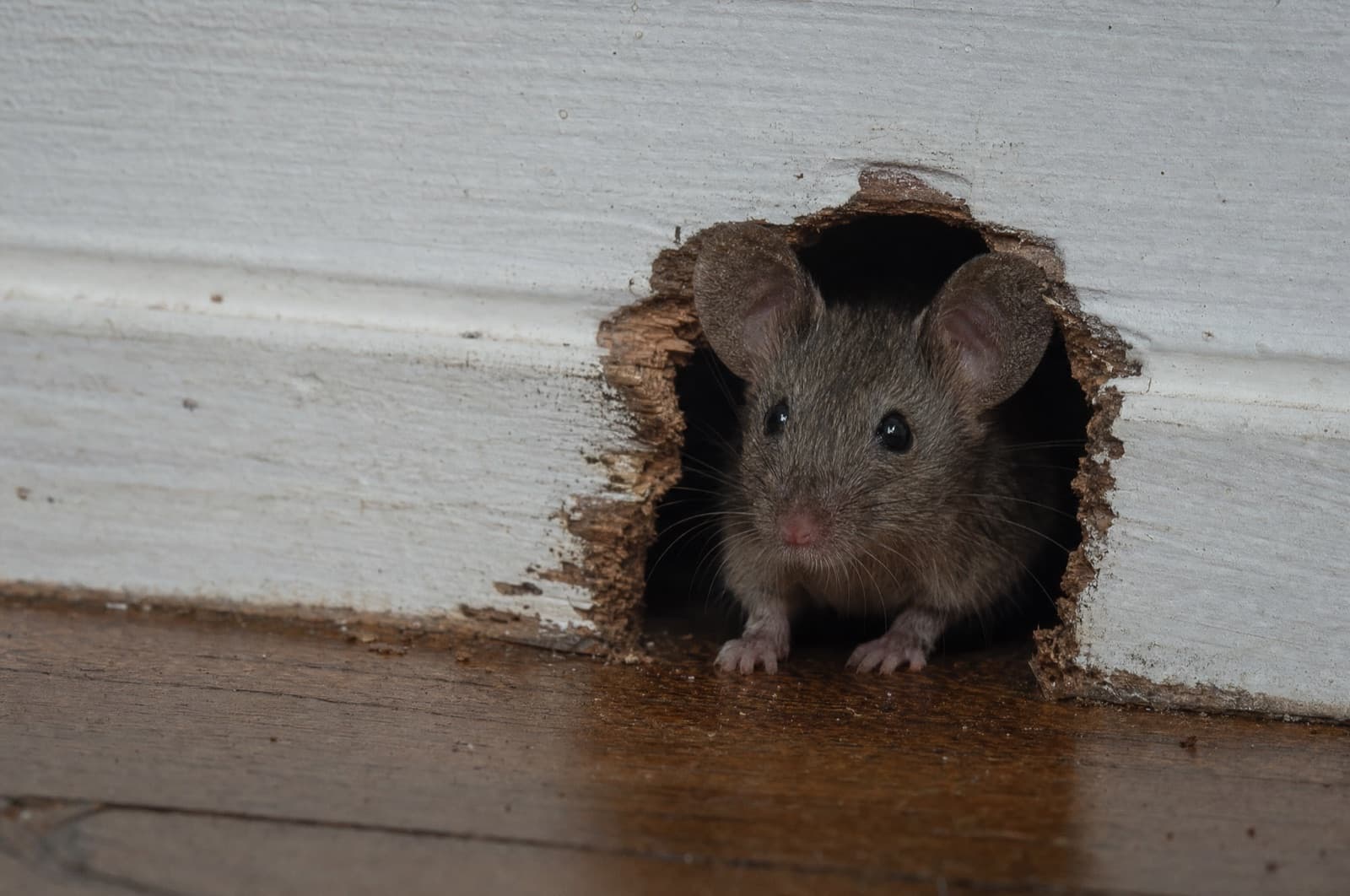
What Food Sources Attract Mice the Most?
At a Glance
- Short answer: Grains, seeds, and cereals top the list, with high-fat or sugary items a close preference when available.
- Key fact: A mouse eats only ~3 grams a day across ~200 small meals a night, contaminating far more than it eats.
- NH relevance: Because mice need almost no water, New Hampshire homes stay attractive to them year-round, not just near leaks or pipes.
- Action needed: Seal dry goods, cereal, and pet food in airtight containers — water control won't move the needle on mice.
The short of it
House mice are opportunists like rats, but their proportional preference skews differently: UC IPM describes them as grazers that lean heavily toward cereals, grains, and seeds, reflecting their long history in human grain stores. They'll take high-fat, high-protein, or sugary items — bacon, butter, chocolate, nutmeats — when available, but grain and seed access (pantry goods, birdseed, pet kibble) is the biggest proportional draw. Two traits make mice hard to starve out: they eat in roughly 200 tiny meals a night, so even crumbs sustain them, and they need almost no free water, pulling moisture from food instead. That's why food storage matters more for mice than water control does.
What Food Sources Attract Mice the Most — By the Numbers
~3 g/day
Food a single mouse eats daily (~8 lb/year)
~200
Small meals a mouse eats per night
~20%
Of body weight a mouse can eat daily
Minimal
Free water a mouse needs — it draws moisture from food
The full picture
Grains and seeds top the list
UC IPM identifies house mice as favoring cereals, grains, and seeds above other food categories — birdseed, pantry cereal, flour, oats, rice, and pet kibble are their most consistent targets in a home. This grain-and-seed leaning reflects their long history nesting near human food stores, and it's the clearest way to distinguish a mouse problem's food draw from a rat problem's, which skews more toward garbage and protein.
Mice are nibblers, not bulk feeders
UC IPM notes a mouse consumes food in about 200 small meals each night, sampling many different items rather than committing to one cache. A single mouse eats only about 3 grams a day — roughly 8 pounds a year, or up to 20% of its body weight daily — yet contaminates many times that amount by partially eating and discarding food and leaving droppings and urine behind. Even a meticulously clean kitchen can sustain mice on crumbs alone, which is why sanitation for mice has to be thorough, not just about securing large containers.
Why water control doesn't work on mice
Unlike Norway and roof rats, house mice can get by with little or no free water, pulling moisture from the food they eat. That means eliminating water sources — a real pressure point against rats — does little against mice. Sanitation for mice is almost entirely about denying food: sealing dry goods, cleaning crumbs and spills, and securing pet food and birdseed. When richer foods are present, mice preferentially take high-fat, high-protein, or sugary items like bacon, butter, chocolate, and nutmeats, which also explains why those baits outperform plain grain in traps.
Bottom line — Mice lean toward grains and seeds more than rats do, eat in tiny nightly nibbles rather than bulk meals, and need almost no free water. That combination means food storage — not water control — is the single most effective sanitation lever against mice, and it has to be thorough enough to deny even crumbs.
Finding gnawed cereal boxes or mystery crumbs?
Food storage helps, but mice need almost no food or water to survive. Anchor's licensed NH technicians seal the gaps sanitation can't fix.
Why this matters in New Hampshire
Because mice need so little food and almost no water, New Hampshire homes stay attractive to them year-round — not just around leaky pipes or damp basements the way rat-prone homes do. The fall push indoors, which sharpens around Manchester's first hard frost (~Oct 19 at 50%, ~Oct 29 at 80%, NOAA 1991–2020), simply concentrates mice near stored food that was already drawing them.
Key local data
NH DHHS: no confirmed hantavirus case acquired in New Hampshire to date; the deer mouse (Peromyscus) is the regional reservoir species.
- NH-licensed applicator · #782664
- Same-day service
- Family-owned since 2017
Service Area Map
Southern New Hampshire
Frequently asked
Sources (3)
- [1]
- [2]
- [3]
Written & reviewed by
VerifiedDaniel Brady
NH-Licensed Pesticide Applicator · License #782664 (NHDAMF, RSA 430)
Daniel Brady is the New Hampshire–licensed applicator behind Anchor Pest Services, a family-owned pest control company serving the Manchester area since 2017.
Preventive Rodent Control
Grain-Proof the Pantry, Then Seal the Gaps
Anchor Pest Services helps southern and central NH homeowners cut off the food mice rely on and close the ¼-inch gaps that let them in to begin with. Family-owned since 2017, NH license #782664.
- Free inspection — no flat-price guesswork
- NH-licensed applicators (#782664)
- Preventive plans across southern & central NH
NH License #782664 · No obligation · We answer in person
Your next step
- Book a NH pro
Rodent Control
Book now - Next step
Do rodents count as fall invaders too?
Read the answer - Related guide
How Do I Store Food to Keep Mice Away?
Read the answer - Related guide
What Steps Prevent Mice From Entering a Home?
Read the answer - Related guide
How Small of a Hole Can a Mouse Get Through?
Read the answer - Related guide
How Do I Store Food to Keep Mice Away?
Read the answer