
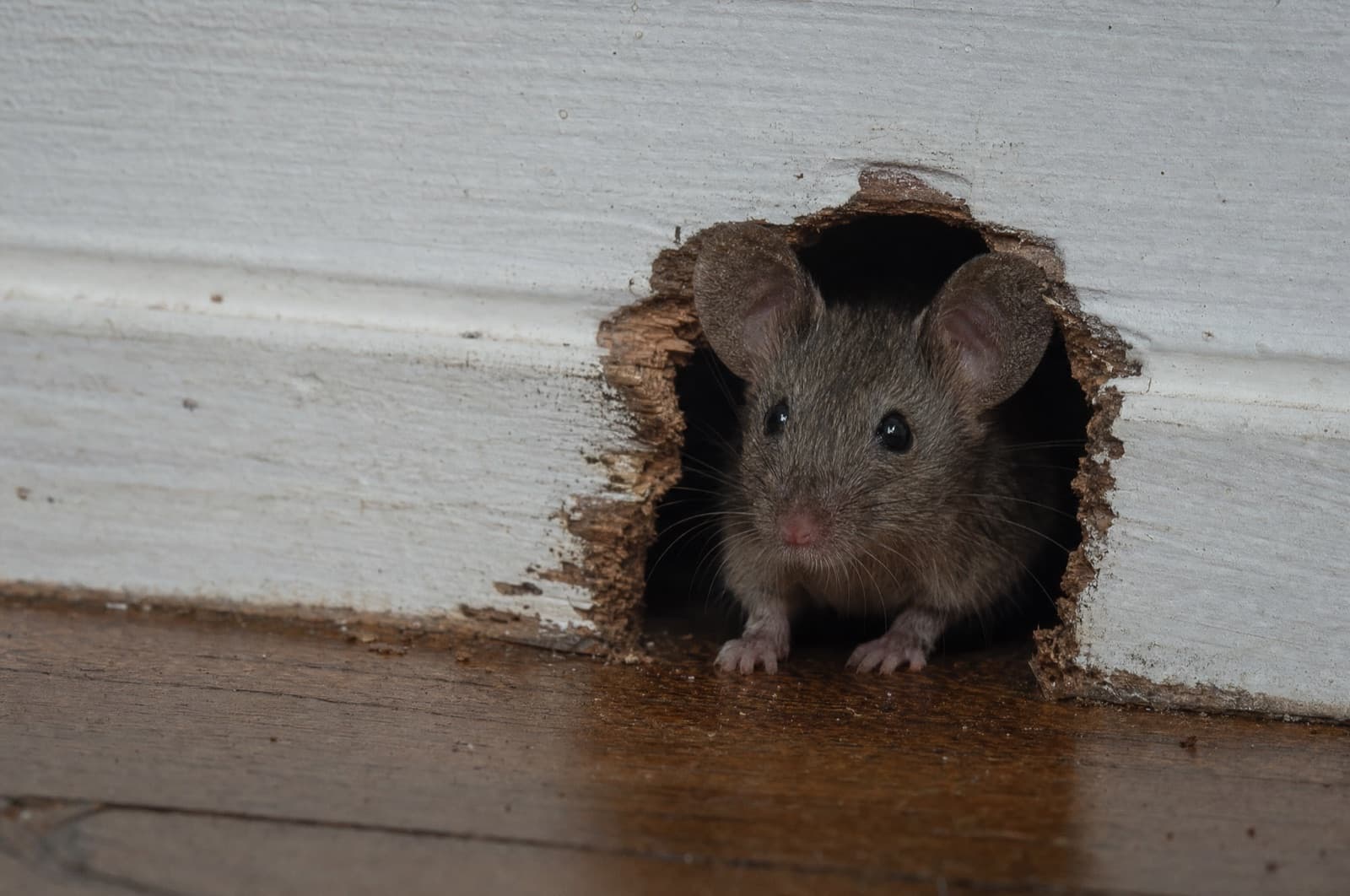
What Time of Year Are Mice Most Likely to Enter Houses?
At a Glance
- Short answer: Fall — roughly September through November — sharpening around Manchester's first frost (~Oct 19–29).
- Key fact: Mice don't hibernate; cooling nights and disappearing outdoor food are what drive them indoors.
- NH relevance: Manchester's first hard frost hits ~Oct 19 at 50% probability and ~Oct 29 at 80% (NOAA 1991–2020) — the sharpest entry trigger in the calendar.
- Action needed: Complete exclusion and sanitation by late September, before the frost window, not after signs appear.
The short of it
Mice can enter a home any month, but the window isn't a vague 'fall' — it tracks Manchester's first hard frost closely. NOAA 1991–2020 normals put a 50% chance of that first 32°F frost by about October 19, rising to roughly 80% by October 29. Mice don't hibernate, so as outdoor food (seeds, insects, fruit) disappears and nights cool ahead of that date, they move toward the reliable warmth and food of heated buildings. Field guidance for the Northeast puts peak indoor activity from late August through November, sharpening in the weeks bracketing the frost dates — which is why the actionable move is completing exclusion and sanitation before the window, not after scratching starts in the walls.
What Time of Year Are Mice Most Likely to Enter Houses — By the Numbers
~Oct 19
50% probability of Manchester's first hard frost (NOAA)
~Oct 29
80% probability of Manchester's first hard frost (NOAA)
Aug–Nov
Peak indoor mouse activity window in the Northeast
24°F
Mice can survive and breed at this temp with food/nesting material — but prefer indoors
NH rodent activity through the year
Pressure climbs toward Manchester's first hard frost (~Oct 19, NOAA), when rodents push indoors for the winter.
Jan
BuildingIndoor populations that entered in fall continue breeding in heated wall voids and pantries.
Feb
BuildingEstablished indoor mice remain active; outdoor entry attempts are rare in deep winter cold.
Mar
LowSnowmelt begins; some outdoor foraging resumes, slightly easing pressure to move indoors.
Apr
LowOutdoor food (new vegetation, insects) becomes available; entry pressure drops further.
May
DormantOutdoor breeding season is in full swing; mice have little reason to seek indoor shelter.
Jun
DormantOutdoor food is abundant; this is the lowest-pressure month for new indoor entry.
Jul
LowOutdoor populations peak; entry pressure stays low through midsummer.
Aug
BuildingLate-summer outdoor food begins to decline; mice start scouting structures for fall shelter.
Sep
PeakNights cool noticeably; mice actively move toward structures ahead of frost.
Oct
PeakPeak entry month — brackets Manchester's first hard frost (~Oct 19 at 50%, ~Oct 29 at 80%, NOAA).
Nov
PeakEntry continues as hard frosts become routine and snow arrives; indoor populations establish.
Dec
BuildingIndoor mice are settled in for winter and breeding continuously; new outdoor entry slows.
The full picture
The frost anchor, not just 'fall'
In Manchester, the seasonal transition tracks the first fall frost closely. Using NOAA's 1991–2020 Climate Normals for the Manchester station, there is about a 50% chance of a first 32°F frost by around October 19, rising to roughly 80% by about October 29. Frost risk begins building in early October and is near-certain by month's end. Those dates matter because the cooling nights that precede and accompany frost are exactly the trigger that drives mice indoors — not a fixed calendar date, but a temperature threshold that Manchester reliably crosses in that window.
The wider peak window
Field guidance for the Northeast puts peak indoor mouse activity from late August through November, sharpening in the weeks bracketing the frost dates. Scouting activity can begin as early as late August as outdoor food starts to thin, building to the sharpest entry pressure through September and October, then continuing into November as hard frosts become routine and snow arrives.
Why the timing matters more than the season name
While house mice can technically survive at 24°F with food and nesting material available, they strongly prefer indoor harborage — and once inside a heated home they breed continuously, so a single mouse that enters in early October can become an established colony by mid-winter. That's why the actionable New Hampshire recommendation is to complete exclusion and sanitation before the frost window, ideally by late September to early October, rather than reacting once scratching starts in the walls.
Bottom line — Mice enter New Hampshire homes most in fall, and that window sharpens precisely around Manchester's first hard frost — about October 19 at 50% probability, October 29 at 80% (NOAA 1991–2020). Seal up and secure food by late September to beat the peak, since indoor mice breed year-round once established.
Beat the fall frost window
Manchester's first hard frost lands around Oct 19–29. Anchor's licensed NH technicians handle pre-frost exclusion and sanitation so mice never make it in.
Why this matters in New Hampshire
Anchor Pest Services serves Manchester, Nashua, Concord, and 12 more towns across Rockingham, Hillsborough, Merrimack, and Strafford counties. Because local first-frost timing (~Oct 19 at 50%, ~Oct 29 at 80%) is the sharpest entry trigger in the region, we recommend homeowners complete pre-frost seal-up each September rather than waiting for the first sign of mice inside.
Key local data
Manchester first hard frost ~Oct 19 (50%) / Oct 29 (80%), NOAA 1991–2020
- NH-licensed applicator · #782664
- Same-day service
- Family-owned since 2017
Service Area Map
Southern New Hampshire
Frequently asked
Sources (4)
- [1]
- [2]
- [3]
- [4]
Written & reviewed by
VerifiedDaniel Brady
NH-Licensed Pesticide Applicator · License #782664 (NHDAMF, RSA 430)
Daniel Brady is the New Hampshire–licensed applicator behind Anchor Pest Services, a family-owned pest control company serving the Manchester area since 2017.
Preventive Rodent Control
Seal Up Before the Frost, Not After
Anchor Pest Services times preventive rodent work to New Hampshire's seasonal calendar, closing entry points before the fall push indoors. Family-owned since 2017, NH license #782664.
- Free inspection — no flat-price guesswork
- NH-licensed applicators (#782664)
- Seasonal preventive plans across southern & central NH
NH License #782664 · No obligation · We answer in person
Your next step
- Book a NH pro
Rodent Control
Book now - Next step
When Are Rats Most Active? NH Rat Timing Guide
Read the answer - Related guide
What Steps Prevent Mice From Entering a Home?
Read the answer - Related guide
How Small of a Hole Can a Mouse Get Through?
Read the answer - Related guide
Do Mice Ever Leave on Their Own?
Read the answer - Related guide
Can Mice Survive Winter in a House?
Read the answer