
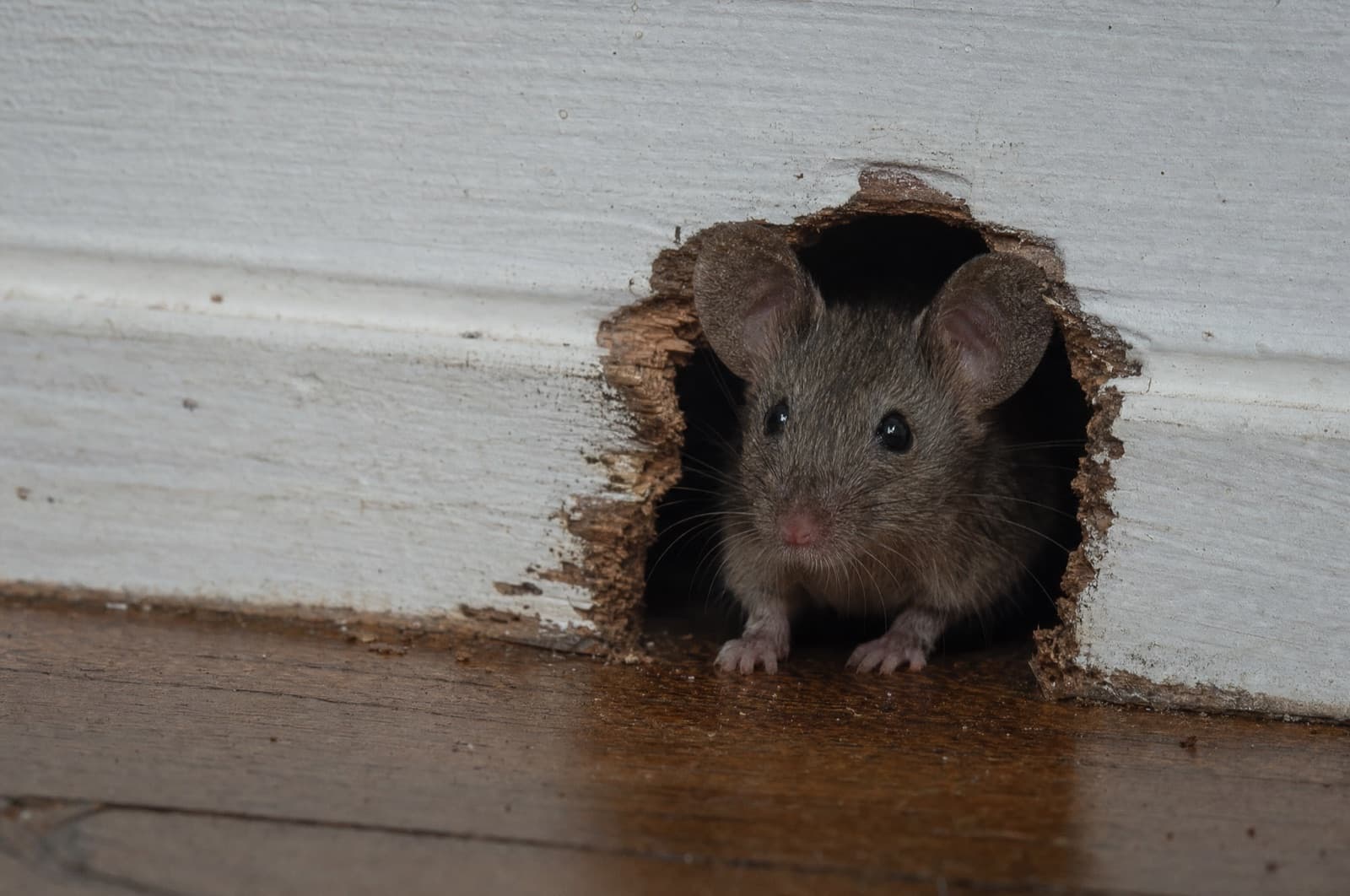
What Steps Prevent Rats From Coming Back?
At a Glance
- Short answer: Exclusion + sanitation + habitat reduction + monitoring, done together, not one at a time.
- Key fact: Rat populations rebound fast if any single pillar of prevention is skipped.
- NH relevance: Time recurrence prevention ahead of Manchester's fall frost window (~Oct 19–29) across the service area.
- Action needed: Confirm the current population is gone before sealing interior voids, then seal, secure food and water, clear harborage, and re-inspect seasonally.
The short of it
Cooperative Extension is explicit that rodent-proofing alone will not guarantee rodent-free buildings — it has to sit inside a program combining exclusion, sanitation, habitat reduction, and monitoring. Seal every gap ½ inch or larger with chew-proof materials, remove food and water sources, clear harborage like woodpiles and dense vegetation, and inspect seasonally for fresh signs. Rat populations rebound quickly if any one pillar is skipped, so recurrence prevention is a combination, not a single fix.
What Steps Prevent Rats From Coming Back — By the Numbers
4
Pillars required together: exclusion, sanitation, habitat, monitoring
½ inch+
Minimum gap size to seal for rats
12 in
Minimum height to elevate woodpiles off the ground
The full picture
The four pillars
Exclusion: seal every gap ½ inch or larger with materials rats cannot chew — steel wool or copper mesh backed by sealant, 19-gauge ½-inch hardware cloth, sheet metal, or mortar — prioritizing utility penetrations, door thresholds, foundation cracks, and vents. Sanitation: remove food and water by securing garbage, storing food and pet food in sealed containers, and fixing leaks (rats need ½ to 1 ounce of water daily on dry food). Habitat reduction: eliminate shelter by elevating woodpiles and stored items at least 12 inches off the ground, maintaining a roughly 3-foot weed-free buffer around the foundation, and trimming vegetation back from the structure. Monitoring: rat colonies rebound rapidly, so populations must be driven very low or they recover and can even temporarily exceed their prior density — inspect seasonally for droppings, gnaw marks, and rub marks, and re-seal any new openings promptly.
Bottom line — Confirm the current rat population is eliminated first, then seal all exterior gaps ½ inch or larger, secure food and water, reduce harborage, and inspect seasonally. Skip any one pillar and the same conditions that drew rats the first time will draw them again.
Don't let rats find their way back
Anchor's licensed NH technicians combine exclusion, sanitation guidance, and seasonal monitoring so a cleared rat problem stays cleared.
Why this matters in New Hampshire
Recurrence prevention should be timed ahead of the fall entry window across the Manchester–Nashua–Concord service area — Manchester's first hard frost lands around October 19 at 50% probability and October 29 at 80% (NOAA 1991–2020), the period when outdoor rat pressure peaks.
Key local data
UNH Cooperative Extension: Norway rats are commonly found in New Hampshire's urban and town settings.
- NH-licensed applicator · #782664
- Same-day service
- Family-owned since 2017
Service Area Map
Southern New Hampshire
Frequently asked
Sources (3)
- [1]
- [2]
- [3]
Written & reviewed by
VerifiedDaniel Brady
NH-Licensed Pesticide Applicator · License #782664 (NHDAMF, RSA 430)
Daniel Brady is the New Hampshire–licensed applicator behind Anchor Pest Services, a family-owned pest control company serving the Manchester area since 2017.
Preventive Rodent Control
Recurrence Prevention, Not Just Removal
Anchor Pest Services builds ongoing exclusion, sanitation, and monitoring into every rodent plan across southern and central NH. Family-owned since 2017, NH license #782664.
- Free inspection — no flat-price guesswork
- NH-licensed applicators (#782664)
- Seasonal monitoring across southern & central NH
NH License #782664 · No obligation · We answer in person
Your next step
- Book a NH pro
Rodent Control
Book now - Next step
Where Do Mice Go in the Winter? NH Mouse Timing Guide
Read the answer - Related guide
Do Rats Come Back After Being Removed?
Read the answer - Related guide
How Do I Store Garbage to Keep Rats Away?
Read the answer - Related guide
What Materials Can Rats Not Chew Through?
Read the answer - Related guide
Do Rats Come Back After Being Removed?
Read the answer