
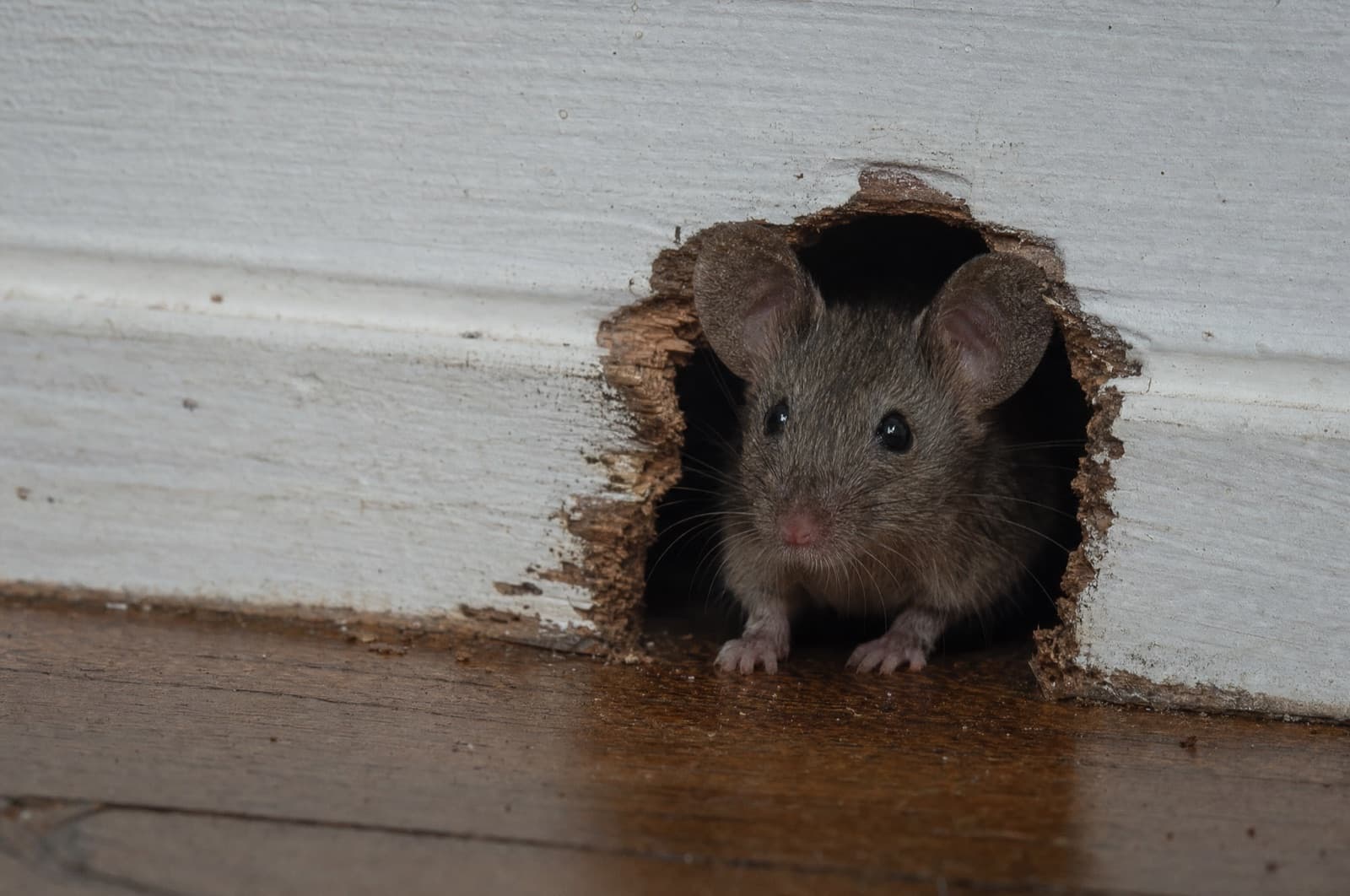
When Are Rats Most Active Indoors?
At a Glance
- Short answer: Two nightly peaks: roughly 30–60 minutes after sunset and again just before sunrise.
- Key fact: Daytime rat sightings usually mean a large, established population, not normal behavior.
- NH relevance: Indoor rat activity in NH concentrates in the cold months after the fall shelter-seeking migration around Manchester's first hard frost (~Oct 19).
- Action needed: Recurring nighttime noise in the same spot signals an active nest nearby — worth inspecting, not dismissing.
The short of it
Norway rats are strongly nocturnal. They leave the nest to forage roughly 30 to 60 minutes after sunset, then again shortly before sunrise, and stay hidden the rest of the day. That's why homeowners hear scratching or gnawing late at night and again just before dawn but rarely see anything during daylight. A daytime sighting isn't part of the normal pattern — it usually means the population has outgrown its ability to stay hidden.
When Are Rats Most Active Indoors — By the Numbers
30–60 min
After sunset: the first nightly activity peak
100–150 ft
Typical diameter of a rat's nightly foraging range
300–400 ft
Rare maximum distance traveled from the burrow
Daylight
A rat sighting in daytime signals population pressure
The full picture
The two nightly peaks
Norway rats usually become active around dusk, when they leave the nest to seek food and water, according to wildlife-damage management literature. Practically, that means the first activity window falls roughly 30 to 60 minutes after sunset, with a second push of activity shortly before sunrise as rats make a final foraging run before retreating to hide for the day. Between those windows, and throughout daylight, rats stay hidden in burrows, wall voids, crawl spaces, or other concealed harborage.
Why daytime sightings are a red flag
Seeing a rat during the day is not normal behavior. Texas A&M's school IPM program notes that daytime activity typically indicates a large population, scarcity of food, or illness within the population — the colony has effectively outgrown its ability to stay hidden. A single daytime sighting is enough reason to look harder for droppings, gnaw marks, or burrows rather than assuming it was a one-off.
Why the noise keeps coming from the same spot
Rats are creatures of habit that reuse the same runways night after night, and their nightly range is modest — typically only about 100 to 150 feet across, rarely more than 300 to 400 feet from the burrow. That's why scratching or gnawing tends to recur at a similar time and place: the nest is usually close to where you hear it, not roaming randomly through the house.
Bottom line — Expect rat activity in two windows — just after sunset and just before sunrise — coming from roughly the same location night after night. Any daytime sighting is a sign of an established, sizeable population that calls for inspection and control, not patience.
Hearing rats at night?
Dusk-and-dawn scratching that keeps returning to the same spot means an active nest nearby. Anchor's licensed NH technicians locate it and clear it.
Why this matters in New Hampshire
Indoor rat activity in southern and central NH climbs sharply after the fall shelter-seeking migration, which lines up with Manchester's first hard frost — about October 19 at 50% probability, October 29 at 80% (NOAA 1991–2020). Once rats are established indoors for the winter, their nocturnal pattern holds: expect the same dusk-and-dawn noise through the cold months until the population is excluded and trapped.
Key local data
Norway rats are established across New Hampshire's cities and towns (UNH Cooperative Extension); roof rats are essentially absent from the Northeast (Cornell).
- NH-licensed applicator · #782664
- Same-day service
- Family-owned since 2017
Service Area Map
Southern New Hampshire
Frequently asked
Written & reviewed by
VerifiedDaniel Brady
NH-Licensed Pesticide Applicator · License #782664 (NHDAMF, RSA 430)
Daniel Brady is the New Hampshire–licensed applicator behind Anchor Pest Services, a family-owned pest control company serving the Manchester area since 2017.
Professional Rodent Control
Same Noise, Same Spot, Every Night? That's a Nest, Not Noise
Rats are creatures of habit — the sound you keep hearing after dark is usually coming from close by. Anchor Pest Services inspects, excludes, and traps, so the noise actually stops. Family-owned since 2017, NH license #782664.
- Same-day service across southern NH
- NH-licensed applicators (#782664)
- Free inspection — no flat-price guesswork
NH License #782664 · No obligation · We answer in person
Your next step
- Book a NH pro
Rodent Control
Book now - Next step
How can I protect my attic from mice and rats during winter?
Read the answer - Related guide
How Long Do Rats Survive Indoors?
Read the answer - Related guide
What Are the Signs of a Rat Infestation?
Read the answer - Related guide
When Should I Call Pest Control for Rats?
Read the answer - Related guide
How Long Do Rats Survive Indoors?
Read the answer