
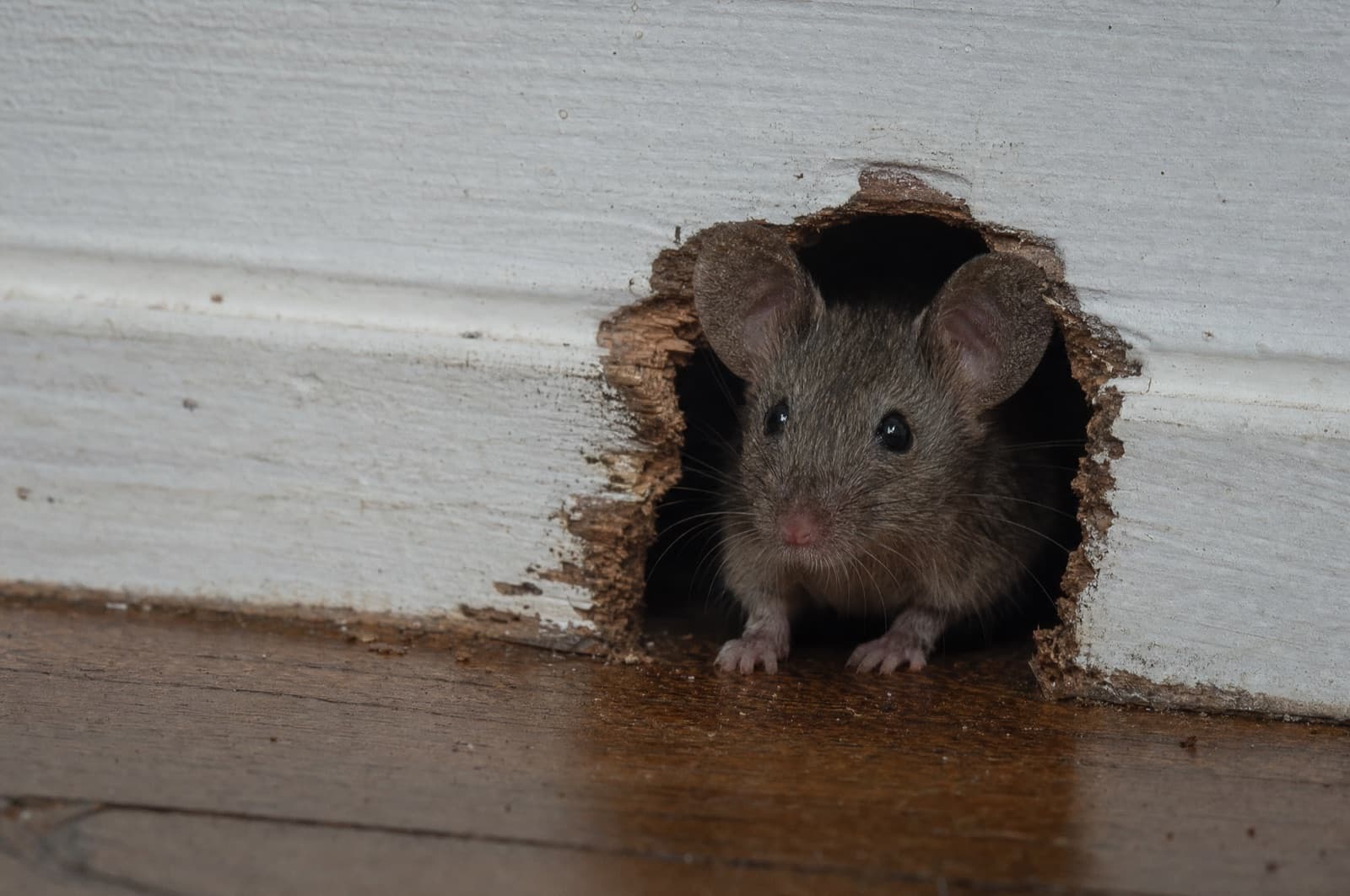
How Long Do Rats Survive Indoors?
At a Glance
- Short answer: Months with water and food; roughly 2–4 days without any water.
- Key fact: Water — not food — is what limits a rat living indoors.
- NH relevance: Rats that get in before Manchester's first hard frost (~Oct 19) gain a warm, watered refuge for the whole NH winter.
- Action needed: Confirmed indoor rats are a prompt-action situation — exclude entry points and trap, don't wait it out.
The short of it
A rat with reliable water and food can live indoors for months — heat, moisture, and shelter let Norway rats survive and breed year-round. But water is the real limit: on a dry diet a rat needs about ½ to 1 ounce of water a day, and secondary sources put survival at roughly 2–4 days with no water at all. That's why 'starving them out' rarely works — rats pull moisture from garbage, pet food, and condensation. Cut off water AND food AND seal entry points, and you shorten survival dramatically.
How Long Do Rats Survive Indoors — By the Numbers
½–1 oz
Water a rat needs daily on dry food
2–4 days
Estimated survival with no water
~1 year
Typical Norway rat lifespan (most die before age 1)
Year-round
Indoor breeding when warm, watered, and fed
The full picture
Water is the real limit
A single Norway rat needs about 110 calories and ½ to 1 ounce of water per day on a dry diet, and less when it can eat moist food like garbage or pet food. A dripping pipe, a pet bowl, or plumbing condensation is enough to keep a rat going indefinitely. Popular sources estimate a rat survives only about two to four days with no water at all, and roughly one to two weeks without food if water is available. These specific durations circulate mainly in secondary pest sources rather than peer-reviewed literature — modern animal-welfare rules stop deprivation studies at humane endpoints — so treat them as rough estimates. What is well documented is the direction: dehydration is the fast killer, and a rat declines within days once water is cut off.
Indoors, rats can live and breed year-round
In the wild most rats live under a year, and many die before their first birthday. Indoors is different: with heat, water, and food, a rat isn't fighting cold or drought, so it routinely survives the winter and breeds continuously. A pair and their offspring can build a resident population inside a single heated home, which is why an unaddressed rat problem tends to grow rather than fade.
Why 'wait it out' backfires
Because a rat draws water from so many everyday sources, removing food alone almost never clears an indoor population — it just makes the rats forage harder and range wider through your walls. The reliable approach is to remove food AND water access and physically exclude entry points (seal gaps larger than ½ inch), then trap the animals already inside. Sealing before the interior population is removed traps rats in the structure, so order matters.
Bottom line — With water and food a rat can live indoors for months and breed year-round; without water it declines in days. Removing food alone won't clear them — cut off water, seal entry points larger than ½ inch, and trap. Confirmed indoor rats warrant prompt action, not patience.
Confirmed rats indoors?
They won't leave on their own. Anchor's licensed NH technicians handle exclusion and monitored trapping across southern and central New Hampshire.
Why this matters in New Hampshire
New Hampshire's cold does the rats a favor: a rat that gets indoors ahead of Manchester's first hard frost — about October 19 at 50% probability, October 29 at 80% (NOAA 1991–2020) — gains a warm, watered refuge for the entire winter, where it can survive and breed while outdoor rats struggle. That's why fall exclusion, before mid-October, is the highest-leverage move for NH homeowners: it's far easier to keep rats out than to wait out a population that has no reason to leave.
Key local data
UNH Cooperative Extension: Norway rats are commonly found in New Hampshire's urban and town settings.
- NH-licensed applicator · #782664
- Same-day service
- Family-owned since 2017
Service Area Map
Southern New Hampshire
Frequently asked
Sources (5)
- [1]
- [2]
- [3]
- [4]
- [5]
Written & reviewed by
VerifiedDaniel Brady
NH-Licensed Pesticide Applicator · License #782664 (NHDAMF, RSA 430)
Daniel Brady is the New Hampshire–licensed applicator behind Anchor Pest Services, a family-owned pest control company serving the Manchester area since 2017.
Professional Rodent Control
Rats Won't Wait Out the Winter — and Neither Should You
A warm, watered NH home lets rats breed year-round. Anchor Pest Services finds and seals entry points, then traps the resident population — no guesswork, no waiting. Family-owned since 2017, NH license #782664.
- Same-day service across southern NH
- NH-licensed applicators (#782664)
- Free inspection — no flat-price guesswork
NH License #782664 · No obligation · We answer in person
Your next step
- Book a NH pro
Rodent Control in New Hampshire
Mice and rats move indoors every fall. We trap, seal entry points and keep them out.
Book now - Next step
How can I protect my attic from mice and rats during winter?
Read the answer - Related guide
When Are Rats Most Active Indoors?
Read the answer - Related guide
Will Rats Go Away Without Food?
Read the answer - Related guide
Do Rats Move Indoors During Cold Weather?
Read the answer - Related guide
Will Rats Go Away Without Food?
Read the answer