
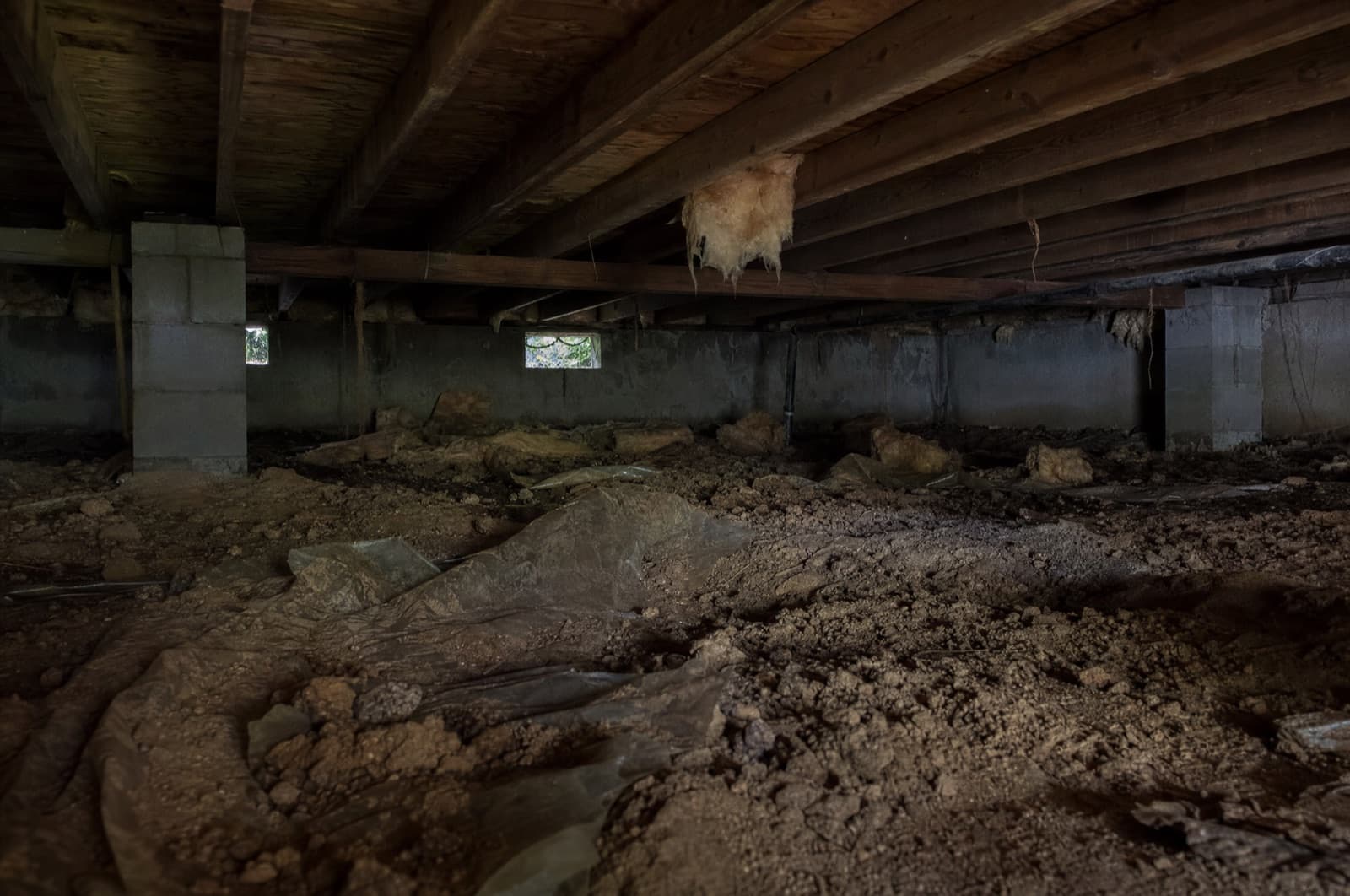
What Is That Smell in My Crawl Space? Causes and Solutions
A musty, earthy smell in a crawl space almost always means moisture — damp soil, condensation, or standing water — and it's the dominant cause in unconditioned, minimally vented New Hampshire crawl spaces by a wide margin. An ammonia smell with droppings or nesting points to rodents or other wildlife, which is common but secondary to moisture here. A putrid smell means a dead animal, and cool, still, low-airflow crawl-space air makes that odor linger longer than it would in an open room. A rotten-egg smell from a broken or leaking waste line running through the crawl space is a plumbing or septic issue, not a pest one.
A New Hampshire crawl space sits below grade against damp, cool soil, which makes it the single most moisture-driven room in this entire hub — and by a wide margin, the dominant cause of a crawl-space smell here is moisture and mold, not a pest. That doesn't mean rodents, a dead animal, or sewer gas are never the answer; it means this page's differential is honestly weighted toward one clear cause rather than padded out to look more even than it is.
At a Glance
- Diagnosing: Crawl space
- Top cause: Mold / Moisture
below 60%
Relative humidity to hold a crawl space under to prevent mold growth
EPA
Moisture and mold are the dominant cause of a crawl-space smell in New Hampshire homes, by a wide margin over rodents, a dead animal, or a sewer/septic issue.
Ranked causes — and how to tell them apart
Like a doctor's differential: the candidate causes for this smell, ranked most-likely first, each with the tell-tale sign that distinguishes it and who actually fixes it.
- Most likelyMold / Moisture
Moisture or mold
How to tell it's this
A musty, earthy smell with damp soil, visible condensation, or standing water on the vapor barrier; a share of that air rises into the home above.
Who fixes itMold remediationA crawl-space contractor handles vapor barrier/encapsulation, drainage, and dehumidification; mold remediation if it's extensive.
- PossiblePest
Rodents or wildlife nesting
How to tell it's this
An ammonia urine smell with droppings, nesting material, or a den; open or poorly sealed crawl-space vents make it an easy entry point for wildlife as well as rodents.
Who fixes itPest → AnchorRemoval plus exclusion — sealing foundation vents and openings with hardware cloth.
- PossibleDecay / Food
Dead animal
How to tell it's this
A putrid smell that lingers unusually long, since the crawl space's cool, still, low-airflow air holds odor far longer than an open, ventilated room.
Who fixes itPest → AnchorLocate, remove with PPE, and apply enzymatic cleanup.
- Less likelyPlumbing / Sewer
Sewer or septic line
How to tell it's this
A rotten-egg/sewage smell from a broken or leaking waste line running through or near the crawl space, often strongest under a bathroom.
Who fixes itPlumberA plumber or septic contractor repairs the line; not a pest or mold issue.
What each clue points to
Notice one of these and you can narrow the differential fast.
- Mold / Moisture
If you notice: Musty, earthy smell with damp soil or condensation
Moisture and mold — the dominant crawl-space cause in NH; encapsulation and dehumidification fix it.
- Pest
If you notice: Ammonia smell with droppings or nesting material
Rodents or wildlife — pest pro removal plus exclusion.
- Decay / Food
If you notice: Putrid smell that lingers unusually long in still air
A dead animal — the low airflow is why it doesn't fade on its own.
- Plumbing / Sewer
If you notice: Rotten-egg/sewage smell strongest under a bathroom
A broken or leaking waste line — plumber or septic contractor, not a pest issue.
How Anchor finds and fixes it
When the differential points to rodents, wildlife, or a dead animal, here's the approach — crawl-space access is genuinely difficult and often not realistic for a homeowner to do safely:
Inspect the vapor barrier, piers, and perimeter
A technician checks for droppings, nests, dens, and entry points along the foundation vents and openings.
Locate any carcass
The odor gradient in the low-airflow space is followed to the source, even though it lingers longer than in an open room.
Remove with PPE
Nesting material, droppings, and any carcass are removed by hand, following CDC guidance to never dry-sweep or vacuum rodent waste — a low-clearance crawl space makes proper PPE even more important.
Enzymatic cleanup
Urine and decomposition residue are treated with an enzyme-based cleaner that breaks the odor compounds down rather than masking them.
Seal foundation vents and openings
Hardware cloth over vents and sealed openings keep rodents and wildlife from re-entering the crawl space.
Because low clearance, insulation exposure, and moisture make crawl-space work genuinely difficult and sometimes unsafe for a homeowner, this is one of the clearest 'call a professional' rooms in the hub, alongside the attic — species ID and rodent biology live at /pests and /mice-and-rats-faq.
Rodents, wildlife, or a dead animal under the house?
Anchor's NH technicians handle the crawl-space access safely, remove the source, and seal the entry points. Free inspection, same-day service.
Who to call for the other causes
The honest routing: when the smell points somewhere other than a pest, here's the right trade and the conservative next step.
- Mold remediation
The smell is musty and tied to damp soil, condensation, or standing water
A crawl-space contractor installs a vapor barrier/encapsulation and drainage/dehumidification; a mold remediation pro if growth is extensive.
- Plumber
A rotten-egg or sewage smell traces to a waste line, not a gas appliance
Call a plumber or septic contractor to repair the broken or leaking line.
- You can handle it
The crawl space contains fuel-burning equipment
Confirm a working CO alarm is installed on the level above, since CO is odorless and won't be detected by smell.
Why moisture dominates NH crawl spaces
New Hampshire crawl spaces sit below grade against damp, cool soil, and humid summer air condensing on those cold surfaces makes moisture-driven mold the runaway leading crawl-space odor cause in the region — which is why encapsulation and dehumidification are the usual fix rather than any pest treatment. That same cool, still, low-airflow environment also makes a dead-animal or sewer odor linger far longer than it would in open, ventilated space above ground.
NH-licensed applicator #782664 (NHDAMF, RSA 430) · NEPMA member · family-owned since 2017.
Frequently asked
Sources(4)
- [1]EPA — Mold Course Chapter 9: Moisture, Mold and Buildings
Crawl-space seepage should be stopped quickly to prevent mold; RH below 60%
gov - [2]
- [3]ATSDR/CDC — Hydrogen Sulfide Public Health Statement
Sewer-gas rotten-egg odor mechanism from a broken waste line
gov - [4]WildlifeHelp.org — Skunks and Wildlife Denning Under Structures
Wildlife denning in open/poorly sealed crawl spaces
extension
Written & reviewed by
VerifiedDaniel Brady
NH-Licensed Pesticide Applicator · License #782664 (NHDAMF, RSA 430)
Daniel Brady is the New Hampshire–licensed applicator behind Anchor Pest Services, a family-owned pest control company serving the Manchester area since 2017.
Last updated 2026-07-14
Odor-Source Diagnosis & Removal
Crawl-Space Access, Handled Safely
Anchor Pest Services inspects the vapor barrier and perimeter, removes rodents, wildlife, or a dead animal, and seals foundation vents and openings, across southern and central New Hampshire — and we'll tell you honestly when the real fix is moisture control, not pest control. Family-owned since 2017, NH license #782664.
- Safe crawl-space access + PPE
- CDC-aligned cleanup + enzymatic odor removal
- Honest routing to moisture/encapsulation when that's the real cause
NH License #782664 · No obligation · We answer in person
Your next step
- Book a NH pro
Pest Control Services
Licensed, family-owned pest control across southern NH.
Book now - Also relevant
Do pests target attics and crawl spaces more often?
Read the answer - Related guide
What Is That Smell in My Walls or Ceiling?
Read the answer - Related guide
Why Does My Attic Smell Bad? Common Causes and What to Do
Read the answer - Related guide
Why Do My Vents Smell Bad? Common Causes and How to Fix Them
Read the answer - Related guide
What Is That Smell in My Basement? Common Causes and Fixes
Read the answer