
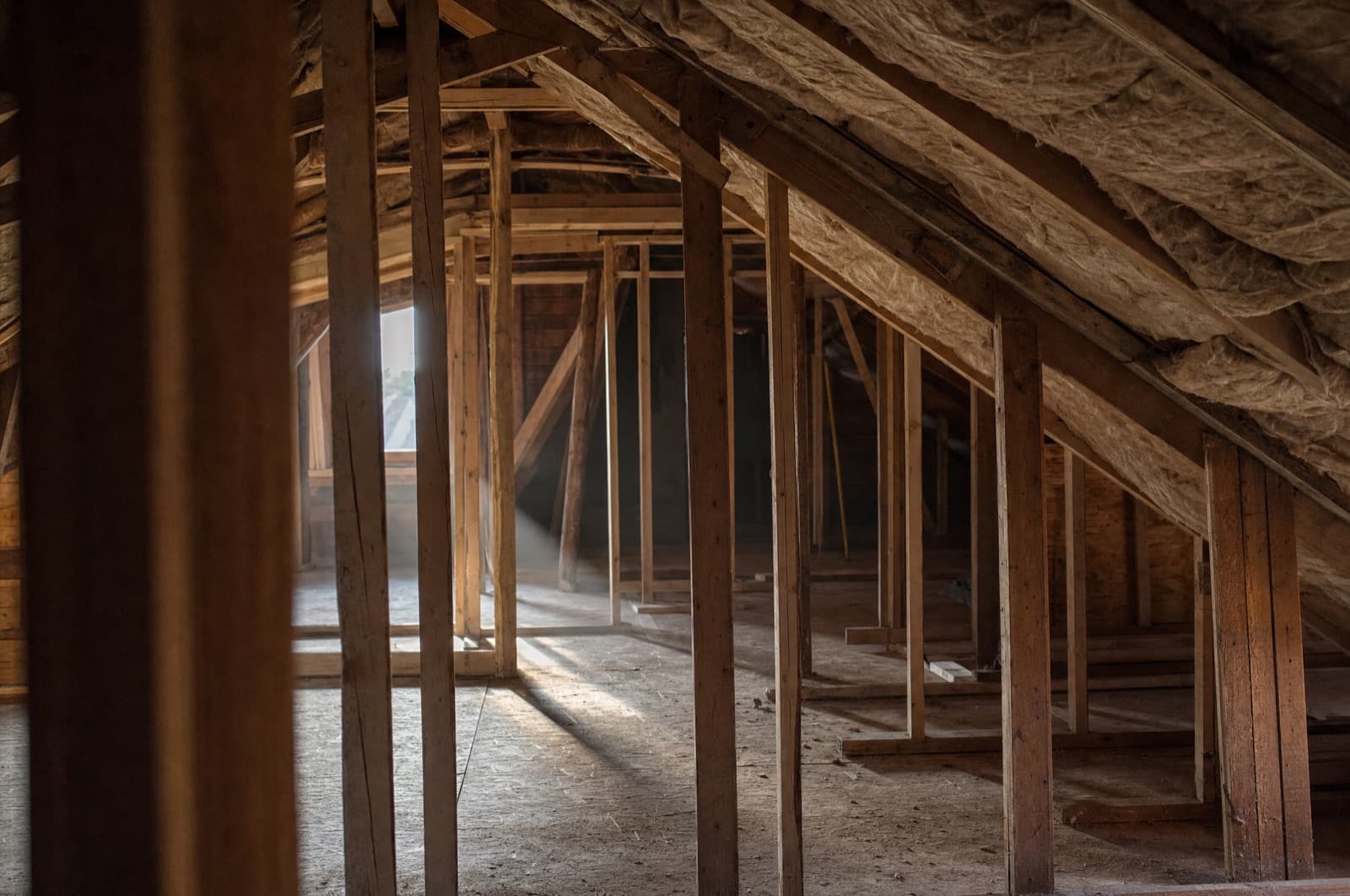
Why Does My Attic Smell Bad? Common Causes and What to Do
An attic smell is most often rodent, squirrel, or bat nesting — an ammonia-urine odor paired with droppings, guano, or torn insulation used as nesting material. A putrid, fly-accompanied smell usually means a dead animal in the attic or a soffit void. A musty smell with visible staining on the roof sheathing or insulation points to a roof leak and mold rather than any animal. There's no acute gas or electrical hazard specific to attics, but large bat or bird guano deposits carry a real, sourced health consideration, and rodents chewing wiring up there is a recognized fire risk worth having checked.
Attics see the widest temperature swings of any space in a New Hampshire home, and they're a favorite entry point for rodents, squirrels, and bats at the roofline and soffit. Most attic odors trace back to nesting — urine, droppings, or guano — but a musty smell can just as easily mean a roof leak with nothing to do with pests at all. Because attics are hard to access safely and can carry a real, if low-frequency, health consideration, this is one room where knowing when to call a professional matters more than the DIY instinct.
At a Glance
- Diagnosing: Attic
- Top cause: Pest
- Safety: A real hazard may apply — read the red band below
mid-May–mid-August
NH window when bats must NOT be excluded (flightless young would be trapped)
NH Fish and Game
mid-August–mid-May
Legal window for bat exclusion from an NH attic
NH Fish and Game
Rodent, squirrel, or bat nesting — with accumulated urine, droppings, or guano — is the most likely cause of an attic smell; a roof leak causing mold is the main non-pest alternative.
Ranked causes — and how to tell them apart
Like a doctor's differential: the candidate causes for this smell, ranked most-likely first, each with the tell-tale sign that distinguishes it and who actually fixes it.
- Most likelyPest
Rodent, squirrel, or bat nesting
How to tell it's this
An ammonia/urine smell with droppings, guano, or torn insulation pulled into nest shapes; scratching sounds, especially around dawn and dusk for bats.
Who fixes itPest → AnchorWildlife/pest pro handles removal and exclusion; bats can only be excluded in legal windows (roughly mid-August through mid-May in NH).
- PossibleDecay / Food
Dead animal in the attic or a soffit void
How to tell it's this
A putrid, sweet-then-rotting odor with flies, sometimes traced to baby squirrels or a bird that died in a soffit or eave void.
Who fixes itPest → AnchorWildlife pro locates, removes, and applies enzymatic cleanup.
- PossibleMold / Moisture
Roof-leak mold
How to tell it's this
A musty smell with visible water staining on the roof sheathing or insulation, often worse after rain or snowmelt; no droppings or nesting evidence.
Who fixes itMold remediationA roofer fixes the leak; a mold remediation pro handles cleanup if it's spread beyond a small area.
- Less likelyOther
Insulation or heat-related odor
How to tell it's this
A dusty or faintly chemical smell, sometimes after new insulation was installed, or a warm/hot smell near recessed light fixtures.
Who fixes itElectricianInsulation contractor for material off-gassing; an electrician if the smell is heat-related and near a fixture.
What each clue points to
Notice one of these and you can narrow the differential fast.
- Pest
If you notice: Ammonia smell with droppings and torn insulation
A rodent or squirrel nest — the torn insulation is used as nesting material.
- Mold / Moisture
If you notice: Musty smell with water stains on the roof sheathing
A roof leak causing mold — needs a roofer, not a pest pro.
- Pest
If you notice: Large piles of guano or droppings present
Do not disturb dry — a health consideration that needs professional cleanup, plus bat exclusion timing if bats are the source.
- Decay / Food
If you notice: Putrid smell with flies gathering at the eaves
A dead animal in the attic or a soffit void.
How Anchor finds and fixes it
When the differential points to rodent, squirrel, or bat nesting, here's how a technician approaches attic access — a space many homeowners genuinely can't or shouldn't work in themselves:
Inspect for nests, droppings, and entry points
A technician surveys insulation, rafters, and the soffit/roofline for nesting evidence and identifies where the animal is getting in.
Identify the species
Species ID matters here specifically because bats and their exclusion timing are legally protected — confirming what's present determines the method and the legal window.
Remove and exclude with one-way devices
For most wildlife, one-way exclusion devices let the animal leave but not return, avoiding trapping young inside.
Professional cleanup of guano or urine
Large droppings deposits are cleaned with PPE and enzymatic treatment rather than dry-swept, per the health considerations around bat and bird guano.
Seal entries and repair chewed material
Roofline and soffit gaps are sealed, and any chewed wiring or material is flagged for repair.
Attic access, insulation, and guano exposure are the reasons this is one of the clearest 'call a professional' rooms in the hub — species ID and rodent biology live at /pests and /mice-and-rats-faq.
Nesting or guano in the attic?
Anchor's NH technicians identify the species, exclude it on the correct legal timeline, and clean up safely. Free inspection, same-day service.
Who to call for the other causes
The honest routing: when the smell points somewhere other than a pest, here's the right trade and the conservative next step.
- Mold remediation
A musty smell traces to a roof leak with staining on sheathing or insulation
A roofer fixes the leak first; a mold remediation pro handles cleanup if the affected area is more than minor.
- Electrician
A heat or chemical smell is near a recessed light fixture or new insulation
Have an electrician check heat-related odors near fixtures, or an insulation contractor for material off-gassing.
- Pest → Anchor
Large guano or droppings deposits are present
Do not disturb dry; a professional cleans it up with proper PPE and enzymatic treatment, coordinating any bat exclusion for the legal timing window.
Why NH attics see rodent, squirrel, and bat activity
New Hampshire's two building-roosting bat species, the little brown bat and big brown bat, form maternity colonies in attics, and state wildlife guidance is explicit that bats should not be excluded from roughly mid-May through mid-August, when flightless young would be trapped inside — legal exclusion runs mid-August to mid-May instead. Combined with fall's rodent push-indoors and NH's aging, snow-loaded roofs, attic nesting and roof-leak mold are the two dominant causes of attic odor across the region.
NH-licensed applicator #782664 (NHDAMF, RSA 430) · NEPMA member · family-owned since 2017.
Frequently asked
Sources(5)
- [1]CDC — Histoplasmosis: About the Fungus
Histoplasma grows in soil/material with bird or bat droppings
gov - [2]NH Fish and Game — Homeowners and Bats
Bat guano histoplasmosis consideration; NH bat exclusion timing
gov - [3]UNH Cooperative Extension — Bats in New Hampshire
NH building-roosting bat species and legal exclusion window
extension - [4]CDC — Baylisascaris (Raccoon Roundworm) Prevention
Avoiding contact with raccoon droppings/latrines in attics
gov - [5]EPA — Mold Course Chapter 9: Moisture, Mold and Buildings
Investigate musty/moldy smells for hidden water intrusion
gov
Written & reviewed by
VerifiedDaniel Brady
NH-Licensed Pesticide Applicator · License #782664 (NHDAMF, RSA 430)
Daniel Brady is the New Hampshire–licensed applicator behind Anchor Pest Services, a family-owned pest control company serving the Manchester area since 2017.
Last updated 2026-07-14
Odor-Source Diagnosis & Removal
Attic Nesting, Handled the Right Way
Anchor Pest Services identifies the species, times exclusion legally (bats included), and cleans up guano and urine with proper PPE and enzymatic treatment, across southern and central New Hampshire. Family-owned since 2017, NH license #782664.
- Species ID before any exclusion
- Legal, timing-aware bat exclusion
- Professional guano/urine cleanup
NH License #782664 · No obligation · We answer in person
Your next step
- Book a NH pro
Pest Control Services
Licensed, family-owned pest control across southern NH.
Book now - Related guide
What Is That Smell in My Walls or Ceiling?
Read the answer - Also relevant
Why do bat droppings smell so bad?
Read the answer - Related guide
Why Do My Vents Smell Bad? Common Causes and How to Fix Them
Read the answer - Related guide
Why Does My Garage Smell Bad? Common Causes and Solutions
Read the answer - Related guide
What Is That Smell in My Basement? Common Causes and Fixes
Read the answer