
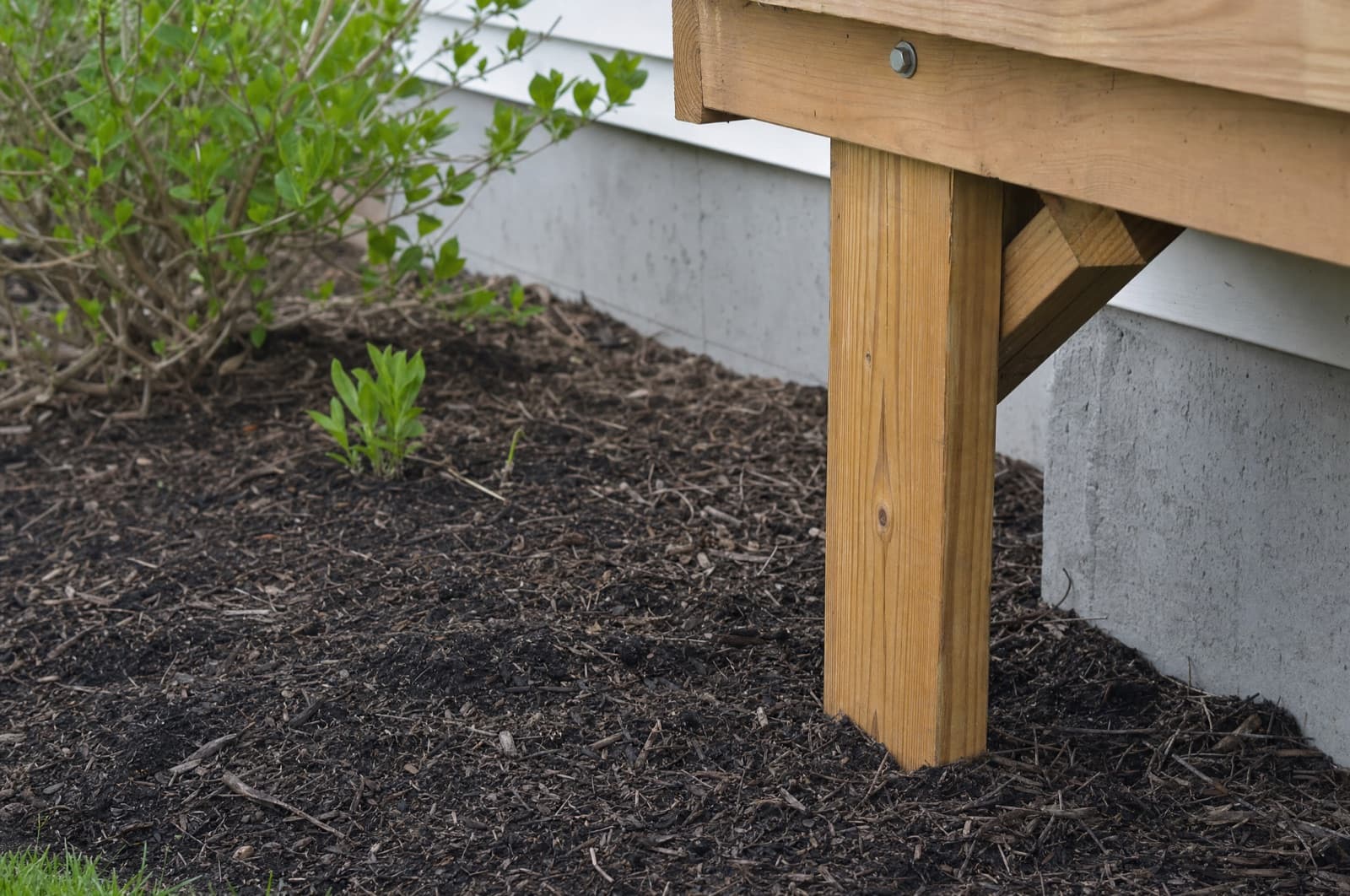
How to Prevent Termites Around a Concrete Slab Foundation
This is a genuine termite-risk scenario worth taking seriously — a slab-on-grade foundation is one of the more vulnerable types because a hairline crack, expansion joint, or utility penetration can let soil-dwelling termites reach the sill plate completely unseen.
Real, but manageable. A dry, sealed, visible perimeter is the fix, and it's the same work that also protects the slab itself — this is worth a professional inspection where you see damp concrete or a crack near the sill, not a reason to worry about the slab in general.
At a glance
- What it is: Real termite risk
- The driver: Hidden slab cracks and penetrations, worsened by perimeter moisture
- Who fixes it: A moisture or building pro
This is a genuine termite-risk scenario worth taking seriously — a slab-on-grade foundation is one of the more vulnerable types because a hairline crack, expansion joint, or utility penetration can let soil-dwelling termites reach the sill plate completely unseen.
Real, but manageable. A dry, sealed, visible perimeter is the fix, and it's the same work that also protects the slab itself — this is worth a professional inspection where you see damp concrete or a crack near the sill, not a reason to worry about the slab in general.
Pull the right lever, not the sprayer
The organism is downstream of one condition. Remove that condition and it has no foothold — which is why prevention here is rarely a pesticide.
The driver
Hidden slab cracks and penetrations, worsened by perimeter moisture
Termites forage through soil and exploit gaps as small as 1/32 inch at slab edges, expansion joints, and plumbing or conduit penetrations to reach the wood framing above — moisture at the foundation edge makes that soil easier to tunnel and keeps it more attractive to a colony.
Source:Building America Solution Center (PNNL/DOE)— Termite-Resistant Foundations and Walls
3 levers, honestly ranked
Sorted by what actually moves the driver — primary first, theatre last. Effort is graded so you know what's a five-minute fix and what's a real project.
- Primary — moves the driverWeekend project
Keep grade and drainage away from the slab edge
Regrade so soil slopes away from the foundation and keep the top of the slab visibly above surrounding grade. Direct roof runoff well away with gutters and extended downspouts, and never let an irrigation system spray the foundation edge. Because termites desiccate quickly, a dry perimeter is one of the single most effective deterrents available — it denies them both the moisture and the concealment they need, and it keeps a clear, inspectable band of exposed foundation where any mud tube would be obvious the moment it appears.
- SupportingHire a pro
Seal and maintain slab cracks and penetrations
Have expansion joints, cold joints, and every point where plumbing or conduit passes through the slab sealed with a durable sealant, and re-check it every year or two because sealants degrade over time. This closes the exact hairline routes termites use to bridge from soil to the sill, and it forces any determined colony onto an exposed surface where a mud tube becomes visible. Never bury the slab edge under soil, mulch, or added grade.
- SupportingQuick DIY
Walk the full perimeter each spring
Look along the entire exposed slab edge for pencil-width mud tubes climbing from soil toward the sill, and probe any suspect wood near the foundation with a screwdriver. Spring is the highest-yield time because swarming and fresh tube-building both peak after warm, wet weather. Early detection is what turns a hidden, slow problem into a manageable one.
Whose job is this, really?
Who actually fixes it
A moisture or building pro
Grading, drainage, and sealing slab cracks are building and homeowner work — the durable fix lives there. A licensed pest professional's role is confirming species and treating soil if activity is actually found, not the everyday upkeep.
You find a mud tube on the foundation, spring swarmers indoors near a window, or sill wood that sounds hollow or crumbles — request a professional inspection promptly.
How this calibrates for NH
Southern and central New Hampshire — Rockingham, Hillsborough, Merrimack, and Strafford counties — sit in the federal government's higher termite-probability zone, while the three northernmost counties fall in the lowest band, so slab detailing genuinely matters more here than in the North Country.
NH-licensed applicator #782664 (NHDAMF, RSA 430) · NEPMA member · family-owned since 2017.
Frequently asked
Sources(3)
- [1]Building America Solution Center (PNNL/DOE)
Termite-Resistant Foundations and Walls
- [2]JLC Online
Q&A: Protecting Insulated Foundations From Termites (Smulski)
- [3]U.S. HUD Circular PH 00-06
Termite Infestation Probability Zones
Written & reviewed by
VerifiedDaniel Brady
NH-Licensed Pesticide Applicator · License #782664 (NHDAMF, RSA 430)
Daniel Brady is the New Hampshire–licensed applicator behind Anchor Pest Services, a family-owned pest control company serving the Manchester area since 2017.
Your next step
Anchor Pest Services
Have a different pest question?
This one may not be a pesticide job — but if you're facing something that is, we serve Southern New Hampshire with a free inspection and same-day service.
- NH-licensed applicator
- Same-day service
- Pet & family-conscious
NH License #782664 · No obligation · We answer in person