
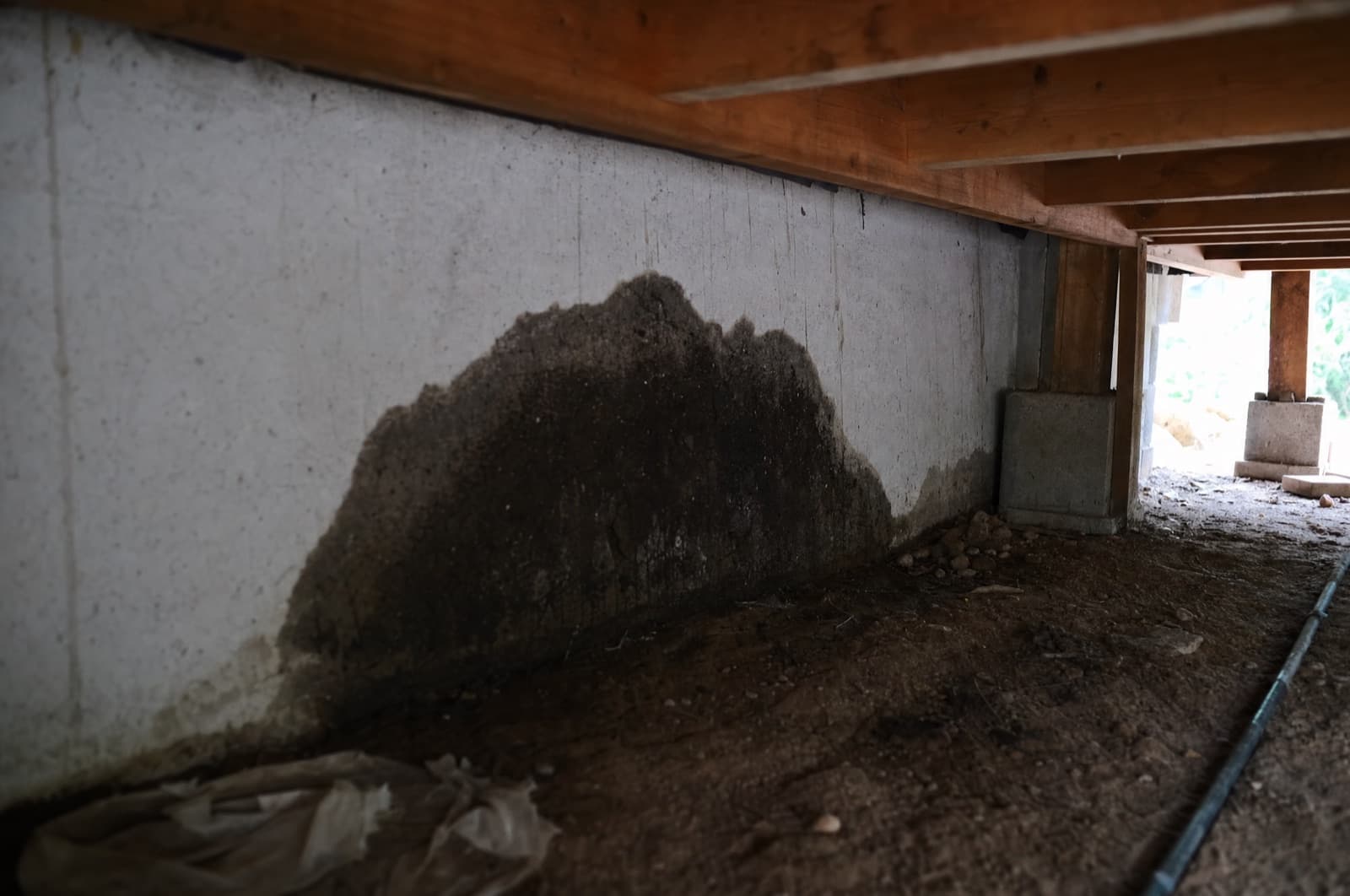
How to Prevent Termites in Homes with a Damp Basement and Musty Odors
This is a genuine termite-risk scenario — a damp, musty basement signals the kind of chronic moisture that both attracts subterranean termites and, in some cases, can sustain them above ground, and it's also a decay and mold flag in its own right.
Real, and worth an inspection, but a musty basement in New Hampshire is statistically more likely to mean carpenter ants or wood decay than termites specifically — the good news is that fixing the moisture addresses all three at once.
At a glance
- What it is: Real termite risk
- The driver: Chronic basement moisture (the source of the musty odor)
- Who fixes it: A moisture or building pro
This is a genuine termite-risk scenario — a damp, musty basement signals the kind of chronic moisture that both attracts subterranean termites and, in some cases, can sustain them above ground, and it's also a decay and mold flag in its own right.
Real, and worth an inspection, but a musty basement in New Hampshire is statistically more likely to mean carpenter ants or wood decay than termites specifically — the good news is that fixing the moisture addresses all three at once.
Pull the right lever, not the sprayer
The organism is downstream of one condition. Remove that condition and it has no foothold — which is why prevention here is rarely a pesticide.
The driver
Chronic basement moisture (the source of the musty odor)
Damp wood is strongly preferred by termites over dry, sound lumber, and chronic basement moisture is one of the conditions that supports both active foraging and, more rarely, an above-ground colony that no longer needs a fresh soil connection — the musty smell itself is the moisture announcing itself before you ever see a mud tube.
Source:University of Kentucky Entomology— ENTFACT-605: Protecting Your Home Against Termites (Potter)
3 levers, honestly ranked
Sorted by what actually moves the driver — primary first, theatre last. Effort is graded so you know what's a five-minute fix and what's a real project.
- Primary — moves the driverWeekend project
Find and fix the actual water source
Work out whether the dampness is seepage through the foundation, condensation on cool surfaces, or a plumbing leak, and correct it directly — through grading, drainage improvements, sealing, or dehumidification depending on the cause. A musty odor is a moisture signature, not a separate problem, so drying the wood out removes the root condition behind termites, decay fungi, and mold all at the same time.
- SupportingWeekend project
Improve perimeter drainage
Extend downspouts well away from the foundation, regrade any low spots that direct water toward the house, and keep gutters clear so rainwater actually leaves the property instead of soaking into the soil against your basement wall.
- SupportingQuick DIY
Inspect framing for tubes and decay each spring
Probe sills and joists specifically in the dampest corners of the basement, since that's where both termite activity and rot are most likely to show up first if either is present.
Whose job is this, really?
Who actually fixes it
A moisture or building pro
Diagnosing and correcting the water source — whether that's grading, drainage, sealing, or a dehumidification strategy — is fundamentally a moisture and building-contractor job. A pest professional's role starts if mud tubes or actual damage are found during the process.
You find a mud tube, visible wood damage, or dampness that doesn't resolve even after addressing the obvious source — get a professional inspection rather than continuing to guess.
How this calibrates for NH
In New Hampshire, a musty-smelling basement is statistically more likely to point to carpenter ants or wood decay than to termites specifically — but southern and central NH sit in a moderate termite-probability zone, so the moisture fix genuinely serves all three problems and the inspection is still worthwhile.
NH-licensed applicator #782664 (NHDAMF, RSA 430) · NEPMA member · family-owned since 2017.
Frequently asked
Sources(3)
- [1]University of Kentucky Entomology
ENTFACT-605: Protecting Your Home Against Termites
- [2]Clemson Cooperative Extension (HGIC)
Subterranean Termite Control
- [3]UNH Cooperative Extension
Carpenter Ants fact sheet (A.T. Eaton) — NH structural pest context
Written & reviewed by
VerifiedDaniel Brady
NH-Licensed Pesticide Applicator · License #782664 (NHDAMF, RSA 430)
Daniel Brady is the New Hampshire–licensed applicator behind Anchor Pest Services, a family-owned pest control company serving the Manchester area since 2017.
Your next step
Anchor Pest Services
Have a different pest question?
This one may not be a pesticide job — but if you're facing something that is, we serve Southern New Hampshire with a free inspection and same-day service.
- NH-licensed applicator
- Same-day service
- Pet & family-conscious
NH License #782664 · No obligation · We answer in person