
How to Prevent Termites in a Home With Wood-to-Soil Contact at Porch Steps
Wooden steps or posts set directly in soil are a textbook 'termite ladder' straight into the structure — one of the strongest, most legitimate risk conditions in this entire hub.
A genuine, high-priority fix, not an exaggeration. Getting the wood off the soil is decisive here in a way few other conditions in the home are.
At a glance
- What it is: Real termite risk
- The driver: Direct earth-to-wood contact at steps or posts
- Who fixes it: A moisture or building pro
Wooden steps or posts set directly in soil are a textbook 'termite ladder' straight into the structure — one of the strongest, most legitimate risk conditions in this entire hub.
A genuine, high-priority fix, not an exaggeration. Getting the wood off the soil is decisive here in a way few other conditions in the home are.
Pull the right lever, not the sprayer
The organism is downstream of one condition. Remove that condition and it has no foothold — which is why prevention here is rarely a pesticide.
The driver
Direct earth-to-wood contact at steps or posts
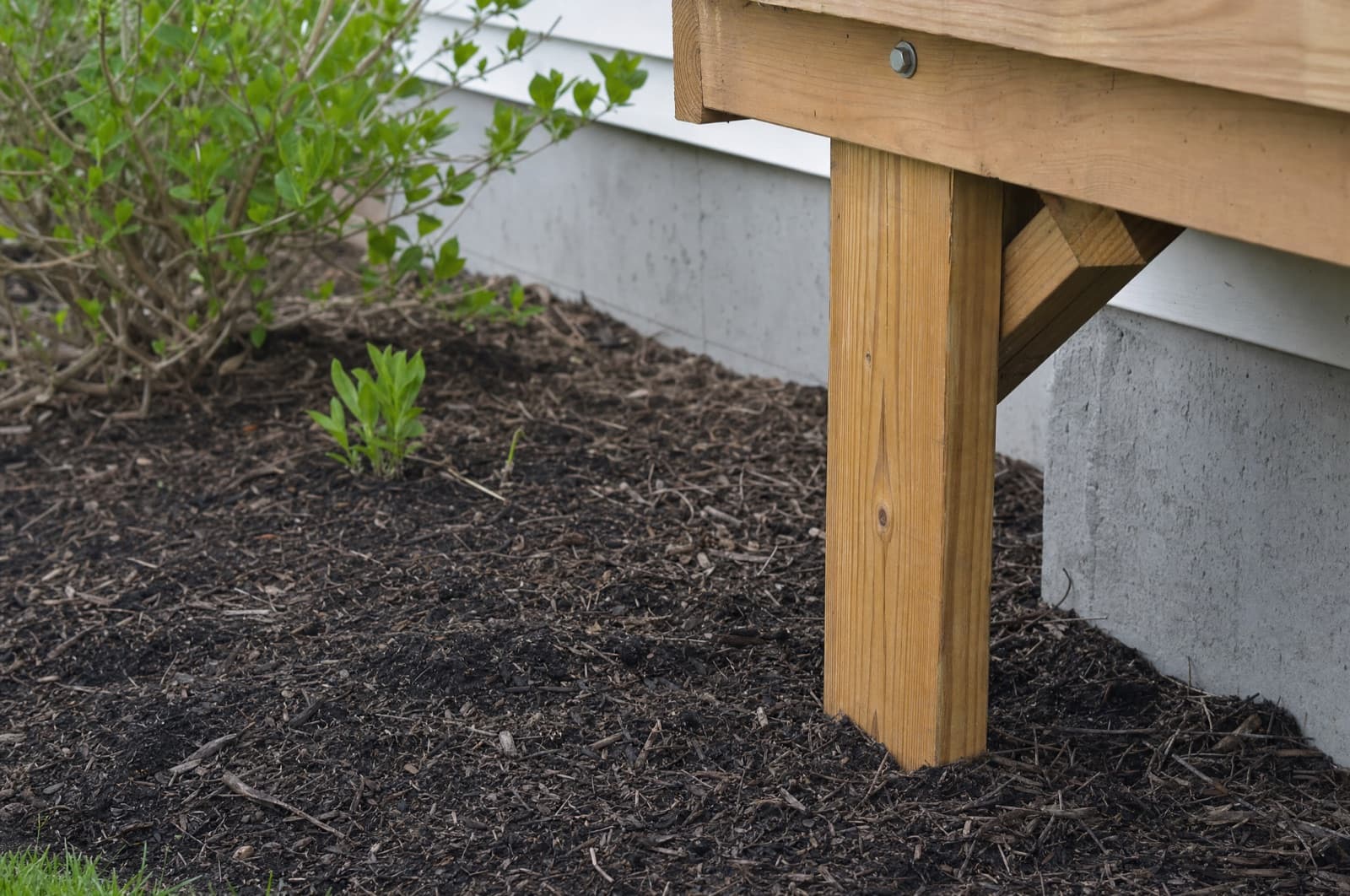
Earth-to-wood contact gives subterranean termites easy, entirely hidden access to food, moisture, and shelter all in one place, with no mud tube even required. Porch steps, stringers, and posts embedded directly in soil or set in concrete that extends into the ground are prime targets, and even pressure-treated wood can still be breached at cut ends and exposed cuts where the treatment doesn't reach.
Source:University of Kentucky Entomology— ENTFACT-605: Protecting Your Home Against Termites (Potter)
2 levers, honestly ranked
Sorted by what actually moves the driver — primary first, theatre last. Effort is graded so you know what's a five-minute fix and what's a real project.
- Primary — moves the driverHire a pro
Get step and post wood off the soil onto concrete or metal
Support wooden steps, stringers, and porch posts on concrete bases or metal standoffs so no wood touches soil, and cut off the bottoms of any lattice or trim that currently reaches the ground. This directly severs the earth-to-wood ladder that is the entire mechanism behind this page's risk, making it the single most effective action according to Extension consensus. Use pressure-treated or naturally durable wood for any members that must stay near grade, and understand that even treated wood can still be breached at cut ends, so keeping it elevated matters regardless of the wood type.
- SupportingWeekend project
Keep the base dry and inspectable
Pull soil and mulch back from the base of steps and posts, grade for drainage so water doesn't pool there, and leave the connection point visible so a mud tube would be immediately obvious during a seasonal check.
Whose job is this, really?
Who actually fixes it
A moisture or building pro
Rebuilding steps or posts onto proper concrete bases or standoffs is carpentry work, not a pest-control task. A licensed pest professional's role is confirming and treating any activity that's found once the structure is inspected.
You see mud tubes on posts, soft or hollow step wood, or embedded posts you genuinely can't inspect because they're buried — any of these calls for a professional termite inspection.
How this calibrates for NH
This is a real risk anywhere in southern New Hampshire's TIP Zone 3, and earth-filled or rubble-filled porches — common in older homes — are especially hard to inspect properly, which is why NC State Extension flags them as warranting professional attention rather than a simple homeowner check.
NH-licensed applicator #782664 (NHDAMF, RSA 430) · NEPMA member · family-owned since 2017.
Frequently asked
Sources(3)
- [1]University of Kentucky Entomology
ENTFACT-605: Protecting Your Home Against Termites (Potter)
- [2]Clemson Cooperative Extension (HGIC)
Subterranean Termite Control
- [3]NC State Extension
Termite Prevention Approaches for New Construction
Written & reviewed by
VerifiedDaniel Brady
NH-Licensed Pesticide Applicator · License #782664 (NHDAMF, RSA 430)
Daniel Brady is the New Hampshire–licensed applicator behind Anchor Pest Services, a family-owned pest control company serving the Manchester area since 2017.
Your next step
Anchor Pest Services
Have a different pest question?
This one may not be a pesticide job — but if you're facing something that is, we serve Southern New Hampshire with a free inspection and same-day service.
- NH-licensed applicator
- Same-day service
- Pet & family-conscious
NH License #782664 · No obligation · We answer in person