
How to Prevent Termites in a Pier-and-Beam Foundation
This is a genuine termite-risk scenario — a pier-and-beam foundation creates an accessible crawl space with soil, moisture, and multiple wood members close to grade, which is real termite risk by design.
Real, but the same open, walk-under accessibility that creates the risk also makes prevention and inspection unusually easy compared to a slab or sealed crawl space — this is a foundation type where doing the basics actually works.
At a glance
- What it is: Real termite risk
- The driver: Wood-to-soil contact at piers, plus crawl-space moisture
- Who fixes it: A moisture or building pro
This is a genuine termite-risk scenario — a pier-and-beam foundation creates an accessible crawl space with soil, moisture, and multiple wood members close to grade, which is real termite risk by design.
Real, but the same open, walk-under accessibility that creates the risk also makes prevention and inspection unusually easy compared to a slab or sealed crawl space — this is a foundation type where doing the basics actually works.
Pull the right lever, not the sprayer
The organism is downstream of one condition. Remove that condition and it has no foothold — which is why prevention here is rarely a pesticide.
The driver
Wood-to-soil contact at piers, plus crawl-space moisture
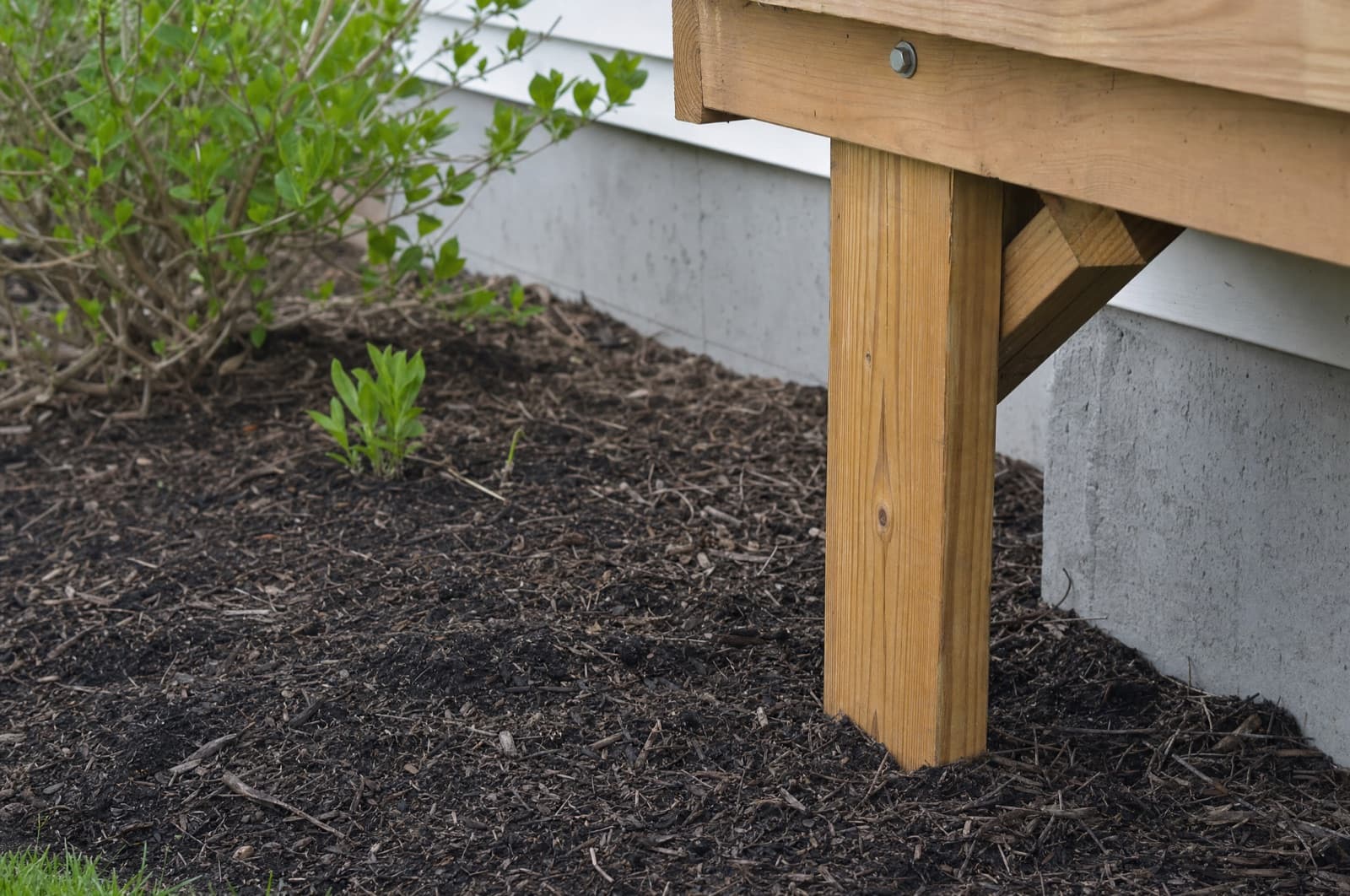
Termites build mud tubes up piers to reach beams and joists above, and any wooden pier or skirting that touches soil directly acts as a ready-made ladder with no tube-building required at all — moisture in the crawl space beneath the beams makes that wood more attractive on top of the direct contact.
Source:Building America Solution Center (PNNL/DOE)— Termite-Resistant Foundations and Walls
3 levers, honestly ranked
Sorted by what actually moves the driver — primary first, theatre last. Effort is graded so you know what's a five-minute fix and what's a real project.
- Primary — moves the driverHire a pro
Break all wood-to-soil contact at piers
Make sure every beam and post bears on a concrete or masonry pier, never on wood sitting in soil, and replace any wooden piers or skirting that touch the ground directly. Keep at least 18 inches of clearance between soil and the lowest beams or joists (36 inches in higher-hazard settings), and keep the dirt underneath graded low and even so piles or erosion don't quietly shrink that clearance over time. Eliminating the direct earth-to-wood ladder is the single decisive move for this foundation type.
- Primary — moves the driverWeekend project
Control crawl moisture beneath the beams
Add full-coverage vapor-barrier sheeting over the exposed soil and correct any drainage issue so the beams and joists stay dry, which both reduces termite attraction and prevents the wood decay that can weaken a pier-and-beam structure independent of any termite activity.
- OptionalHire a pro
Consider metal termite shields at the pier-to-beam junction
A shield installed where each pier meets its beam doesn't stop termites outright, but it forces any tube to build around the shield's exposed edge, where it becomes obvious during a routine walk-through rather than hidden against the pier itself.
Whose job is this, really?
Who actually fixes it
A moisture or building pro
Correcting wood-to-soil contact at piers and improving crawl moisture are structural and building-contractor tasks. A pest professional's role is monitoring the space and treating soil if activity is confirmed.
You spot mud tubes on a pier, notice soft or sagging beams, or find a wooden pier actually embedded in soil — get a professional inspection before doing structural repairs yourself.
How this calibrates for NH
Older homes and additions in southern New Hampshire sometimes use pier-and-beam construction, and the same open accessibility that creates the risk is a genuine advantage — an annual spring walk-under check is far easier here than trying to inspect a slab or a fully enclosed crawl space.
NH-licensed applicator #782664 (NHDAMF, RSA 430) · NEPMA member · family-owned since 2017.
Frequently asked
Sources(2)
- [1]Building America Solution Center (PNNL/DOE)
Termite-Resistant Foundations and Walls
- [2]Clemson Cooperative Extension (HGIC)
Subterranean Termite Control
Written & reviewed by
VerifiedDaniel Brady
NH-Licensed Pesticide Applicator · License #782664 (NHDAMF, RSA 430)
Daniel Brady is the New Hampshire–licensed applicator behind Anchor Pest Services, a family-owned pest control company serving the Manchester area since 2017.
Anchor Pest Services
Have a different pest question?
This one may not be a pesticide job — but if you're facing something that is, we serve Southern New Hampshire with a free inspection and same-day service.
- NH-licensed applicator
- Same-day service
- Pet & family-conscious
NH License #782664 · No obligation · We answer in person