
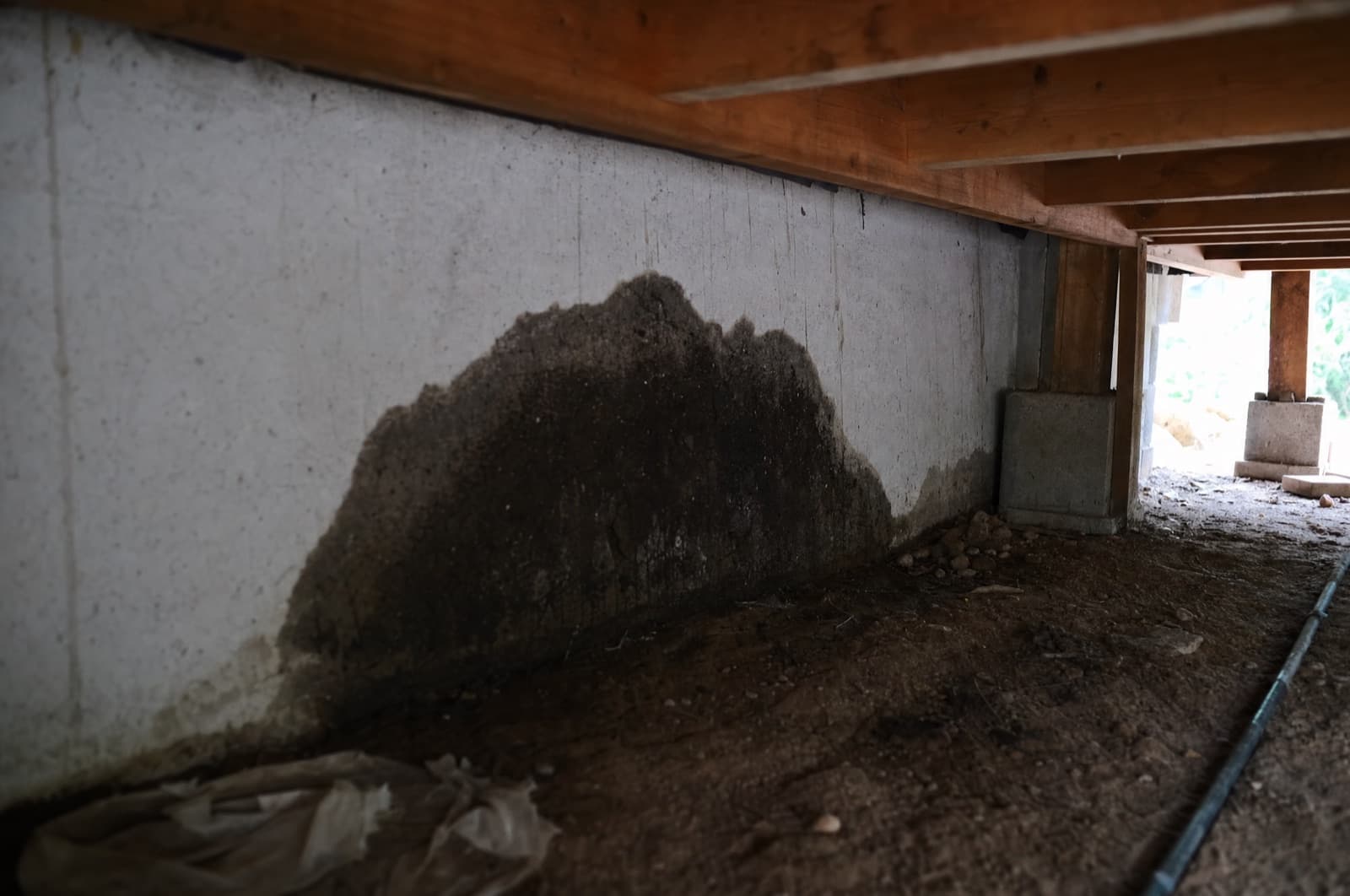
How to Prevent Termites in Homes with Irrigation Spraying the Foundation
This is a genuine termite-risk scenario, and one of the more easily fixed ones — irrigation that hits the foundation keeps perimeter soil and the wood above it chronically wet, which is a direct, avoidable driver rather than a structural problem.
Real, but genuinely easy to fix. This is the rare termite lever you can pull in five minutes with a screwdriver and a sprinkler head adjustment.
At a glance
- What it is: Real termite risk
- The driver: Over-irrigation wetting the foundation and perimeter soil
- Who fixes it: You can handle this
This is a genuine termite-risk scenario, and one of the more easily fixed ones — irrigation that hits the foundation keeps perimeter soil and the wood above it chronically wet, which is a direct, avoidable driver rather than a structural problem.
Real, but genuinely easy to fix. This is the rare termite lever you can pull in five minutes with a screwdriver and a sprinkler head adjustment.
Pull the right lever, not the sprayer
The organism is downstream of one condition. Remove that condition and it has no foothold — which is why prevention here is rarely a pesticide.
The driver
Over-irrigation wetting the foundation and perimeter soil
Constantly moist perimeter soil raises local termite activity and keeps siding and the sill wetter than it should be — building-science guidance on termite-resistant construction is explicit that irrigation should never spray the house, because that self-inflicted moisture recreates the exact conditions homeowners otherwise work to remove.
Source:Building America Solution Center (PNNL/DOE)— Termite-Resistant Foundations and Walls
3 levers, honestly ranked
Sorted by what actually moves the driver — primary first, theatre last. Effort is graded so you know what's a five-minute fix and what's a real project.
- Primary — moves the driverQuick DIY
Re-aim or cap sprinkler heads away from the house
Adjust spray patterns, install deflectors, or cap heads entirely so no water strikes the foundation, siding, or sill, and move any drip lines or soaker hoses back away from the wall. Because desiccation is genuinely one of a termite's worst enemies, keeping the perimeter dry is a real primary control, not landscaping fussiness — water plantings at their roots, several feet out from the house, rather than against it.
- SupportingWeekend project
Grade and drain the wetted zone
If a strip of soil along the foundation has stayed chronically soggy from past irrigation exposure, regrade it so surface water actually sheds away from the house rather than pooling or slowly draining back toward the wall.
- SupportingQuick DIY
Keep a dry, inspectable perimeter band
Maintain a bare or thin, mulch-free strip of exposed foundation so you can actually see a mud tube if one appears, rather than letting landscaping grow up against the wall and hide it.
Whose job is this, really?
Who actually fixes it
You can handle this
Re-aiming sprinkler heads and adjusting an irrigation schedule is squarely homeowner work — no special equipment or professional needed for the fix itself. A moisture or building professional only enters the picture if the wetted zone needs actual regrading.
A mud tube appears at the previously wetted section of the foundation, or siding there shows signs of rot — get a professional inspection at that point.
How this calibrates for NH
Automatic irrigation is less universal in New Hampshire than in warmer regions, but it's increasingly common in southern-NH suburban landscaping, and it creates the exact same conducive moisture band there that it would anywhere else — a five-minute head adjustment removes a self-created risk in a state that already sits in a moderate termite-probability zone.
NH-licensed applicator #782664 (NHDAMF, RSA 430) · NEPMA member · family-owned since 2017.
Frequently asked
Sources(2)
- [1]Building America Solution Center (PNNL/DOE)
Termite-Resistant Foundations and Walls
- [2]UF/IFAS
Subterranean Termites (EENY-212) — biology and moisture conditions
Written & reviewed by
VerifiedDaniel Brady
NH-Licensed Pesticide Applicator · License #782664 (NHDAMF, RSA 430)
Daniel Brady is the New Hampshire–licensed applicator behind Anchor Pest Services, a family-owned pest control company serving the Manchester area since 2017.
Anchor Pest Services
Have a different pest question?
This one may not be a pesticide job — but if you're facing something that is, we serve Southern New Hampshire with a free inspection and same-day service.
- NH-licensed applicator
- Same-day service
- Pet & family-conscious
NH License #782664 · No obligation · We answer in person