
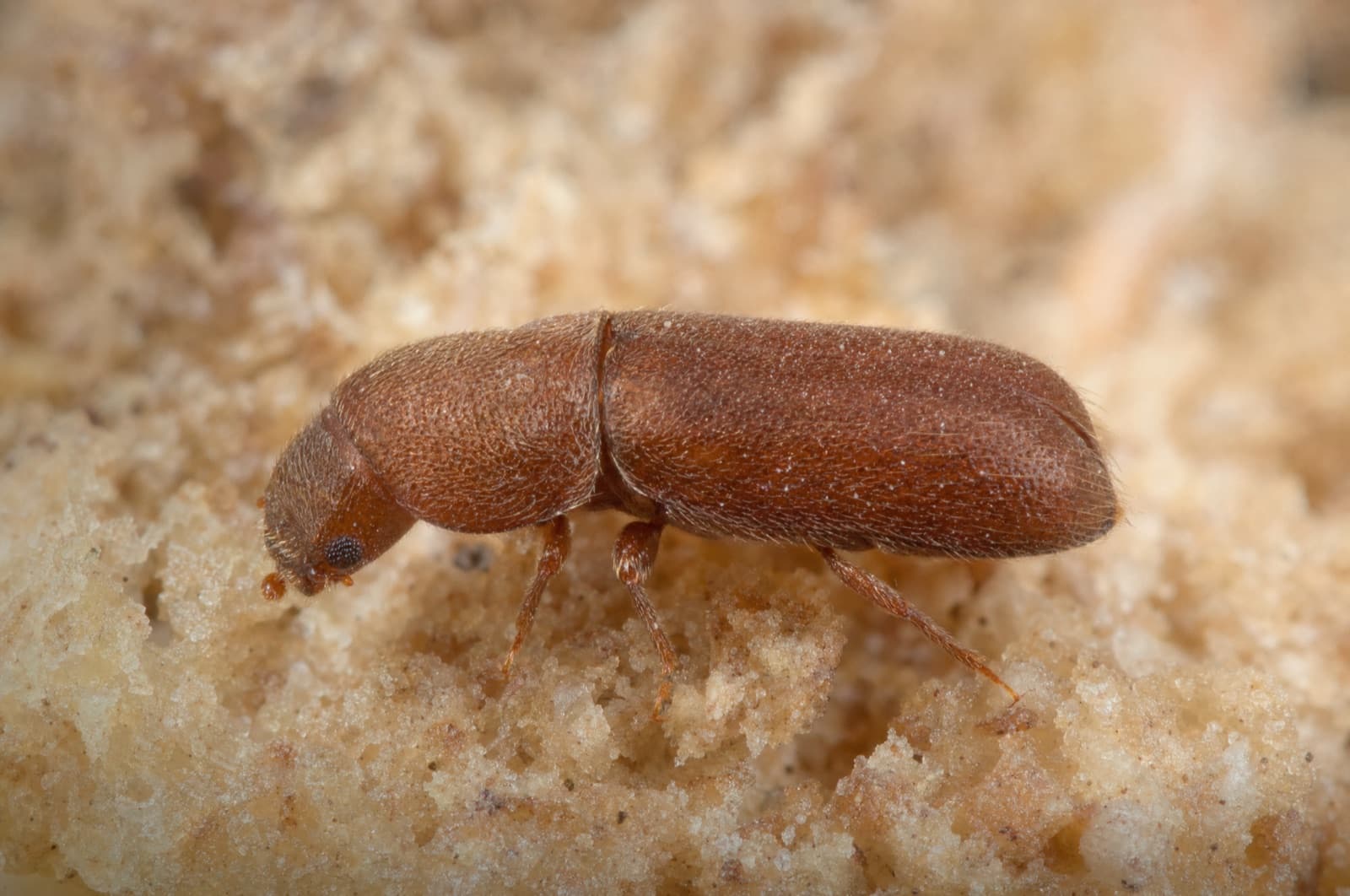
How to Get Rid of Drugstore Beetles
At a glance
- Difficulty: Beginner
- Time: A few hours to inspect and clean out a pantry; ongoing airtight storage habit
- Cost: Low — airtight containers and a vacuum
- Success: High once the source item is found; low if you only treat the beetles you see and skip the search
Can you DIY Drugstore Beetle?
The verdict on Drugstore Beetle DIY
A beginner-friendly DIY — the fix is finding every infested item, not spraying.
Stegobium paniceum has an unusually broad diet — spices, dried flowers, pet food, dog treats, books, even rodent bait — and adults chew through paperboard and bags to spread. But it's a sanitation problem, not a pest you fight with pesticide: locate and discard every infested item, store what's left in airtight rigid containers, and the population collapses. No exterminator needed for a typical kitchen or pantry.
The 5 DIY methods — honestly graded
Every approach graded for this species, in IPM order — prevention first, chemistry late. Pick a method to see how it works, the steps, and what it actually takes.
Prevention / Exclusion
Works wellThe most effective long-term fix — airtight storage stops both new introductions and re-infestation from what's already in the pantry.
Drugstore beetles are introduced almost entirely through purchased dry goods and then spread when adults chew through flimsy packaging to reach new food sources. Rigid, gasketed containers physically block that spread.
Best for: Stopping new introductions and re-infestation for good
Inspect at the door
Check dry goods for small emergence holes, live beetles, or webbing-like debris before they go in the pantry — especially spices, pet food, and dried decorative items.
TipBulk-bin and slow-turnover items (spices, holiday baking stock) are the most common source.Switch to airtight rigid containers
Transfer flour, grains, spices, pet food, and dried florals into glass or hard-plastic containers with tight-fitting lids. Don't leave anything in its original paper or thin plastic packaging.
CautionAdults can chew through paperboard, bags, and even aluminum foil — soft packaging isn't a real barrier.Rotate stock and clean seams
Use older stock first and vacuum shelf cracks and corners periodically, where spilled food dust can sustain a hidden population.
Tools & materials
Why DIY falls short here
Not scare tactics — the specific, proportionate reasons a home attempt can stall for this species.
Missed source
Adults are mobile fliers that collect at windows and light fixtures far from the infested package, so people chase the wrong spot instead of searching the pantry systematically.
Broad diet overlooked
Beyond flour and cereal, drugstore beetles infest spices, dried flowers, pet food, dog treats, books, and even rodent bait — one overlooked item reseeds the whole pantry.
Soft packaging left in place
Leaving goods in their original paper bags, cardboard, or thin plastic doesn't stop them — adults chew through paperboard and even aluminum foil, so survivors keep spreading.
How risky is it, really?
An honest read — most nuisance species are genuinely low risk, and we say so.
Drugstore beetles are a food-contamination and nuisance pest, not a health hazard — they don't bite, sting, or carry disease. The only real harm is spoiled food, which is why finding and discarding infested items is the whole job.
- Contamination/spoilage of infested dry goodsCommon
The main real-world harm — discard infested items rather than trying to salvage them (except via heat/freeze treatment before contamination sets in)
University of Wisconsin Horticulture
- Health or property harm to people or petsRare
Not considered harmful to humans or pets; there's no bite, sting, or disease association
University of Wisconsin Horticulture
Still Finding Drugstore Beetles?
A recurring infestation usually means an unfound source. Anchor Pest Services offers inspection and sanitation guidance across southern and central New Hampshire. Family-owned since 2017, NH license #782664.
Call a pro when…
- Beetles keep reappearing 2–3 weeks after a full pantry clean-out
- You suspect a hidden source outside the kitchen (stored birdseed, dried florals, an old spice cabinet)
- You want a professional inspection to rule out a broader stored-product issue
General Pest Control
You almost never need a pro for drugstore beetles — this is a find-and-discard job. The exception is a persistent infestation that keeps coming back after a thorough pantry clean-out, which usually means an unfound source somewhere in the home.
Keep them out
- Store all dry goods in airtight glass or hard-plastic containers
- Inspect bulk and slow-turnover items (spices, pet food, dried florals) before they go in the pantry
- Rotate stock — use older items first
Drugstore beetles in New Hampshire
UNH Cooperative Extension's Kitchen Pests fact sheet includes the drugstore beetle among the stored-product insects it documents in New Hampshire kitchens, and makes the same point local homeowners tend to miss: these beetles are carried in accidentally inside infested store-bought goods, not attracted from outdoors. Unlike fall home-invaders, they don't follow a seasonal trigger — New Hampshire's heated homes give them a stable, warm environment year-round, so an infestation can start and spread in January as easily as August. The UNH-consistent fix is inspection and airtight storage, not timing around frost.
Peak season
Year-round indoors — no seasonal die-off
Make sure it's a Drugstore Beetle
Two quick detours worth taking — confirm the ID, then learn what drew it in so it doesn't come back.
Frequently asked
Sources & further reading(4)
- [1]University of Wisconsin Horticulture — Drugstore Beetles
Broad host range, sanitation-based control, harmless to humans/pets
extensionverified 2026-07-13 - [2]University of Georgia CAES — Stored Product Pests in the Home (B1378)
Packaging penetration, discard-and-clean protocol
extensionverified 2026-07-13 - [3]University of Minnesota Extension — Pantry Pests: Insects Found in Stored Food
Heat/freeze treatment parameters, airtight storage guidance
extensionverified 2026-07-13 - [4]UNH Cooperative Extension — Kitchen Pests [fact sheet]
Drugstore beetle listed among New Hampshire stored-product/pantry pests; introduced via infested store-bought goods; sanitation-based control
extensionverified 2026-07-22
Written & reviewed by
VerifiedDaniel Brady
NH-Licensed Pesticide Applicator · License #782664 (NHDAMF, RSA 430)
Daniel Brady is the New Hampshire–licensed applicator behind Anchor Pest Services, a family-owned pest control company serving the Manchester area since 2017.
Last updated July 2026
Other species you can tackle
Same category — the dot shows each one's DIY verdict at a glance (green = friendly, amber = doable with care, red = call a pro).
Professional Pest Control
Still Finding Drugstore Beetles?
A recurring infestation usually means an unfound source. Anchor Pest Services offers inspection and sanitation guidance across southern and central New Hampshire. Family-owned since 2017, NH license #782664.
- Source-tracing inspection
- NH-licensed applicators (#782664)
- Free inspection — same-day service across southern NH
NH License #782664 · No obligation · We answer in person
Your next step
- Book a NH pro
Pest Control Services
Licensed, family-owned pest control across southern NH.
Book now - What to do next
Drugstore Beetles in New Hampshire: Signs, Hidden Sources & Control
Read the answer - Also relevant
Drugstore Beetles in New Hampshire: Signs, Hidden Sources & Control
Read the answer - Also relevant
Pantry Beetle Prevention: Airtight Storage + FIFO Habits
Read the answer - Related guide
How to Get Rid of Cigarette Beetles
Read the answer - Also relevant
Natural Pantry Beetle Control: What Actually Works in NH
Read the answer