
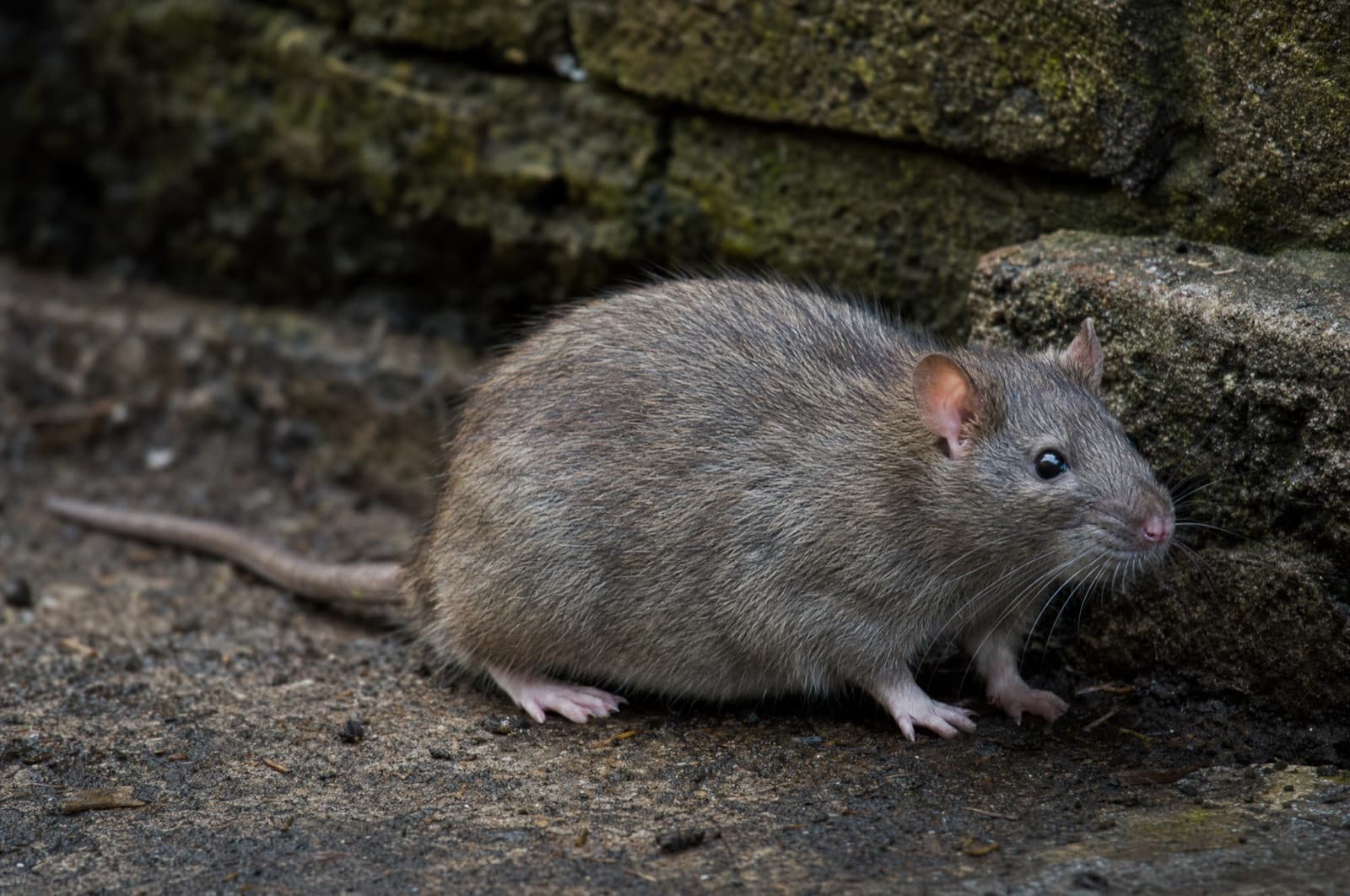
How to Get Rid of Norway Rats
At a glance
- Difficulty: Advanced
- Time: A weekend for reachable foundation sealing; professional trapping for an active colony typically runs several weeks
- Cost: Low for sealing materials; moderate-to-higher if a pro handles trapping and station placement
- Success: Good for exclusion done correctly; low for trapping an established colony without pre-baiting or professional technique
Can you DIY Norway Rat?
The verdict on Norway Rat DIY
Ground-level exclusion is DIY-doable; an established burrow colony genuinely isn't.
The Norway rat (Rattus norvegicus) is a large, stocky, blunt-nosed rat that burrows at ground level — along foundations, under slabs, in debris piles and gardens — the opposite of the climbing roof rat. Sealing low, at-grade entry points is real, teachable DIY work. But like all rats, Norway rats are strongly neophobic: they avoid unfamiliar traps and bait on their runways for days to weeks, which is why homeowner trap-and-bait attempts routinely stall. Add extensive burrow systems that hide much of the colony underground, and an established infestation is honestly a job for a pro.
The 5 DIY methods — honestly graded
Every approach graded for this species, in IPM order — prevention first, chemistry late. Pick a method to see how it works, the steps, and what it actually takes.
Prevention / Exclusion
Works wellThe most reliable DIY lever — but the focus has to be low and at grade, the opposite of roof rat exclusion.
Norway rats dig burrows along foundations, under slabs, debris piles, and gardens, and nest in basements and crawl spaces. Sealing gaps and openings at ground level, and removing the harborage that shelters burrows, closes off the entry points and cover this species actually uses.
Best for: Stopping new rats from burrowing in at the foundation
Seal foundation and low utility gaps
Seal foundation gaps and openings around low utility penetrations with hardware cloth, steel wool plus caulk, sheet metal, or mortar/concrete patch.
CautionA Norway rat can pass through a gap about the size of a quarter (roughly 1/2 inch) — check around pipes, dryer vents, and foundation cracks closely.Cover vents and clear ground harborage
Add hardware cloth over crawl-space and foundation vents, install tight door sweeps, repair grade-level gaps, and remove debris piles, woodpiles, and dense vegetation against the foundation where burrows tend to start.
TipAddress any active burrows you find along the foundation as part of the same pass.
Tools & materials
Why DIY falls short here
Not scare tactics — the specific, proportionate reasons a home attempt can stall for this species.
Neophobia stalls DIY traps and bait
Rats avoid new objects on their runways for days to weeks. A trap set once and checked the next morning is usually untouched — the missing step is pre-baiting.
Extensive burrow systems
Norway rats dig interconnected 2-3-inch burrows along foundations and under slabs. Hidden ground tunnels sustain the colony even after visible surface activity looks controlled.
Prolific breeding
Female Norway rats produce roughly 3-6 litters a year of 6-12 young each, reaching sexual maturity around 3 months — a population rebounds quickly after partial control that doesn't remove the whole colony.
Bait hazards without expertise
Loose or improperly stationed rodenticide creates real primary poisoning risk to pets and kids and secondary poisoning risk to any predator or scavenger that eats a poisoned rat.
How risky is it, really?
An honest read — most nuisance species are genuinely low risk, and we say so.
Norway rats carry real, proportionate risks — contamination and gnawing damage, not a 'plague' framing. Leptospirosis is a genuine but occasional risk tied to urine-contaminated water or food, not casual contact, and Norway rats are one of the leading reservoirs for it.
- Leptospirosis from urine-contaminated water, soil, or foodOccasional
CDC: Norway rats are a leading reservoir; transmission is through contact entering the eyes, nose, mouth, or broken skin, more likely with standing water or flooding.
CDC — Leptospirosis
- Salmonella and food contamination from droppings and urineCommon
Standard sanitation — discard contaminated food, clean and disinfect surfaces — controls this.
CDC
- Gnawing damage to wiring (a fire-risk-adjacent property concern)Common
Rats gnaw continuously to wear down their teeth; basement and crawl-space wiring is a common target.
Pest-industry structural-damage reporting
- Seoul hantavirus associationRare
A documented but uncommon association in Norway rat populations; standard sanitation and CDC's wet-cleanup approach for droppings is the proportionate precaution.
CDC
Norway Rat Colony Not Responding to DIY?
Neophobic rats and hidden burrow systems are where DIY genuinely stalls. Anchor Pest Services handles exclusion, pre-baiting, and tamper-resistant station placement across southern and central New Hampshire. Family-owned since 2017, NH license #782664.
Call a pro when…
- Active burrows found along the foundation or under a shed/deck
- Your own traps sit untouched for more than 1-2 weeks despite pre-baiting
- Rats seen in the basement or crawl space, not just outside
- Droppings show up in multiple areas
General Pest Control
Foundation-level exclusion is genuinely DIY-doable for Norway rats — but an established burrow colony of neophobic rats avoiding your traps is a fair place to call in a pro. Anchor's licensed technicians pre-bait, place tamper-resistant stations correctly, and know how to find and close burrow systems homeowners often miss.
Keep them out
- Seal foundation gaps and low utility penetrations down to about 1/2 inch
- Screen crawl-space and foundation vents with hardware cloth
- Clear debris piles and dense vegetation from the foundation perimeter
Norway rats in New Hampshire
Norway rats den in basements and crawl spaces and are especially drawn indoors as Manchester approaches its first hard frost (~Oct 19-29, NOAA). Late summer through early fall is the window to inspect the foundation perimeter for burrows and seal ground-level gaps before rats move in for winter shelter.
Peak season
Late summer through fall, before the first hard frost
First-frost anchor
Manchester first hard frost ~Oct 19 (50%) / Oct 29 (80%), NOAA 1991-2020
Make sure it's a Norway Rat
Two quick detours worth taking — confirm the ID, then learn what drew it in so it doesn't come back.
Frequently asked
Sources & further reading(5)
- [1]CDC — Leptospirosis
Leptospirosis transmission and Norway rats as a leading reservoir
govverified 2026-07-13 - [2]CDC — Cleaning Up After Rodents
Safe droppings cleanup and general rodent hygiene
govverified 2026-07-13 - [3]PMC (National Library of Medicine) — Rodent Reproductive Biology
Norway rat reproductive rate: 3-6 litters/year, 6-12 young per litter, sexual maturity at ~3 months
academicverified 2026-07-13 - [4]Miller the Killer — Roof Rats vs. Norway Rats
Body-shape and behavior differences between the two species
industryverified 2026-07-13 - [5]Colonial Pest Control — Rats Are Neophobic
Rat neophobia as the core reason DIY trap/bait placement underperforms
industryverified 2026-07-13
Written & reviewed by
VerifiedDaniel Brady
NH-Licensed Pesticide Applicator · License #782664 (NHDAMF, RSA 430)
Daniel Brady is the New Hampshire–licensed applicator behind Anchor Pest Services, a family-owned pest control company serving the Manchester area since 2017.
Last updated July 2026
Other species you can tackle
Same category — the dot shows each one's DIY verdict at a glance (green = friendly, amber = doable with care, red = call a pro).
Professional Pest Control
Norway Rat Colony Not Responding to DIY?
Neophobic rats and hidden burrow systems are where DIY genuinely stalls. Anchor Pest Services handles exclusion, pre-baiting, and tamper-resistant station placement across southern and central New Hampshire. Family-owned since 2017, NH license #782664.
- Foundation exclusion + burrow inspection
- NH-licensed applicators (#782664)
- Free inspection — same-day service across southern NH
NH License #782664 · No obligation · We answer in person
Your next step
- Book a NH pro
Rodent Control
Book now - What to do next
Norway Rat in New Hampshire — ID, Signs & Control
Read the answer - What to do next
Where Do Rats Build Nests Around Homes?
Read the answer - What to do next
Roof Rat in New Hampshire — Or Is It a Squirrel?
Read the answer - Also relevant
Norway Rat in New Hampshire — ID, Signs & Control
Read the answer - Also relevant
Rodent Prevention: Seal, Sanitize, and Time It Right in NH
Read the answer