
How Can I Prevent Wasps From Nesting Around My Home?
At a Glance
- The call: Sealing likely entry points in spring, making eaves less attractive to attach to, and managing food sources are what extension guidance actually backs — not decoys or scent tricks.
The short of it
Sealing likely entry points in spring, making eaves less attractive to attach to, and managing food sources are what extension guidance actually backs — not decoys or scent tricks.
The full picture
Timing: spring is when this work matters most
A queen scouting for a nest site in spring is looking for an accessible gap or a surface to build against; closing off those opportunities before she finds one is far more effective than trying to deal with a nest after it's already established. UNH Cooperative Extension recommends caulking cracks and sealing gaps around the exterior specifically in spring, ahead of the season's nest-founding activity. In southern New Hampshire — Manchester sits in USDA hardiness zone 5b–6a — that scouting window lines up with the warm days of April into May, so the practical target is to finish exclusion work early in that stretch, before overwintered queens are actively committing to nest sites.
Reduce attachment surfaces and access points
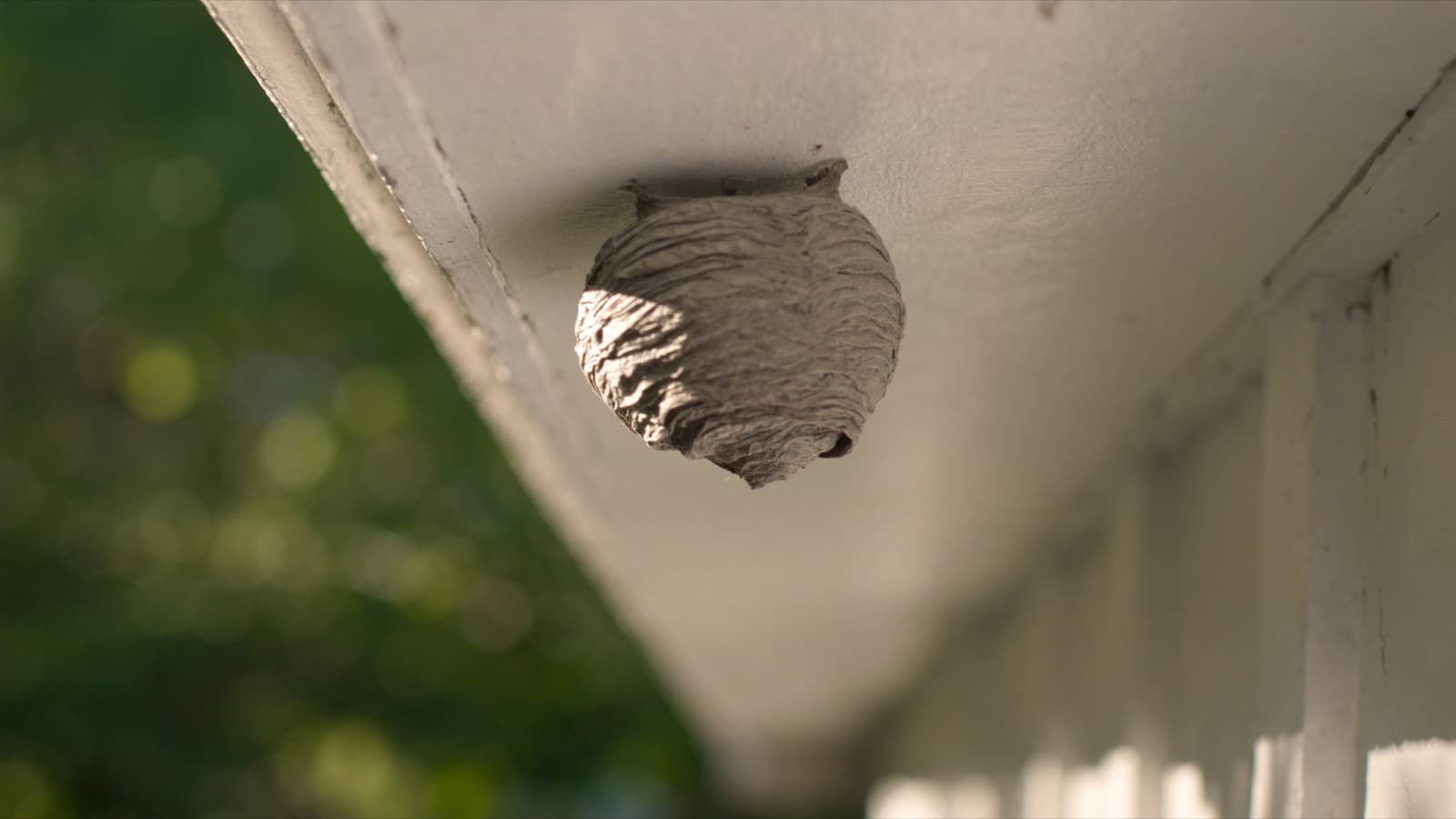
Painting or otherwise slicking eave surfaces makes it harder for a paper wasp to attach and build a new comb there, since these nests need a stable surface to adhere to. Screening vents and sealing gaps around utility penetrations closes off the cavity access that yellowjackets and other cavity-nesting species look for. None of this requires identifying or approaching an existing nest — it's about removing the opportunity before one forms.
What to skip, and what to add if you want to
Fake nest decoys and hanging paper bags rely on an unproven idea about wasps avoiding a perceived rival colony, and we could not source controlled evidence that either reliably works — see this hub's remedy pages for the full breakdown. If a scent-based extra appeals, concentrated essential-oil sprays do have real, peer-reviewed short-term repellency, though that's a supplement to sealing and managing food, not a replacement for it.
The honest line — Sealing likely entry points in spring, making eaves less attractive to attach to, and managing food sources are what extension guidance actually backs — not decoys or scent tricks.
Key takeaways
- Sealing likely entry points in spring, before queens actively scout nest sites, is the highest-leverage timing.
- Slicking or painting eave surfaces makes it harder for paper wasps to attach a new nest.
- Screening vents and sealing gaps closes off cavity access that yellowjackets and similar species look for.
- Managing food and garbage sources reduces a property's general appeal.
- Fake nest decoys and hanging paper bags are unproven — don't count on them as the actual prevention plan.
Where to go next
Identification, sting treatment, per-species DIY viability, and nest-reuse facts each live on the hub that owns them. We route, we don't rebuild.
DIY viability by species
The router's source of truth — which nests are DIY-able.
Go thereIdentify the species
Tell the wasps, hornets, and lookalikes apart.
Go thereSting & allergy treatment
What to do about a sting or a reaction.
Go thereNest reuse & winter
The colony dies at frost; the nest is never reused.
Go there
Not sure which entry points are worth sealing?
Anchor can walk the property and identify the spots actually worth addressing before the season starts.
Frequently asked questions
Sources(2)
- [1]UNH Cooperative Extension — Controlling Wasps, Bees and Hornets Around Your Home
Spring caulking/sealing, painted eave surfaces, and vent screening as prevention steps
extensionverified 2026-07-17 - [2]University of Maryland Extension — Social Wasps: Yellowjackets, Hornets and Paper Wasps
Attachment-surface and access-point prevention for social wasp nesting
extensionverified 2026-07-17
Written & reviewed by
VerifiedDaniel Brady
NH-Licensed Pesticide Applicator · License #782664 (NHDAMF, RSA 430)
Daniel Brady is the New Hampshire–licensed applicator behind Anchor Pest Services, a family-owned pest control company serving the Manchester area since 2017.
Last updated 2026-07-17
Prevention beats a spring surprise
Close the opportunity before a queen finds it
A licensed technician can identify likely entry points and attractive surfaces around your property.
- Family-owned since 2017
- NH License #782664, category F1 (RSA 430, NHDAMF)
- Member, NEPMA
Your next step
- What to do next
Where Do Wasps Go in the Winter? NH Wasp Timing Guide
Read the answer - What to do next
Wasp & Hornet Prevention: Seal Voids Before Queens Arrive
Read the answer - Also relevant
How Long Do Wasps Live? Lifespan, Life Cycle & the NH Season
Read the answer - Related guide
Can Wasps Nest Inside Walls or Attics, and How Should I Address That?
Read the answer - Related guide
Do Coffee Grounds Help Repel Wasps From Patios or Gardens?
Read the answer