
How Can I Tell if I'm Dealing With Wasps or Bees Before Attempting Removal?
At a Glance
- The call: If it's a honeybee colony, this hub's whole removal conversation doesn't apply — that's a call to a beekeeper, not a pest treatment.
The short of it
If it's a honeybee colony, this hub's whole removal conversation doesn't apply — that's a call to a beekeeper, not a pest treatment.
The full picture
Why this decision matters more than the visual ID itself
Everything else on this hub — router verdicts, DIY viability, professional treatment — assumes you're dealing with a social wasp: a yellowjacket, paper wasp, bald-faced hornet, or European hornet. A honeybee colony is a genuinely different situation. Bees are a valuable pollinator species, in some regions facing real population pressure, and cooperative extension guidance treats an established honeybee colony as something to relocate through a beekeeper rather than exterminate outright. Getting this identification right, before doing anything else, determines which of two entirely different next steps applies.
The fastest confirming signs, without replacing full identification
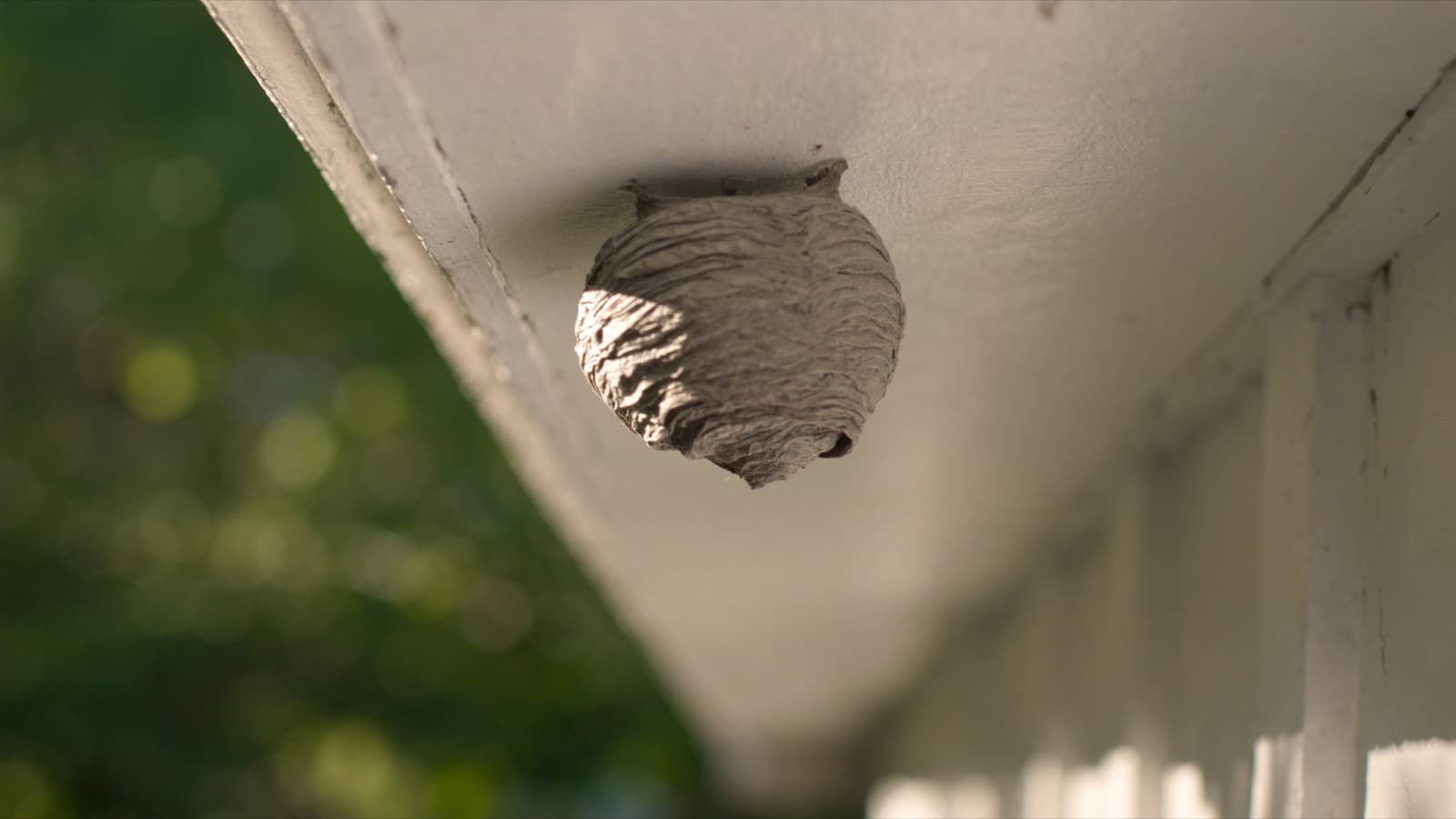
The clearest giveaway is what's inside or visible at the nest: wax comb and stored honey point to bees; a grey or brown papery material, built in layers or as an open umbrella shape, points to a social wasp. If you can see the nest structure at a safe distance and it clearly contains wax comb, that's reason enough to stop and call a beekeeper rather than a pest control company. For everything short of that clear a look, or if you want confirmation on markings, flight behavior, or size, that depth belongs on /wasp-species, not here — this page exists only to flag the fork in the decision, not to replace that identification guide.
What to do with each answer
If it's confirmed as a honeybee colony, the right next step is a local beekeeper or bee-removal specialist who can relocate the colony rather than kill it — that's outside what a standard pest treatment does and outside what this hub covers. If it's confirmed as a social wasp — yellowjacket, paper wasp, or hornet — the rest of this hub and /top-diy-methods pick up from there, with species-specific guidance on whether the situation is workable yourself or needs a professional.
The honest line — If it's a honeybee colony, this hub's whole removal conversation doesn't apply — that's a call to a beekeeper, not a pest treatment.
Key takeaways
- A honeybee colony is a different animal with a different answer — not a milder version of a wasp problem.
- Wax comb and stored honey mean bees; a papery, chewed-fiber nest material means a social wasp.
- Confirmed honeybees call for a beekeeper or bee-removal specialist, not a pest treatment.
- Full side-by-side visual identification lives on /wasp-species — this page only covers the decision fork.
- Everything else on this hub assumes a social wasp: yellowjacket, paper wasp, bald-faced hornet, or European hornet.
Where to go next
Identification, sting treatment, per-species DIY viability, and nest-reuse facts each live on the hub that owns them. We route, we don't rebuild.
DIY viability by species
The router's source of truth — which nests are DIY-able.
Go thereIdentify the species
Tell the wasps, hornets, and lookalikes apart.
Go thereSting & allergy treatment
What to do about a sting or a reaction.
Go thereNest reuse & winter
The colony dies at frost; the nest is never reused.
Go there
Still not sure what's in the nest?
If you can't confirm bees or wasps from a safe distance, Anchor can take a look before anyone touches it.
Frequently asked questions
Sources(2)
- [1]UNH Cooperative Extension — Controlling Wasps, Bees and Hornets Around Your Home
Distinguishing honeybee colonies (wax comb, honey) from social wasp nests before deciding on removal
extensionverified 2026-07-17 - [2]University of Maryland Extension — Social Wasps: Yellowjackets, Hornets and Paper Wasps
Nest-material and behavioral differences between social wasps and bees
extensionverified 2026-07-17
Written & reviewed by
VerifiedDaniel Brady
NH-Licensed Pesticide Applicator · License #782664 (NHDAMF, RSA 430)
Daniel Brady is the New Hampshire–licensed applicator behind Anchor Pest Services, a family-owned pest control company serving the Manchester area since 2017.
Last updated 2026-07-17
Before you decide who to call
Confirm the species before the treatment
A licensed technician can confirm what's actually nesting on your property and point you to the right next step, beekeeper or pest control.
- Family-owned since 2017
- NH License #782664, category F1 (RSA 430, NHDAMF)
- Member, NEPMA
Your next step
- Also relevant
Ground Wasps in NH — What's Nesting in Your Lawn?
Read the answer - Related guide
Why Do Wasps Become More Aggressive When Tackled in Late Summer?
Read the answer - Related guide
Can Removing a Nest Provoke Multiple Stings From Wasps?
Read the answer - Also relevant
Carpenter Bee in New Hampshire — ID, Signs & Control
Read the answer