
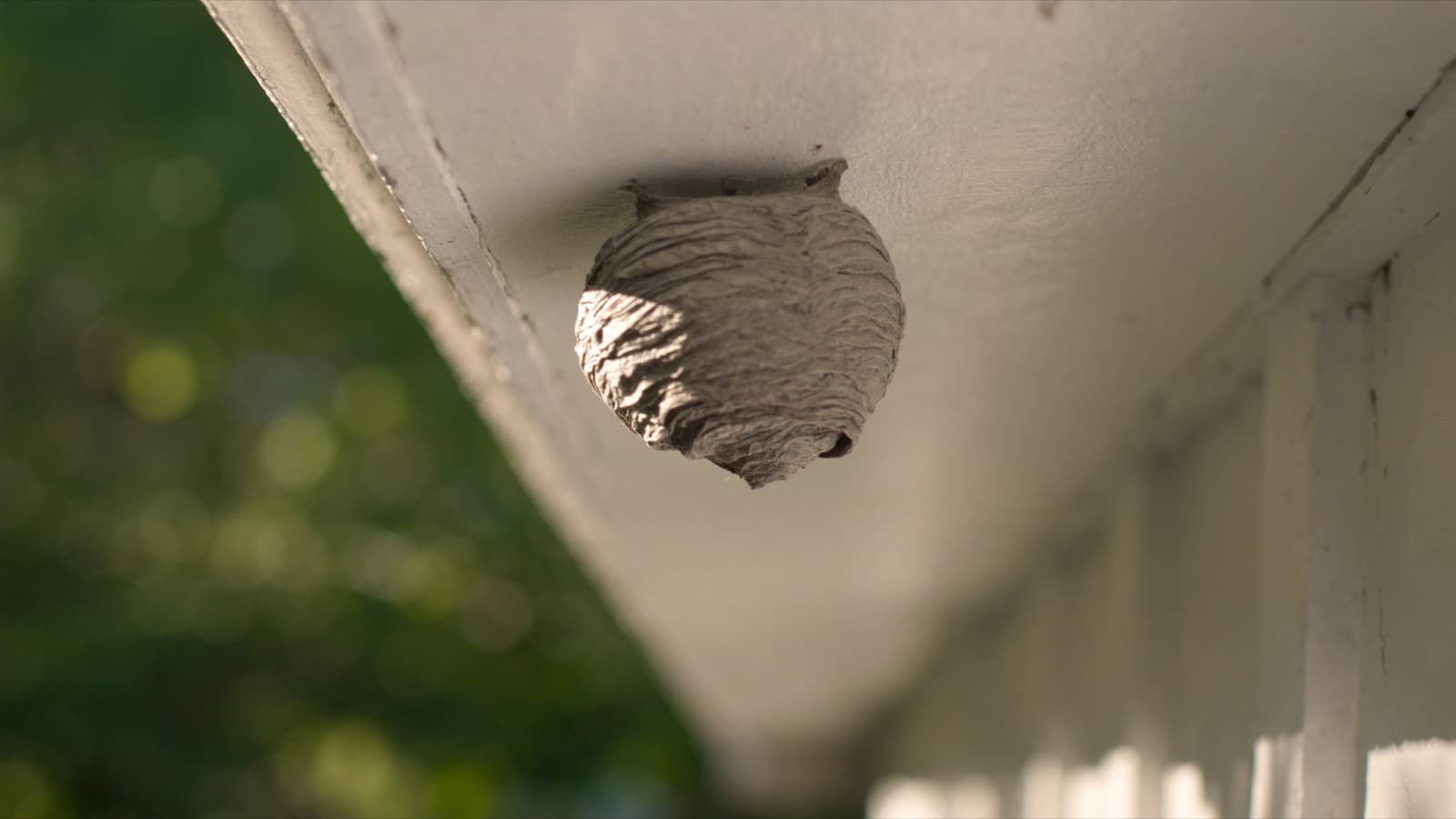
Why Do Wasps Become More Aggressive When Tackled in Late Summer?
At a Glance
- The call: Peak colony size, dwindling natural food, and a colony defending its only reproductive future all converge in late summer — which is why the same nest gets harder to tackle then.
The short of it
Peak colony size, dwindling natural food, and a colony defending its only reproductive future all converge in late summer — which is why the same nest gets harder to tackle then.
The full picture
Peak size means a bigger possible response
A colony tackled in late summer is close to its largest population of the year, after a full season of workers hatching and building numbers. In southern New Hampshire that peak lands in late August and September — the final stretch before Manchester's first sustained hard freeze, which averages the third week of October (National Weather Service climate normals put the local first 32°F freeze near October 19). More workers available to respond to a disturbance is a straightforward numbers problem — the same nest disturbed back in spring, with only a handful of individuals present, simply doesn't have the same defensive capacity.
Food scarcity changes behavior, not just mood
UNH Cooperative Extension notes that wasps may become especially aggressive as natural food sources become scarce later in the season, since the sugars that fueled earlier-season foraging (from sources like aphid secretions and ripening fruit) become less available, pushing workers toward more assertive scavenging, including around people and food. That's a genuine behavioral shift, not simply an impression.
The colony is defending its entire future for the year
By late summer, a colony has typically begun producing new queens and males — the only individuals capable of starting next year's colonies. Disturbing a nest at this stage means disturbing the colony's one reproductive opportunity for the year, which may contribute to a more intense defensive response than earlier in the season, when only workers and the original queen were at stake. All three pressures — size, food stress, and reproductive stakes — land in the same late-summer window, which is exactly why timing matters so much for this hub's DIY-viability calls on /top-diy-methods.
The honest line — Peak colony size, dwindling natural food, and a colony defending its only reproductive future all converge in late summer — which is why the same nest gets harder to tackle then.
Key takeaways
- Colonies are at or near their largest population of the year by late summer, meaning more workers can respond to a disturbance.
- Dwindling natural food sources push workers toward more assertive, defensive foraging around people.
- By late summer, the colony is producing and defending new queens and males — its entire reproductive future for the year.
- These three pressures converge at the same point in the season, compounding rather than acting separately.
- This is part of why /top-diy-methods treats early-season and late-season nests of the same species differently.
Where to go next
Identification, sting treatment, per-species DIY viability, and nest-reuse facts each live on the hub that owns them. We route, we don't rebuild.
DIY viability by species
The router's source of truth — which nests are DIY-able.
Go thereIdentify the species
Tell the wasps, hornets, and lookalikes apart.
Go thereSting & allergy treatment
What to do about a sting or a reaction.
Go thereNest reuse & winter
The colony dies at frost; the nest is never reused.
Go there
Dealing with a nest right in the hardest window of the season?
Anchor can assess whether it's still workable or has moved past a reasonable DIY situation.
Frequently asked questions
Sources(2)
- [1]UNH Cooperative Extension — Controlling Wasps, Bees and Hornets Around Your Home
Increased aggression tied to peak colony size and late-season food scarcity
extensionverified 2026-07-17 - [2]Virginia Tech Cooperative Extension — Yellowjackets, Baldfaced Hornets, and Paper Wasps
Colony life-cycle timing and late-season reproductive activity
extensionverified 2026-07-17
Written & reviewed by
VerifiedDaniel Brady
NH-Licensed Pesticide Applicator · License #782664 (NHDAMF, RSA 430)
Daniel Brady is the New Hampshire–licensed applicator behind Anchor Pest Services, a family-owned pest control company serving the Manchester area since 2017.
Last updated 2026-07-17
The hardest window to go it alone
Late summer is when these situations escalate fastest
A licensed technician can tell you honestly whether a late-season nest is still manageable or needs a professional.
- Family-owned since 2017
- NH License #782664, category F1 (RSA 430, NHDAMF)
- Member, NEPMA
Your next step
- What to do next
Where Do Wasps Go in the Winter? NH Wasp Timing Guide
Read the answer - In your area
How Long Do Wasps Live? Lifespan, Life Cycle & the NH Season
Read the answer - Related guide
Can Wasps Nest Inside Walls or Attics, and How Should I Address That?
Read the answer - Related guide
How Can I Tell if I'm Dealing With Wasps or Bees Before Attempting Removal?
Read the answer