
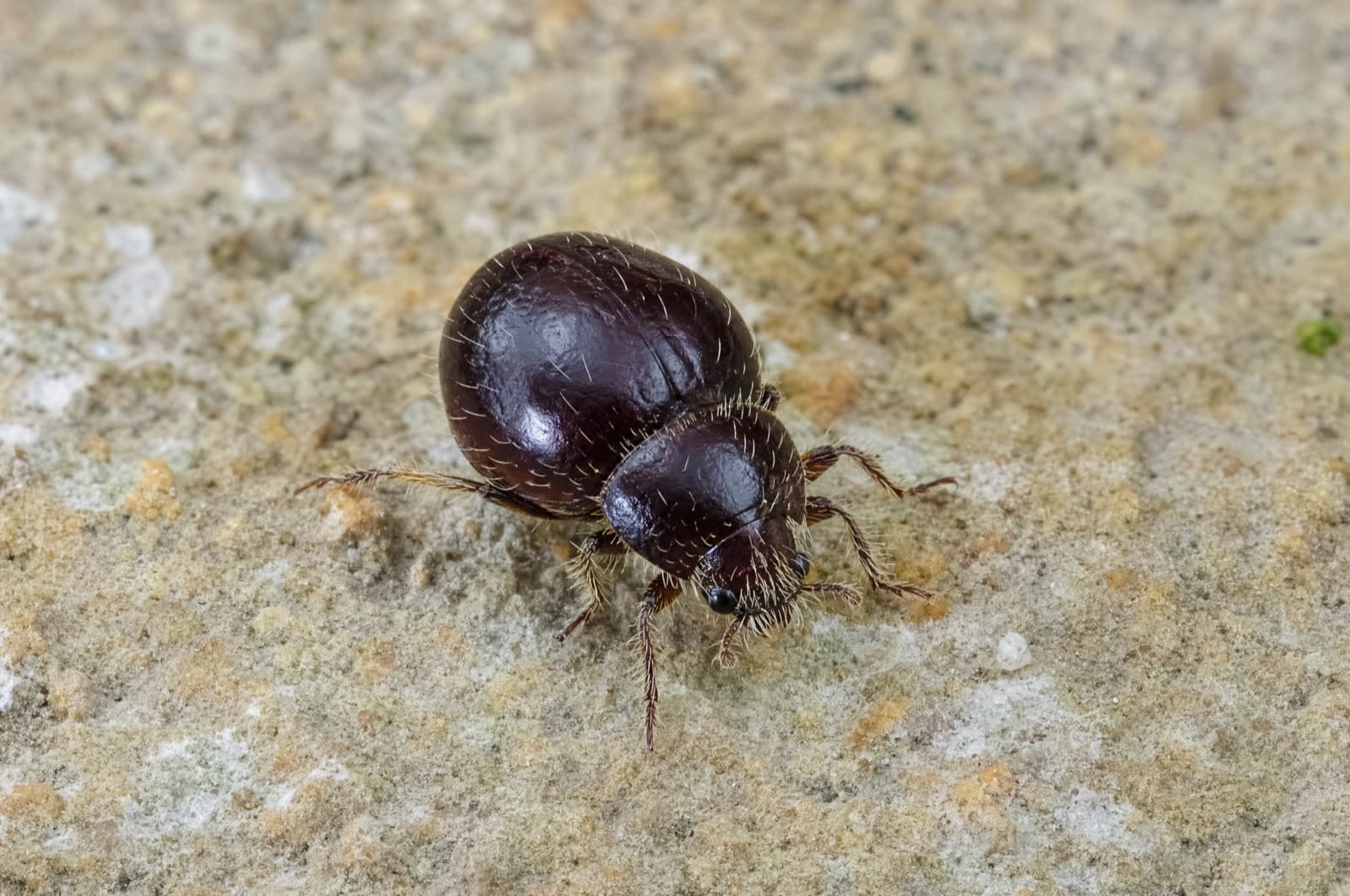
What Attracts Spider Beetles to Your House?
At a glance
- Short answer: Spider beetles usually aren't drawn in by your pantry. They scavenge old rodent or bird nests and debris that may already be part of the structure.
- The verdict: You didn't attract it — you carried it in
The attractant verdict
Four possible answers to why this species turned up. Three stay unlit — and that's the argument: the honest answer could have been any of them, and for this species it wasn't.
Spider beetles usually aren't drawn in by your pantry. They scavenge old rodent or bird nests and debris that may already be part of the structure.
Our own previous page said spider beetles are "drawn to homes mainly for food and shelter," a description broad enough to miss the more specific and more useful mechanism: this species often persists on debris and nesting material that has nothing to do with what's in the pantry.
Old bird or rodent nests, accumulated debris, dead insects, or rodent droppings already present in an older building, wall void, or storage area — or, less often, an infested stored product. Either way, it's an existing reservoir the beetle scavenges, not something it was drawn toward from outside.
“This one usually isn't about your groceries at all. It's about debris and old nests that may have been part of the building longer than the food was.”
Why it's here, in full
The debris-and-nest source, not the grocery bag
Spider beetles are general scavengers, and extension and university entomology describe their most characteristic infestations as beginning near bird or rodent nests, in accumulated debris, or among dead insects in old, undisturbed parts of a building — a wall void, an attic, an old warehouse — rather than in a specific bag of food brought home from the store. The University of Wisconsin-Milwaukee Field Station notes that species like the white-marked spider beetle are frequently associated with mammal or bird nests, tree holes, and human structures where that kind of organic debris accumulates undisturbed for long periods.
Our old page's "food and shelter" framing isn't wrong exactly, but it's generic enough to miss the more useful and more specific point: for this species, the reservoir is often structural — nesting material or debris that may predate any groceries currently in the house — rather than a fresh product recently carried in.
A genuine cold-tolerant outlier among pantry pests
Unlike most stored-product beetles and moths, spider beetles can remain active in cold, unheated conditions, which is part of why UC Riverside's entomology reference notes they gain particular importance in northern regions and can survive winters in unheated warehouses and older structures. That cold tolerance reinforces the structural-debris picture: a population can persist quietly in an attic, an unused wall void, or an old storage area year-round, feeding on whatever organic debris — rodent droppings, dead insects, old nesting material — happens to be there, entirely independent of what's currently stored in the kitchen.
How to tell it's actually this species
Real signs only — a species with four honest tells gets four, and stops. Where a sign is weak on its own, we say so.
Small, humpbacked, spider-like beetles found in old, undisturbed areas — attics, wall voids, or storage rooms — rather than just the kitchen
Beetles found in association with an old bird or rodent nest, accumulated debris, or rodent droppings in a wall void or attic
Beetles also found in stored food products, reflecting this species' broad, general scavenging diet
Could be something else: Finding them in food alone doesn't rule out a structural debris source elsewhere in the building; both can be true at once.
Beetle activity persisting in cool, undisturbed parts of an older building through winter, when this species remains active in cold conditions unlike many other stored-product insects
Want spider beetles gone?
This page only answers why it's here. Every removal step for this exact species — what to seal, what to set, what actually works — lives on its own dedicated guide.
Two questions, two pages
Here: why it turned up at all — the honest answer, blame removed.
There: the step-by-step removal guide for this exact species.
Key takeaways
- This one usually isn't about your groceries at all. It's about debris and old nests that may have been part of the building longer than the food was.
- Cleanliness isn't the deciding factor here — the actual vector is what matters.
- What actually matters: food, shelter.
- If it's already inside, removal is a different question — see /top-diy-methods/spider-beetle.
Finding spider beetles in an attic or wall void?
This page is about why they showed up. Locating the debris source and removal steps are covered at /top-diy-methods/spider-beetle.
Frequently asked
Sources(2)
- [1]University of California, Riverside — Chapter 7: Pests of Stored Food Products (Ebeling)
Spider beetles as general scavengers persisting on debris and nesting material in old, undisturbed structures
extensionverified 2026-07-17 - [2]University of Wisconsin-Milwaukee Field Station — White-Marked Spider Beetle
Spider beetle association with mammal and bird nests and human structures
extensionverified 2026-07-17
Written & reviewed by
VerifiedDaniel Brady
NH-Licensed Pesticide Applicator · License #782664 (NHDAMF, RSA 430)
Daniel Brady is the New Hampshire–licensed applicator behind Anchor Pest Services, a family-owned pest control company serving the Manchester area since 2017.
Last updated Jul 2026
Often about old debris, not fresh groceries
Dealing with spider beetles at home?
Same-day inspections across southern and central New Hampshire — we'll help trace whether the source is structural or in stored food.
- Family-owned in Manchester since 2017
- NH commercial applicator #782664, category F1
- We will tell you when the answer is do nothing
NH License #782664 · No obligation · We answer in person
Your next step
- What to do next
Spider Beetles in New Hampshire: Not a Spider — Here's the Real ID
Read the answer - Also relevant
Chemical Pantry Beetle Control: Why You Shouldn't Spray
Read the answer - Also relevant
Pantry Beetle Prevention: Airtight Storage + FIFO Habits
Read the answer - Also relevant
Natural Pantry Beetle Control: What Actually Works in NH
Read the answer