
Skip to content
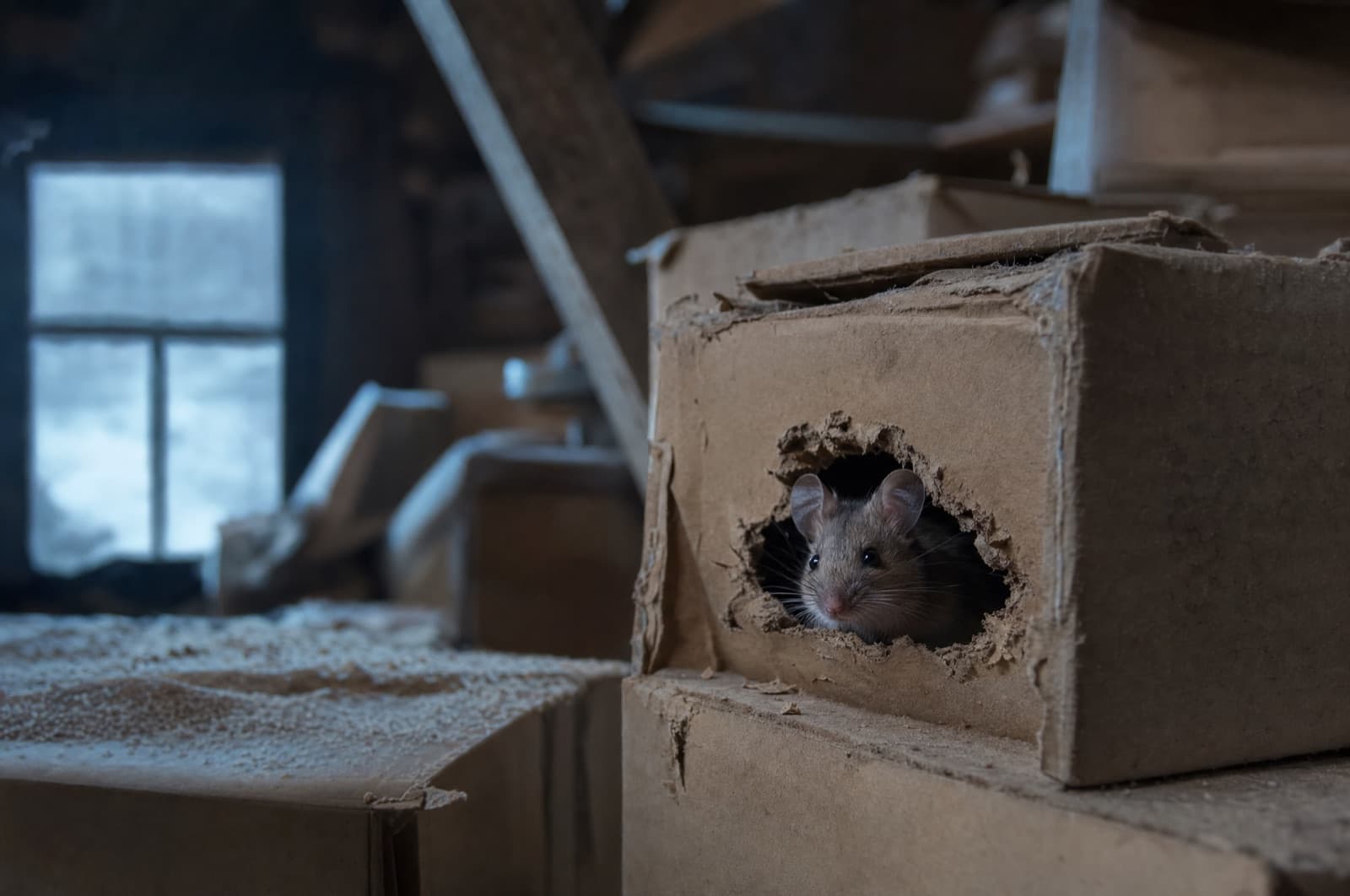
A house mouse in a gnawed cardboard storage box in a cold New Hampshire attic
Daniel Brady · NH-Licensed Pesticide Applicator · License #782664
Reviewed by Daniel Brady

How long do winter pests stay active in homes?

It depends — insects wait, rodents don't
It depends entirely on which pest you mean.Overwintering insects — cluster flies, Asian lady beetles, stink bugs, boxelder bugs — enter a dormant state called diapause in fall and stay that way until spring, with occasional brief stirring on unseasonably warm days. Rodents are the opposite story: mice and rats do not hibernate, and they stay fully active, feeding, gnawing and moving through your walls, every single day of a New Hampshire winter, which is why the two groups call for very different responses.

At a glance

  • The verdict: It depends — insects wait, rodents don't
The honest answer

The short of it

The verdict
It depends — insects wait, rodents don't

Overwintering insects go dormant until spring and only stir on warm days; rodents never go dormant and stay active every day of a New Hampshire winter.

What actually happens

The busted assumption

It depends

What people assume

"If I'm still seeing bugs weeks after dealing with them, whatever I did failed." For overwintering insects, sporadic warm-day appearances are normal dormancy behavior, not evidence of a live, growing infestation — the population isn't reproducing indoors, it's the same wintering group intermittently stirring.

What actually happens

Colorado State University Extension describes cluster flies as insects that "cease reproduction, slow down their metabolism, and become dormant (diapause)... remain in this inactive state for many months," while still stirring "a bit during warm, sunny periods," before finally moving back outdoors in early spring. That pattern — dormant for months, briefly active on warm days, no reproduction — generalizes across the other overwintering insects covered in this hub. Rodents follow a completely different clock: Utah State University Extension confirms Norway rats "do not hibernate" and remain active outdoors and indoors through the entire winter.

What it means for you
For insects, patience plus a vacuum for anything that appears is the right response through the whole winter — there's no ongoing infestation to treat, and spraying a wall void just creates a different problem (dead insects draw carpet and larder beetles). For rodents, there is no dormant period to wait out: any sign of activity — droppings, gnaw marks, scratching in a wall — calls for action now, because the population is neither slowing down nor going anywhere on its own.
In depth

The full picture

01

Two very different clocks under one roof

It's easy to lump every winter pest into one mental category — "things that are around in cold weather" — but the insects and the rodents in that category are operating on fundamentally different biological clocks. The overwintering insects (cluster flies, Asian lady beetles, stink bugs, boxelder bugs) entered your house in fall specifically to wait out the winter in a dormant, non-reproductive state. Rodents entered your house in fall or winter to live there, actively, the entire time.

That distinction changes what "how long does it stay active" even means. For the insects, the honest answer is closer to "months of near-zero activity, punctuated by warm-day flickers." For rodents, the honest answer is "continuously, all winter, with no dormant period at all."

02

Why insects seem to reappear even in January

Colorado State University Extension's description of cluster fly biology is a good model for the whole overwintering-insect group: they cease reproducing, slow their metabolism dramatically, and settle into diapause for months at a stretch — but they aren't inert the entire time. Warm, sunny stretches, or even the warmth radiating off a furnace-heated interior wall, can rouse a portion of the dormant population briefly. That's why homeowners sometimes report "they came back" on a mild January afternoon; it isn't a new wave, it's the same population stirring on the same warmth cue that drove the fall entry in the first place. By early spring, the same warming trend that produces these winter flickers pulls the whole population back outdoors for good.

03

Why rodents don't get this pass

Rodents simply don't have an equivalent off switch. Utah State University Extension is direct: Norway rats "do not hibernate," and the same is true of house mice. Cold doesn't slow a rodent's activity level the way it does an insect's metabolism — if anything, cold increases the incentive to stay somewhere warm, fed and sheltered, which for a rodent that has gotten indoors is exactly your house. That means gnawing, nest-building and breeding (a genuinely distinct finding covered on its own page in this hub) continue at full pace through the entire winter, with no seasonal pause to wait out. Practically, this is the reason rodent signs should never be met with "let's see if it goes away by spring" — nothing about winter works in your favor there, unlike with the dormant insects.

Key takeaways
5 points
  • Overwintering insects (cluster flies, lady beetles, stink bugs, boxelder bugs) go dormant in fall and stay that way until spring, with brief warm-day stirring.
  • Rodents do not hibernate and stay fully active every day of winter — there is no dormant period to wait out.
  • Seeing an insect again in January isn't a new infestation; it's the same dormant population briefly stirred by warmth.
  • For insects: vacuum what appears and be patient until spring. For rodents: act on any sign immediately.
  • Don't spray insecticide into a wall void housing dormant insects — it kills them in place and draws carpet/larder beetles instead.
New Hampshire context

What this looks like through a Manchester winter

Manchester's first hard frost lands around October 19 to 29 (NOAA), which is roughly when the overwintering insects settle into diapause for the season. From that point through early spring, expect long stretches of no activity from them, occasionally interrupted by a mild afternoon or a warm spell mid-winter. Rodents don't follow that pattern at all — an unheated garage, an attic, or a wall void stays workable for a mouse or rat all winter long, so any activity noticed in November is just as urgent in January as it would be in July.

  • NH-licensed #782664

    Southern New Hampshire

  • Family-owned

    Since 2017

  • Honest routing

    Even when it isn’t us

We serve these communities

ManchesterNashuaConcordDerryBedfordSalemHudsonAmherst

Dormant insects need patience. Active rodents need action.

Vacuum stray overwintering insects and let winter run its course. If it's rodents you're hearing in the walls, that's a genuine winter job for us.

Follow-up questions

Frequently asked

Sources & citations(3)
  1. Colorado State University Extension — Cluster Flies and other Winter Flies

    Diapause/dormancy pattern, warm-day stirring, spring emergence timing for overwintering flies

    extensionverified 2026-07-16
  2. Utah State University Extension — Norway Rat

    Norway rats do not hibernate; remain active outdoors and indoors through winter

    extensionverified 2026-07-16
  3. Ohio State University (Ohioline) — Multicolored Asian Lady Beetle (ENT-44)

    Overwintering aggregation and dormancy behavior in structures

    extensionverified 2026-07-16

Written & reviewed by

Verified

Daniel Brady

NH-Licensed Pesticide Applicator · License #782664 (NHDAMF, RSA 430)

Daniel Brady is the New Hampshire–licensed applicator behind Anchor Pest Services, a family-owned pest control company serving the Manchester area since 2017.

Verify license

Last updated Jul 2026

Honest pest help for New Hampshire homes

We'll Tell You Which Pests Winter Actually Stops.

Overwintering insects mostly take care of themselves by spring. Rodents don't — winter is far and away Anchor Pest Services' busiest season for exclusion and trapping. Family-owned since 2017, NH license #782664, serving Manchester, Nashua, Concord and nearby towns.

  • Honest advice — we'll tell you when patience beats a service call
  • NH-licensed applicators (#782664) — free inspection, same-day service
  • Rodent exclusion and winter pest control across southern and central New Hampshire

NH License #782664 · No obligation · We answer in person