
Skip to content
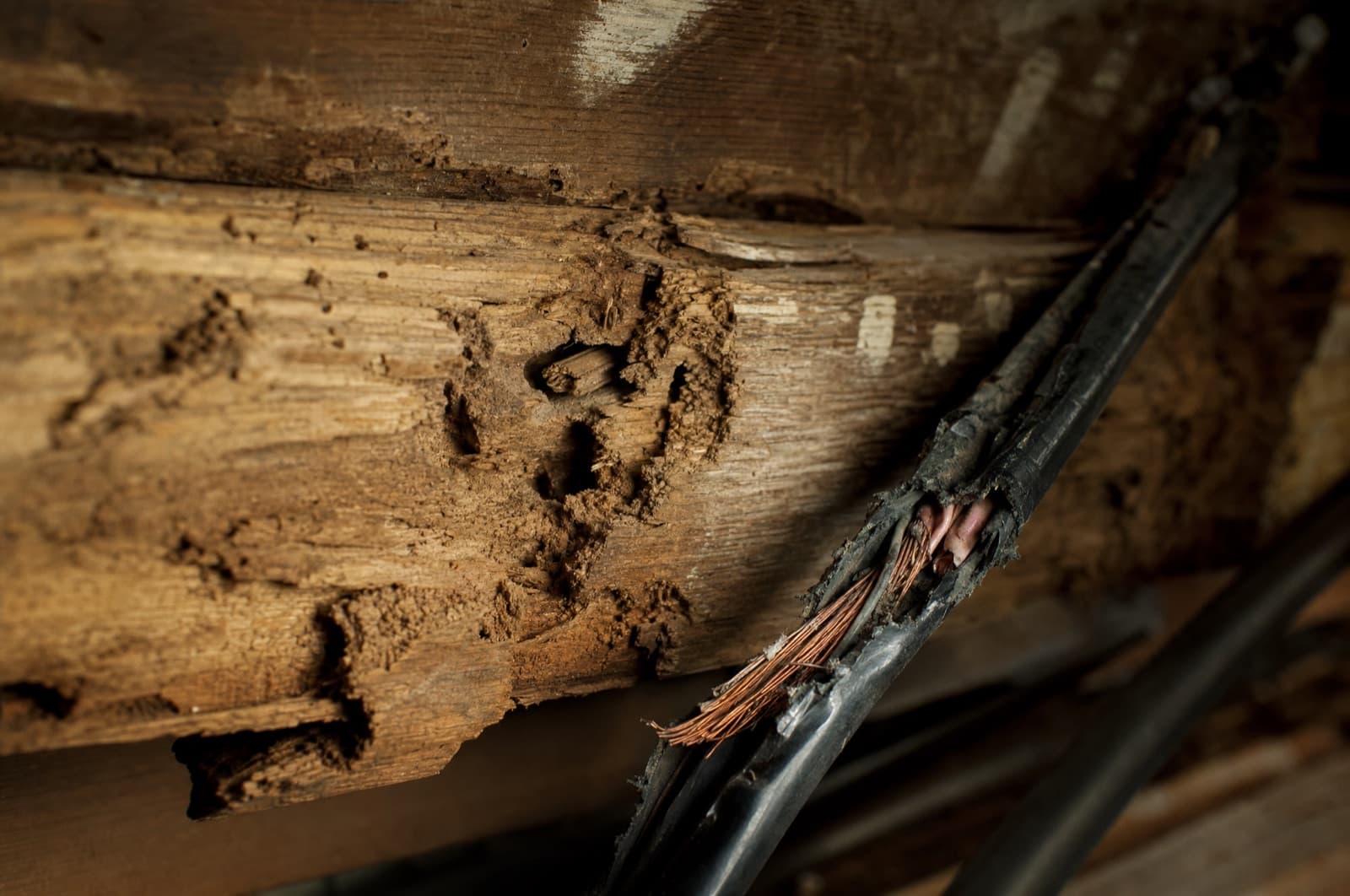
Pest damage evidence — a gnawed structural beam and a chewed electrical wire
Daniel Brady · NH-Licensed Pesticide Applicator · License #782664
Reviewed by Daniel Brady

Can fire ants harm lawns or outdoor wiring?

None in New Hampshire — the premise doesn't apply here
In New Hampshire, no — because red imported fire ants (Solenopsis invicta) are not established here at all. Their US range is climate-limited and stops well south of New England; federal quarantine maps list Southern and South-Central states as infested, with the northernmost edge around Virginia, Tennessee, Oklahoma, and Arkansas. Where fire ants ARE established, the damage to lawns and outdoor electrical equipment is real and well documented. But the honest New Hampshire answer leads with this: the ant that causes this damage does not live in your yard, and current climate conditions keep it that way.

At a glance

  • Can it?: No
  • How common: Rare
  • Hype: Wildly overstated
  • Evidence: Debunked
  • about 10°F

    Cold-tolerance limit below which imported fire ants cannot survive — why they are not established in NH

    eXtension Ant Pests — At what temperature is it too cold for fire ants to survive?

The honest answer

The short of it

The verdict
None in New Hampshire — the premise doesn't apply here

No — red imported fire ants are not established in New Hampshire; the state's cold winters keep them out entirely. Where they do live, the lawn and equipment damage is genuine, but that's the South, not your yard.

The correction

What they claim vs. what the evidence supports

One shared severity track, two markers. The span between them is the hype delta — named out loud.

The claim — fire ants harming a New Hampshire lawn or outdoor electrical equipment

General pest-content warns homeowners broadly that fire ants wreck lawns, sting people and pets, and get into outdoor electrical and AC equipment where they cause malfunctions — treated as a threat any homeowner should watch for.

Where the claim comes from: National pest-marketing content and syndicated home-and-garden articles that don't account for geography, repeating warnings written for Southern readers as if they applied everywhere.

Severity, 0–100
Hype says80
3Evidence says
Hype delta77point gapDebunked
The evidence

For New Hampshire specifically, the risk is close to zero. USDA APHIS's federal quarantine list of infested states does not include any New England state. Extension entomology research attributes the fire ant's northern range limit to lethally cold soil temperatures — the ants cannot survive where soil freezes as deep as their nests, and their cold tolerance runs out at roughly 10 degrees Fahrenheit. New Hampshire winters are far outside that tolerance. Where fire ants ARE established, in the South, the mechanism is real: colonies nest inside warm electrical housings, and the soil and ant bodies they bring in can corrode contacts and interfere with switching equipment.

The gap

The phenomenon is real — just not here. Applied to a New Hampshire yard, this warning is wildly overstated because the animal responsible isn't part of the local ecosystem, and there is no plausible pathway for it to become one under the state's current climate.

Correction
The claim
That fire ants are a threat to New Hampshire lawns and outdoor wiring — a warning reproduced by national pest content that never says where fire ants actually live.
Why it is wrong
The red imported fire ant is climate-limited and is not established anywhere in New England. USDA APHIS's federal imported fire ant quarantine names the infested states, and no New England state appears on it. Extension entomology attributes the northern range limit to lethally cold winter soil temperatures — the exact condition a New Hampshire winter supplies every year.
What is true instead
Where fire ants ARE established, chiefly the southern United States, the damage is genuine and well documented: mounds disrupt turf, and the ants really do invade electrical and air-conditioning equipment, where they corrode contacts and interfere with switching gear. That research is sound. It simply describes a different part of the country. In New Hampshire the ants in your lawn are native or naturalized species, and pavement ants — which do not harm the slab they live under — are the usual culprit.
Source
USDA APHIS imported fire ant quarantine (federal list of infested states — no New England state included)
Damage assessment

What is actually harmed

Damage verdict
None in New Hampshire — the premise doesn't apply here
No property damageCan it?No
The specimen
Pest
Red imported fire ant (Solenopsis invicta) — reported here for accuracy, but not established in New Hampshire
What is in question
New Hampshire lawns and outdoor electrical equipment (no genuine local target exists)
How common
Rare
Evidence
Well documented
Mechanism

Where fire ants are established, colonies are drawn to the low-level warmth given off by electrical equipment and build nests directly inside AC condensers, transformer housings, traffic-signal boxes, and pump housings. The soil and ant material they carry in can corrode contacts and interfere with switching components, and mound-building in lawns creates raised, uneven ground that interferes with mowing. None of that mechanism has anywhere to operate in New Hampshire, because there is no established colony here to begin with — the state's soil-freeze depth exceeds what the ants can survive, which is the same reason their range map stops hundreds of miles south.

Actually at risk3
  • Nothing in New Hampshire under current climate conditions — there is no established population here to cause any of this
  • Where fire ants ARE established, in the South: AC condenser units, transformer and utility junction-box housings, and irrigation pump equipment, which genuinely can be damaged by nesting and corrosion
  • Where established, people, pets, and livestock face a genuine sting risk, occasionally including a serious allergic reaction
Not at risk — despite the myth3
  • Any New Hampshire lawn, garden bed, or outdoor electrical equipment — there is no established colony here to do any of this
  • New England as a region generally — the federal infested/quarantine state list excludes it entirely
  • This will not change after one mild winter — the northern range limit is tied to how deep the ground freezes, not a single season's weather
Worst realistic case
Under current New Hampshire climate conditions, there is no realistic case at all — the honest ceiling here is 'not applicable.' A New Hampshire resident who travels to a Southern state and gets stung, or who spots stray fire ants in shipped nursery stock, faces a real but entirely different situation than a homeowner in Manchester worrying about their own lawn.

Assessed from: USDA APHIS Imported Fire Ants; eXtension Ant Pests (cold-tolerance range limit); Texas A&M AgriLife ENTO-020

The compounding clock

Does it get worse if you ignore it?

Over time
Static — never worsens

Static in New Hampshire — with no established population, there is no clock running at all.

Now
Ever

There is no established colony in New Hampshire to progress from one stage to the next. The range limit is a fixed climate boundary, not a threshold that is slowly being approached — current New Hampshire winters are far colder than the ant's documented survival limit, so there is no meaningful trend to track.

What stops the clock
New Hampshire's winters do the work on their own: soil freezes deeper than fire ant colonies can survive, which is the same mechanism that defines the species' entire northern range limit. The federal quarantine program also limits human-assisted spread of the ant into new territory through regulated nursery stock and soil movement.
Repair scope

Who actually fixes this

Scope, not dollars — the honest answer to “how expensive is it,” routed to the right trade.

Who fixes it
Nobody — nothing to repair
Effort
Minutes

There is nothing to repair or treat in New Hampshire, because there is no established fire ant population here to begin with. This is one of the cases in this hub where the honest answer is that no service, of any kind, is warranted.

Route by symptom
  • Licensed electricianYou have unrelated outdoor electrical equipment issues — corrosion, moisture damage, rodent gnawing — those are real New Hampshire concerns and worth a licensed electrician's look, just not a fire-ant one
Do not
  • Don't assume every ant mound in your New Hampshire lawn is a fire ant colony — the mounding, biting ants actually found here are almost always pavement ants or other native species with a very different (and far milder) risk profile
  • Don't buy a preventive fire-ant treatment for a New Hampshire property — there is no established population here to prevent
Where we help — and where we don't

This is genuinely not an issue for New Hampshire homeowners, and we won't sell a fire-ant treatment that has nothing to treat. If you were stung while traveling and have concerns about the reaction, that's a matter for a doctor or, for exposure questions generally, the Northern New England Poison Center at 1-800-222-1222 — not a pest-control call.

In depth

The full picture

01

Why this question has a different answer depending on where you live

Fire ant content online is written almost entirely from a Southern perspective, because that's where the ant actually lives, and it gets syndicated and reprinted without any adjustment for readers in places the ant has never reached. Red imported fire ants are climate-limited: USDA APHIS's federal quarantine map of infested states runs through the South and South-Central US, with the northernmost edge around Virginia, Tennessee, Oklahoma, and Arkansas. New Hampshire is not on that list, and it isn't close to the boundary.

02

The reason is cold, and it's a hard limit

Extension entomology research is specific about why the range stops where it does: fire ants cannot survive where soil freezes as deep as the level at which they nest, and their cold tolerance runs out at roughly 10 degrees Fahrenheit. That's a physiological limit, not a matter of the ants simply not having arrived yet. New Hampshire's winters routinely freeze soil well beyond what the species can tolerate, which is the same reason the ant's range has stayed put for decades despite plenty of opportunity to spread via commerce and shipping.

03

What the damage genuinely looks like where fire ants DO live

It's worth describing the real mechanism honestly, because readers who've encountered this claim online deserve to know it isn't invented — it's just not local. In the South, fire ant colonies are drawn to the warmth given off by electrical equipment and build nests directly inside AC condensers, transformer housings, traffic-signal boxes, and irrigation pump equipment. The soil and ant material the colony brings in can corrode contacts and interfere with switching components, causing genuine equipment malfunctions, and this has been documented as a real, statewide economic cost to electrical and communications infrastructure in Texas specifically. Mounding in lawns also interferes with mowing, and the ants deliver a painful sting that can, in rare cases, trigger a serious allergic reaction.

04

Why this doesn't apply to your New Hampshire yard

None of that mechanism has anywhere to operate here. There is no established fire ant colony in New Hampshire, no evidence one is establishing, and no plausible pathway for that to change under the state's current climate — the range limit is set by winter soil temperature, not by chance or by how long it's been since the species last tried to spread. If you're seeing aggressive mounding, biting ants in a New Hampshire lawn, the far more likely explanation is a native species like the pavement ant, which has a real but far milder profile, covered on its own page in this hub.

Key takeaways
5 points
  • No — red imported fire ants are not established in New Hampshire, and the state's winters are the reason why.
  • The federal infested-state list excludes all of New England; the nearest edge of the ant's range is hundreds of miles south.
  • Where fire ants ARE established, in the South, lawn mounding and outdoor electrical equipment damage are real, documented problems.
  • New Hampshire's cold soil is a hard physiological limit for this species, not a temporary gap that could close with one mild winter.
  • If you see aggressive ants mounding in a New Hampshire lawn, it's a native species like the pavement ant — not a fire ant, and not the same risk.

Fire ants aren't a New Hampshire problem — but ants indoors are worth a look.

If native ants like pavement ants or carpenter ants are trailing into your home, Anchor's perimeter treatment genuinely helps.

Follow-up questions

Frequently asked

Sources & citations(4)
  1. USDA APHIS — Imported Fire Ants

    Federal quarantine/infested state list, which excludes all of New England

    govverified 2026-07-16
  2. eXtension Ant Pests — At what temperature is it too cold for fire ants to survive?

    Northern range limit tied to a roughly 10°F cold-tolerance boundary and lethal soil-freeze depth

    extensionverified 2026-07-16
  3. Texas A&M AgriLife Extension, ENTO-020 — Managing Red Imported Fire Ants in Electrical Equipment

    Mechanism of fire ant nesting damage to electrical housings where the species is established

    extensionverified 2026-07-16
  4. NC State Extension — Red Imported Fire Ant in North Carolina

    Fire ant distribution and electrical-equipment damage in an established Southern state

    extensionverified 2026-07-16

Written & reviewed by

Verified

Daniel Brady

NH-Licensed Pesticide Applicator · License #782664 (NHDAMF, RSA 430)

Daniel Brady is the New Hampshire–licensed applicator behind Anchor Pest Services, a family-owned pest control company serving the Manchester area since 2017.

Verify license

Last updated Jul 2026

Honest pest help for New Hampshire homes

We'll Tell You When It's Not Our Job.

Fire ants are not established in New Hampshire, and we won't sell a treatment for a pest that doesn't live here. If a native ant species is genuinely a problem in or around your home, Anchor Pest Services handles that. Family-owned since 2017, NH license #782664, serving Manchester, Nashua, Concord and nearby towns.

  • Honest advice — we won't sell you protection against a pest that isn't here
  • NH-licensed applicators (#782664) — free inspection, same-day service
  • Perimeter and indoor ant control across southern and central New Hampshire

NH License #782664 · No obligation · We answer in person