
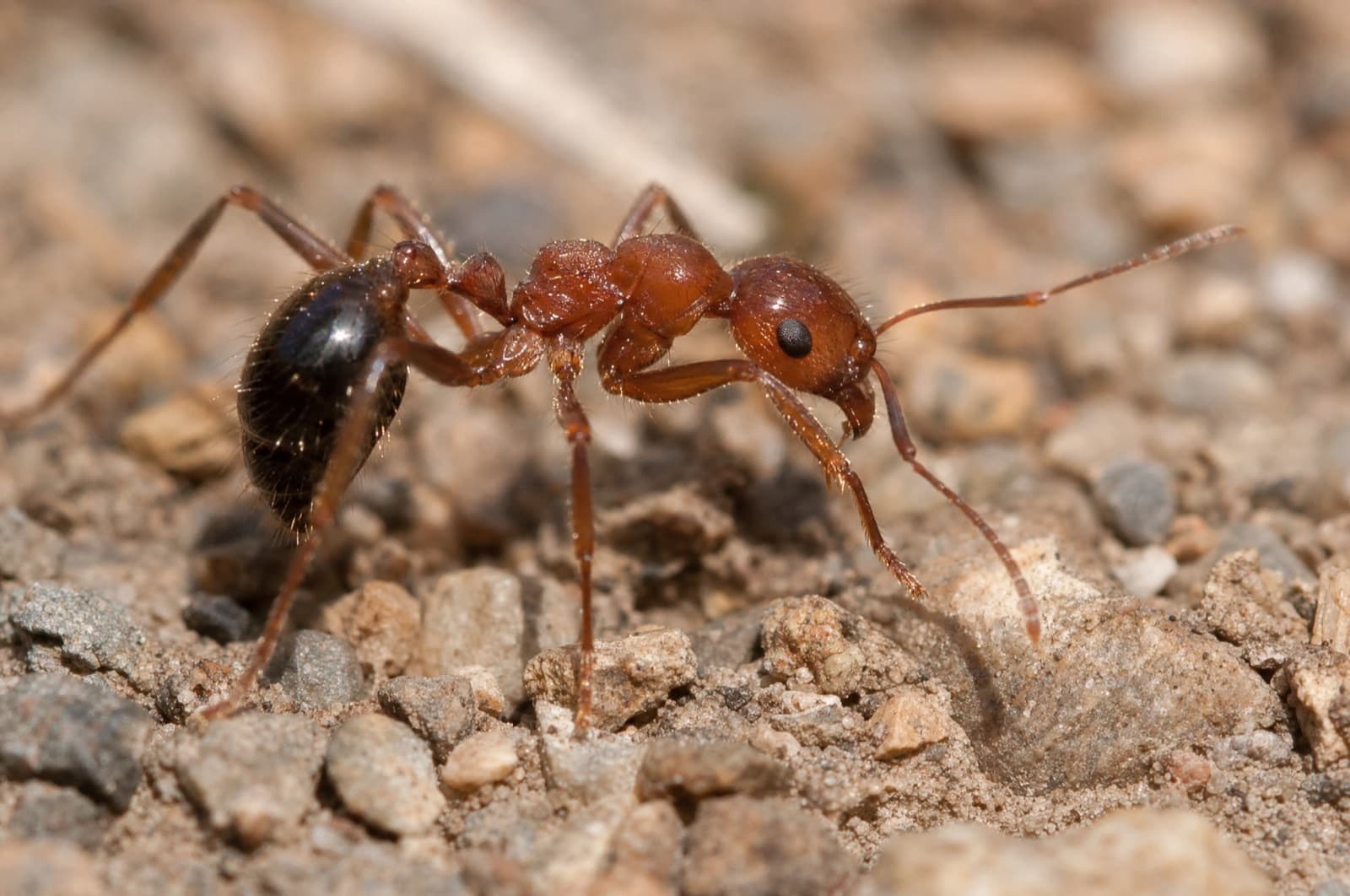
How to Get Rid of "Fire Ants" in New Hampshire
At a glance
- Difficulty: Intermediate
- Time: Ongoing — weeks for initial bait response, seasonal follow-up likely
- Cost: Low to moderate — labeled bait and yard modifications
- Success: Moderate for suppression with correct bait; low for full eradication of an established, spreading population
Can you DIY Fire Ant?
The verdict on Fire Ant DIY
Suppression, not eradication — and only after you confirm which ant you actually have.
Most "fire ant" pest content online is written for the red imported fire ant (Solenopsis invicta), which is not established in New Hampshire's climate — USDA APHIS's infested-state list doesn't include NH. What NH homeowners actually encounter is the European fire ant (Myrmica rubra), a genuinely present, stinging species with different biology: many queens per colony, many interconnected nests, no obvious mound. Because colonies are multi-queen and often span property lines, University of Maine Extension states eradication may not be possible once established — the honest goal is suppression via labeled bait plus reducing the moist, shaded conditions it favors.
The 5 DIY methods — honestly graded
Every approach graded for this species, in IPM order — prevention first, chemistry late. Pick a method to see how it works, the steps, and what it actually takes.
Prevention / Exclusion
ModerateReduces habitat favorability and, critically, prevents spreading the ant to new areas — but won't remove an established population.
European fire ants prefer high humidity, moist soil, and shade. Reducing those conditions makes your yard less favorable, and inspecting anything soil-based before moving it prevents the single most common way new infestations start.
Best for: Slowing spread and making the yard less hospitable
Reduce moisture and shade
Cut back irrigation, mow tall grass, and increase sun exposure where practical; remove debris, logs, and rocks that shelter nests.
Never move soil-borne material from an infested area
Inspect potted plants, soil, compost, and wood chips before moving them — this is how most new infestations start, per University of Maine Extension.
CautionDo not transport plants or soil from a known infested yard to an uninfested one.
Tools & materials
Why DIY falls short here
Not scare tactics — the specific, proportionate reasons a home attempt can stall for this species.
Wrong-species content leads to the wrong plan
Generic "fire ant" advice online targets the red imported fire ant's single-queen, broadcast-mound-bait biology — a mismatch for New Hampshire's mound-less, multi-queen European fire ant.
Multi-queen, multi-nest biology causes rebound
Killing one nest or its foragers leaves dozens of other queens; documented nest densities for this species run far higher in infested U.S. areas than in its native range.
Cross-property colonies hit legal and practical limits
A colony spanning into a neighbor's yard can't legally or practically be treated there, and it will reseed your yard.
How risky is it, really?
An honest read — most nuisance species are genuinely low risk, and we say so.
Once correctly identified as the European fire ant, the risk is a genuinely painful sting — real, but not the severe agricultural/medical threat profile of the red imported fire ant found in Southern states, which is not present in NH.
- Painful sting when a hidden nest is disturbed while gardening or mowingCommon
Burning sensation that can last hours in areas where the species is established
University of Maine Extension
- Multiple stings from swarming defendersOccasional
Colonies defend aggressively when disturbed
University of Maine Extension
- Rare allergic or anaphylactic reaction in sensitized individualsRare
Well documented though rare — seek medical care for systemic symptoms (difficulty breathing, widespread swelling, dizziness)
University of Maine Extension / IUCN Global Invasive Species Database
Dealing With a Stinging Ant Problem?
European fire ant infestations that span property lines or keep expanding are hard to manage alone. Anchor Pest Services provides species-correct treatment across southern and central New Hampshire. Family-owned since 2017, NH license #782664.
Call a pro when…
- The infestation spans a large area or crosses property lines
- You or a family member has a known insect-sting allergy
- Suppression with labeled bait hasn't reduced activity after a season
General Pest Control
An established European fire ant infestation, especially one spanning multiple yards or a large area, is a reasonable point to bring in a professional — the multi-queen, multi-nest biology and legal limits on treating a neighbor's property make DIY suppression alone an uphill fight.
Keep them out
- Reduce irrigation and shade where practical
- Never move soil, mulch, or potted plants from a known infested area
- Inspect incoming landscaping material before bringing it onto your property
"Fire ants" in New Hampshire — species matters
The red imported fire ant, the species behind most national "fire ant" pest content, is limited by cold winters and is not established in New Hampshire. University of Florida IFAS and University of Maine Extension both document the European fire ant (Myrmica rubra) as present in New Hampshire — a different species with different biology. If you've found a stinging ant in moist, shaded soil in your NH yard without an obvious mound, this is almost certainly what you're dealing with.
Peak season
Spring through fall, most active and defensive in warm months
First-frost anchor
Manchester first hard frost ~Oct 19 (50%) / Oct 29 (80%), NOAA 1991–2020
Make sure it's a Fire Ant
Two quick detours worth taking — confirm the ID, then learn what drew it in so it doesn't come back.
Frequently asked
Sources & further reading(3)
- [1]USDA APHIS — Imported Fire Ant
Red imported fire ant infested-state list; NH not included
govverified 2026-07-13 - [2]University of Florida IFAS — Myrmica rubra (European Fire Ant)
NH presence, biology, bait guidance
extensionverified 2026-07-13 - [3]University of Maine Cooperative Extension — European Fire Ant Fact Sheet
Sting risk, spread via soil-borne material, eradication difficulty
extensionverified 2026-07-13
Written & reviewed by
VerifiedDaniel Brady
NH-Licensed Pesticide Applicator · License #782664 (NHDAMF, RSA 430)
Daniel Brady is the New Hampshire–licensed applicator behind Anchor Pest Services, a family-owned pest control company serving the Manchester area since 2017.
Last updated July 2026
Other species you can tackle
Same category — the dot shows each one's DIY verdict at a glance (green = friendly, amber = doable with care, red = call a pro).
Professional Pest Control
Dealing With a Stinging Ant Problem?
European fire ant infestations that span property lines or keep expanding are hard to manage alone. Anchor Pest Services provides species-correct treatment across southern and central New Hampshire. Family-owned since 2017, NH license #782664.
- Correct species ID — not generic Southern fire-ant advice
- NH-licensed applicators (#782664)
- Free inspection — same-day service across southern NH
NH License #782664 · No obligation · We answer in person