
Skip to content
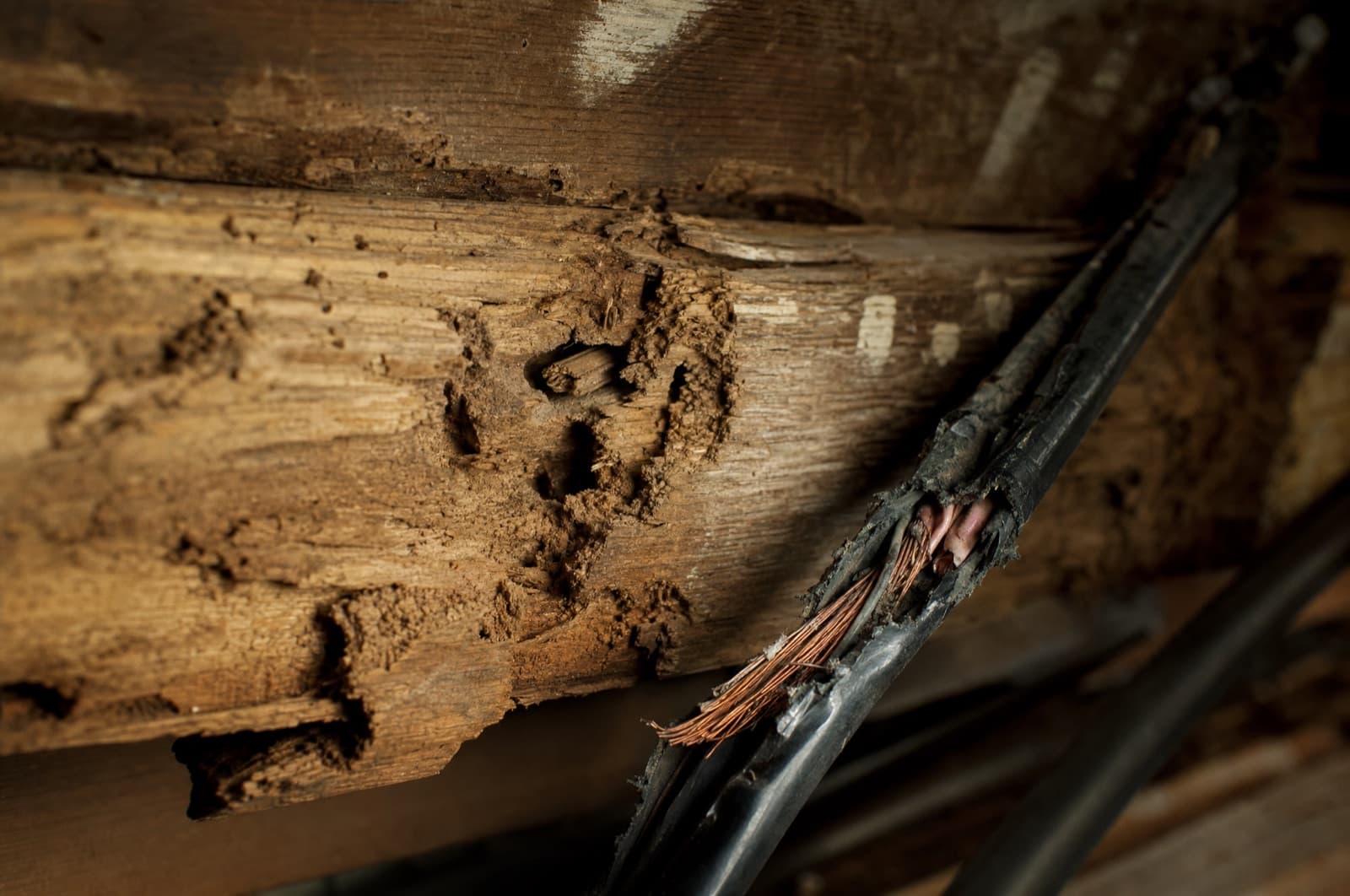
Pest damage evidence — a gnawed structural beam and a chewed electrical wire
Daniel Brady · NH-Licensed Pesticide Applicator · License #782664
Reviewed by Daniel Brady

Can insect droppings damage surfaces or finishes?

Cosmetic staining — real, not structural
Yes, but only cosmetically. Cockroach fecal spotting and smearing, fly specks, boxelder-bug and lady-beetle crush stains, and carpenter-ant or powderpost-beetle frass all discolor painted walls, cabinets, baseboards, and drawer tracks. What none of them do is chemically etch, corrode, or eat through a finish the way some pest-marketing copy implies — that language borrows from bird and bat guano corrosion claims and misapplies it to insects. The staining is real and can be stubborn; the 'damaged finish' story is not.

At a glance

  • Can it?: Yes, but
  • How common: Routine
  • Hype: Overstated
  • Evidence: Plausible, under-documented
The honest answer

The short of it

The verdict
Cosmetic staining — real, not structural

Yes, insect droppings stain and smear surfaces — but they don't etch, corrode, or eat through finishes; it's a cleaning problem, not a chemistry one.

The correction

What they claim vs. what the evidence supports

One shared severity track, two markers. The span between them is the hype delta — named out loud.

The claim — insect droppings staining, etching, or eating through finishes

That insect droppings corrode and eat through paint, wood, and finishes, permanently ruining surfaces — the same 'eats through' language used for bird and bat guano gets recycled for roach droppings and boxelder-bug spotting.

Where the claim comes from: Pest-company 'signs of infestation' blog posts and home-maintenance content that borrow corrosion language to dramatize a cleaning problem.

Severity, 0–100
Hype says60
25Evidence says
Hype delta35point gapPlausible, under-documented
The evidence

Staining is genuinely well documented: roach feces mixed with body oils and humidity smear into a stubborn paste, boxelder bugs and lady beetles leave a reddish-brown stain when crushed, and frass from carpenter ants and powderpost beetles is simply ejected wood shavings or flour-like fecal powder. No source documents insect droppings or frass chemically etching or dissolving paint, wood, or finishes — that specific corrosion claim is unsupported.

The gap

Insect droppings are a cleaning problem and, for roaches, an allergen problem — not a chemistry problem. They stain; they don't dissolve your paint.

Damage assessment

What is actually harmed

Damage verdict
Cosmetic staining — real, not structural
CosmeticCan it?Yes, but
The specimen
Pest
Cockroaches, flies, carpenter ants, powderpost beetles, and boxelder bugs or Asian lady beetles
What is in question
Painted walls, cabinets, baseboards, drawer tracks, and unfinished wood surfaces
How common
Routine
Evidence
Plausible, under-documented
Mechanism

Roach feces, especially in humid areas, mixes with body oils and moisture into a dark paste that smears rather than sits as a dry spot. Fly specks are simply regurgitation and fecal marks left wherever flies land repeatedly. Frass from carpenter ants is coarse ejected wood shavings mixed with insect parts — debris pushed out of an excavated gallery, not a substance with any corrosive property — while powderpost beetle frass is a fine, flour-like fecal powder that packs a gallery and sifts out through tiny exit holes. Boxelder bugs and lady beetles leave a reddish-brown stain only if they're crushed rather than removed intact.

Actually at risk4
  • The appearance of painted walls, cabinets, and baseboards near roach harborage
  • Drawer tracks and cabinet interiors where roach smearing concentrates
  • Curtains, sills, and walls where boxelder bugs or lady beetles are crushed instead of vacuumed
  • Visible frass piles near an active carpenter-ant or powderpost-beetle site — a sign of excavation happening elsewhere, not damage from the frass itself
Not at risk — despite the myth3
  • No chemical etching or corrosion of paint, finishes, or wood by insect droppings or frass — that specific claim is unsupported
  • The wood underneath frass is not weakened by the frass itself; any wood damage traces to the insect's excavation or feeding, a separate mechanism covered on the wood-damage pages
  • Fabric and upholstery fibers are not dissolved or degraded by insect droppings
Worst realistic case
A heavy, sustained roach infestation leaves widespread staining across cabinets and walls that needs a real cleaning and repainting job, plus a documented indoor allergen load — a nuisance and a health concern, but never a structural one.

Assessed from: EPA Cockroaches and Schools; EPA Asthma Triggers: Gain Control; NC State Extension powderpost beetle frass; Maine DACF/Harvard carpenter ant fact sheet; UMN Extension boxelder bugs

The compounding clock

Does it get worse if you ignore it?

Over time
Compounds slowly

A single dropping or smear doesn't get worse on its own — it keeps accumulating only as long as the insects stay active.

The timeline
3 stages
  1. WeeksReversible

    Fresh fecal spotting or smearing appears near active harborage — under a sink, along a baseboard, inside a cabinet. At this stage it's still a surface-level mark.

  2. MonthsReversible

    Repeated deposits from a continuing infestation darken and spread the staining across a wider area, and it becomes noticeably harder to lift with a simple wipe.

  3. YearsReversible

    An uncontrolled, long-running roach population leaves widespread staining across multiple surfaces along with a measurable indoor allergen load — a bigger cleaning job, still not a structural one.

What stops the clock
Eliminate the insect source first, then clean the surface and repaint stubborn spots. A dried stain with no active infestation behind it is already static — clean it whenever convenient.
Repair scope

Who actually fixes this

Scope, not dollars — the honest answer to “how expensive is it,” routed to the right trade.

Who fixes it
You — wipe it up
Effort
An afternoon

Ordinary cleaning, and a coat of primer and paint on stubborn spots, resolves insect-dropping staining completely — no trade is required.

The right order
  1. 1
    Resolve the insect source first — treat the roaches, or address the moisture/wood issue drawing carpenter ants or beetles
  2. 2
    Clean the stained surface with standard household cleaning and let it dry
  3. 3
    Prime and repaint stubborn or porous spots that don't lift with cleaning alone
Route by symptom
  • You — a DIY patchfrass or fine fecal powder keeps reappearing in the same spot — that's a sign of an active wood-boring insect elsewhere, worth having identified before you simply keep cleaning it up
Do not
  • Don't dry-sweep or vacuum heavy roach droppings carelessly — wear gloves and vacuum with a HEPA filter where possible, since roach droppings are a documented asthma and allergy trigger
  • Don't assume a pile of frass means the wood underneath is ruined — have the source insect identified before replacing anything
Where we help — and where we don't

Anchor treats the roaches, carpenter ants, or beetles causing the droppings. Cleaning and repainting the resulting stain is a homeowner task, and we won't upsell you on it.

In depth

The full picture

01

What's actually staining your walls and cabinets

Cockroach fecal spotting is the most common culprit indoors — in humid spots it mixes with body oils into a smeary dark paste rather than a dry spot, which is why it can be stubborn on porous cabinet interiors and along baseboards. Fly specks are regurgitation and fecal marks left wherever flies land repeatedly, usually near windows or light fixtures. Boxelder bugs and Asian lady beetles leave a reddish-brown stain, but only if they're crushed — vacuumed or swept up intact, they leave nothing behind. Frass from carpenter ants (coarse ejected wood shavings mixed with insect parts) and powderpost beetles (a fine, flour-like fecal powder) is a visible sign that excavation is happening somewhere nearby, not a stain-causing substance in its own right.

02

Why 'insect droppings eat through finishes' doesn't hold up

The corrosion language attached to insect droppings is borrowed from a genuinely real claim about bird and bat guano, whose dried acids can etch paint and metal finishes over prolonged contact. Nothing comparable exists in the entomological literature for cockroach feces, fly specks, or frass — no source documents insects' waste chemically breaking down a finish. Frass in particular is misunderstood: it's simply wood debris and insect fragments physically ejected from a gallery during excavation, mechanically identical to sawdust. It has no corrosive property of its own.

03

The real risk with roach droppings isn't your paint — it's the air

The reason to take roach droppings seriously has nothing to do with your finish. The EPA identifies cockroach feces, saliva, and shed body parts as recognized indoor allergens that trigger asthma and allergy symptoms, particularly in children — a documented health effect that matters far more than any cosmetic mark on a cabinet. That's the genuine stake here, and it's worth treating the infestation for that reason even where the staining itself is minor.

04

Cosmetic, not structural — and why that distinction holds

Every mechanism above stops at the surface. None of it weakens studs, sheathing, or framing, and none of it compounds into a structural problem no matter how long it's left. Where frass shows up repeatedly in the same location, treat it as a useful signal that a wood-boring insect is active nearby and worth identifying — the wood damage, if any, comes from that insect's feeding or excavation, a separate and dedicated topic on our wood-damage pages, not from the frass itself.

Key takeaways
5 points
  • Yes — roach smearing, fly specks, boxelder/lady-beetle crush stains, and frass all stain surfaces.
  • No — none of it chemically etches, corrodes, or eats through paint, wood, or finishes; that claim borrows corrosion language from bird and bat guano.
  • Frass is ejected wood shavings or fecal powder — a sign of excavation happening elsewhere, not a damaging substance itself.
  • The genuine reason to treat roaches is the documented asthma and allergy risk, not the staining.
  • Cleaning and, where needed, repainting resolves the staining completely — no trade required.
New Hampshire context

Seasonal patterns in New Hampshire homes

Boxelder bugs and Asian lady beetles push indoors across southern and central New Hampshire each fall as temperatures drop toward Manchester's first hard frost, historically around October 19 to 29, and again try to leave in spring — the crushing-stain complaints cluster around those two windows. Roach staining, by contrast, is a year-round kitchen and bathroom issue tied to moisture and food access rather than season.

  • NH-licensed #782664

    Southern New Hampshire

  • Family-owned

    Since 2017

  • Honest routing

    Even when it isn’t us

We serve these communities

ManchesterNashuaConcordDerryBedfordSalemHudsonAmherstAuburnGoffstownHooksettLitchfieldLoudonMilfordBristol

Service Area Map

Southern New Hampshire

BristolPop. 3,200LoudonPop. 5,500ConcordPop. 43,900HooksettPop. 14,800GoffstownPop. 18,000AuburnPop. 5,700ManchesterPop. 115,600BedfordPop. 23,300LitchfieldPop. 8,500AmherstPop. 11,300DerryPop. 34,500MilfordPop. 15,700HudsonPop. 25,600NashuaPop. 91,100SalemPop. 30,000HQCityHover for info

Roaches, ants, or beetles behind the staining? Anchor resolves the source.

We treat the insect causing the droppings or frass. Cleaning and repainting the stain itself is yours, and we'll tell you honestly when it's nothing more than that.

Follow-up questions

Frequently asked

Sources & citations(5)
  1. EPA — Cockroaches and Schools

    Cockroach feces, saliva, and cuticle as documented asthma/allergy triggers

    govverified 2026-07-16
  2. EPA — Asthma Triggers: Gain Control

    Cockroach droppings and body parts as indoor asthma triggers

    govverified 2026-07-16
  3. NC State Extension — Powderpost Beetles and Wood-Inhabiting Fungi

    Flour-like frass from powderpost beetle activity

    extensionverified 2026-07-16
  4. Maine DACF / Harvard fact sheet — Carpenter Ants

    Frass is ejected wood shavings and insect parts, not consumed wood

    extensionverified 2026-07-16
  5. UMN Extension — Boxelder Bugs

    Reddish-brown fecal staining when boxelder bugs are crushed; fall entry timing

    extensionverified 2026-07-16

Written & reviewed by

Verified

Daniel Brady

NH-Licensed Pesticide Applicator · License #782664 (NHDAMF, RSA 430)

Daniel Brady is the New Hampshire–licensed applicator behind Anchor Pest Services, a family-owned pest control company serving the Manchester area since 2017.

Verify license

Last updated Jul 2026

Honest pest help for New Hampshire homes

We Stop the Insect. You Handle the Cleanup.

Insect-dropping staining is a cleaning job once the source is gone — Anchor Pest Services resolves the roach, carpenter-ant, or beetle activity causing it, and we're upfront when a stain is purely cosmetic and doesn't need a repeat visit. Family-owned since 2017, NH license #782664, serving Manchester, Nashua, Concord and nearby towns.

  • Honest advice — we tell you when it's cosmetic, not just when it isn't
  • NH-licensed applicators (#782664) — free inspection, same-day service
  • Roach, ant, and wood-pest control across southern and central New Hampshire

NH License #782664 · No obligation · We answer in person