
Skip to content
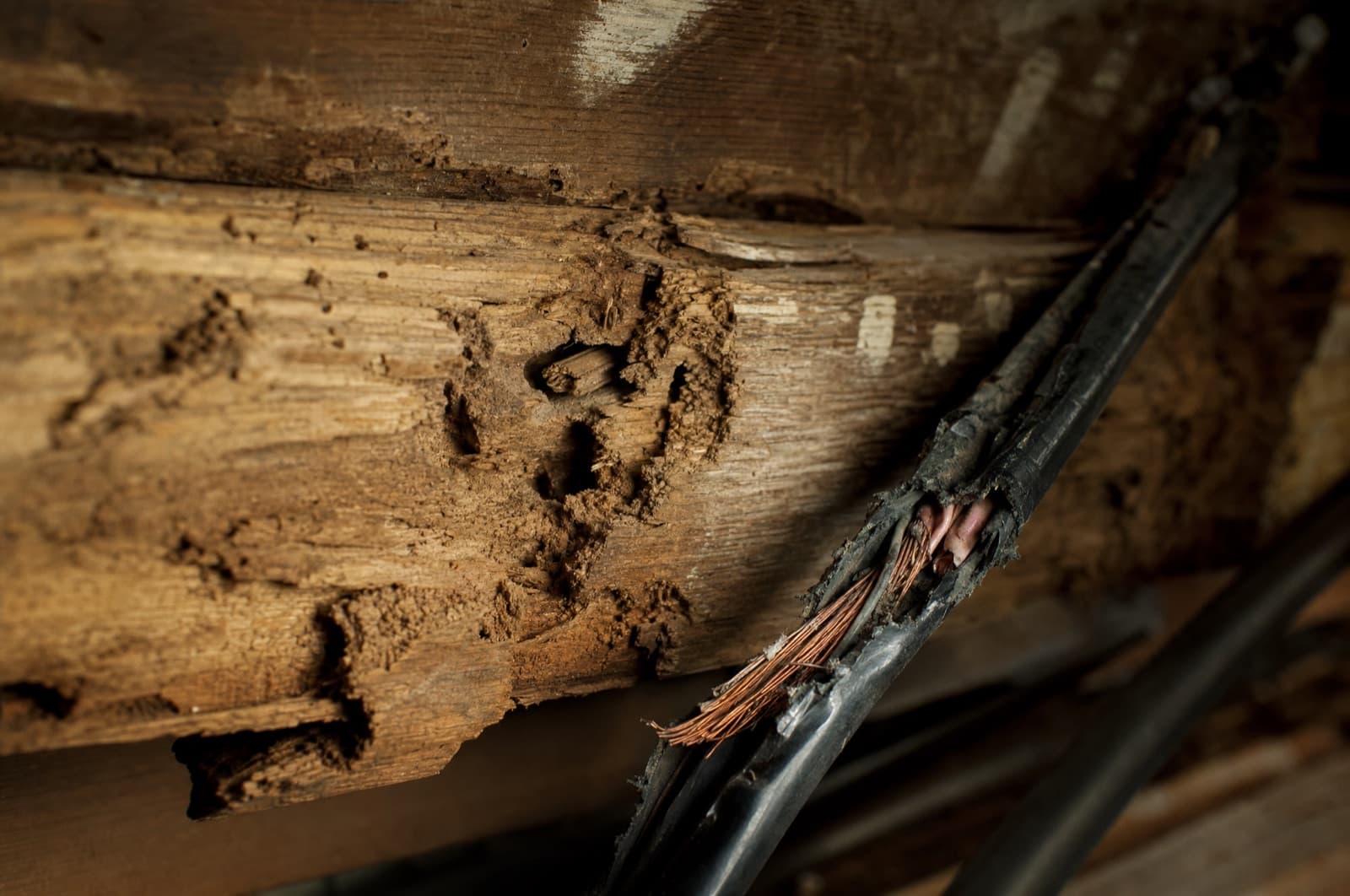
Pest damage evidence — a gnawed structural beam and a chewed electrical wire
Daniel Brady · NH-Licensed Pesticide Applicator · License #782664
Reviewed by Daniel Brady

Can squirrels chew through roof vents or wires?

Functional damage — real
Yes. Squirrels are rodents, and their incisors grow continuously and must be worn down regardless of what's available to eat, so they routinely gnaw plastic roof, soffit, and gable vents, thin aluminum, and the plastic insulation covering household wiring and coaxial cable. Exposed energized wire touching wood or other combustibles is a real, recognized ignition pathway in fire-investigation literature. What isn't real is the specific statistic you'll often see attached to this — that rodents cause 20 to 25 percent of house fires — which traces to an uncited 2012 pest-industry trade article and appears in no NFPA or NFIRS fire-cause data.

At a glance

  • Can it?: Yes
  • How common: Routine
  • Hype: Overstated
  • Evidence: Well documented
The honest answer

The short of it

The verdict
Functional damage — real

Yes — squirrels are rodents with continuously growing incisors, and they gnaw plastic and aluminum roof vents and strip wire insulation routinely. Exposed, energized wire touching wood or insulation is a genuine documented ignition pathway. But the widely repeated claim that rodents cause 20 to 25 percent of house fires traces to an uncited 2012 trade article, not any fire authority — the mechanism is real, the number is invented.

The correction

What they claim vs. what the evidence supports

One shared severity track, two markers. The span between them is the hype delta — named out loud.

The claim — squirrels chewing through roof vents, aluminum flashing, and wire insulation

That squirrel gnawing in an attic makes a house fire practically inevitable, commonly citing a claim that rodents cause 20 to 25 percent of house fires.

Where the claim comes from: Pest-control and electrical-inspection marketing, which pairs a dramatic fire framing with a hard-to-verify statistic to create urgency around a service call.

Severity, 0–100
Hype says80
55Evidence says
Hype delta25point gapWell documented
The evidence

Squirrels genuinely gnaw plastic and aluminum vents and strip wire insulation — that part is well documented and routine wherever they're active in an attic. Exposed, energized wire touching wood or insulation is also a real, recognized ignition pathway in fire-investigation and consumer-safety literature. But the specific 20-to-25-percent figure traces to a 2012 pest-industry trade article with no underlying study, and it does not appear in NFPA or NFIRS fire-cause data at all.

The gap

The chewing and the wire-exposure risk are both real. The number bolted onto it — that rodents cause 20 to 25 percent of house fires — is not: no fire authority publishes it, and it traces to an uncited 2012 trade-magazine estimate. The mechanism is real; the number is invented.

Damage assessment

What is actually harmed

Damage verdict
Functional damage — real
FunctionalCan it?Yes
The specimen
Pest
Eastern gray squirrels and red squirrels — rodents with continuously growing incisors
What is in question
Plastic and aluminum roof, soffit, and gable vents; wire and cable insulation; coaxial and low-voltage lines; attic ductwork
How common
Routine
Evidence
Well documented
Mechanism

A squirrel's incisors grow continuously and must be worn down regardless of hunger, so gnawing is obligate maintenance, not appetite-driven. Plastic vent housings and thin aluminum flashing are soft enough to be readily breached, and plastic wire insulation offers the same easy purchase. Where gnawing exposes an energized conductor and that bare wire contacts wood, insulation, or another combustible, a consumer-safety and fire-investigation framework recognizes arcing from damaged wiring as a genuine ignition pathway.

Actually at risk4
  • Roof, soffit, and gable vents made of plastic or thin aluminum
  • Wire and cable insulation throughout an occupied attic
  • Coaxial and low-voltage lines
  • Attic ductwork
Not at risk — despite the myth3
  • Steel hardware cloth and adequate-gauge metal exclusion material — squirrels cannot breach it
  • Copper pipe as a chew target — it is not a food or wear-reward material they pursue
  • Concrete and masonry structure
Worst realistic case
An attic electrical fire ignited by chewed, energized wire contacting wood or insulation — a real but low-probability tail outcome, not the routine result of squirrels simply being in an attic.

Assessed from: CPSC arc-fault circuit interrupter publication; NFPA electrical-fire research; Alabama Extension gray-squirrel attic-damage guidance

The compounding clock

Does it get worse if you ignore it?

Over time
Compounds

It compounds while squirrels are active in the attic — and stops the day they're excluded and the wiring is checked.

The timeline
3 stages
  1. DaysReversible

    Exploratory gnawing starts at an existing edge or seam — a vent corner, a cable tie, a gap in flashing. Usually invisible unless you're looking for it.

  2. WeeksReversible

    Established runways mean repeated gnawing in the same spots. Wire insulation is stripped along a run, and vent housings develop enlarged openings.

  3. MonthsReversible

    A breached vent invites water intrusion and other wildlife; a stripped wire run becomes a genuine electrical hazard needing an electrician's evaluation rather than a patch.

What stops the clock
Exclusion — sealing entries with steel mesh or metal the squirrels cannot chew through, and removing the animals — combined with an electrician's inspection of any exposed wiring. New gnawing ends the day the gnawer is gone.
Repair scope

Who actually fixes this

Scope, not dollars — the honest answer to “how expensive is it,” routed to the right trade.

Who fixes it
Pest pro first
Effort
A trade visit

Nothing stays fixed while squirrels are still getting into the attic — resolving and excluding them is the genuine first step, and it's squarely Anchor's lane. Only then does the damaged vent or wiring get repaired by whoever owns that system.

The right order
  1. 1
    Exclude the squirrels and seal entry points with steel mesh or metal the animals cannot chew through
  2. 2
    Have a licensed electrician inspect and repair any chewed or exposed wiring
  3. 3
    Have a roofer replace or repair damaged vents
Route by symptom
  • Licensed electricianAny wire insulation is stripped or a circuit is behaving oddly — energized work is never a pest-control or DIY job
  • RooferA roof, soffit, or gable vent itself needs replacement
Do not
  • Don't inspect or touch a suspected chewed, energized wire yourself — call a licensed electrician
  • Don't patch a chewed vent while squirrels are still active — they'll chew straight back through it
  • Don't seal an entry point without confirming no young are trapped inside
Where we help — and where we don't

Anchor genuinely does squirrel exclusion and gnawing-damage prevention — that's real Anchor work. We do not do the electrical repair or the roof/vent replacement itself, and we'll say so rather than quote you for either.

In depth

The full picture

01

What squirrels can actually chew up there

Squirrels are rodents, and like all rodents their incisors are rootless and grow continuously — wearing them down is a biological necessity, not a matter of hunger or malice. Once a squirrel gets into an attic or roofline, the readily available soft materials are plastic vent housings, thin aluminum flashing, wire and cable insulation, and coaxial or low-voltage lines. All of these are routinely breached wherever squirrels are active, and it happens regardless of whether there's anything edible nearby, because the point of the gnawing is wear, not food.

02

The wire-and-fire mechanism, honestly

This is the part worth taking seriously without exaggerating it. When gnawing strips insulation off an energized conductor, the bare wire can arc if it contacts wood, insulation, or another combustible material, and that is a recognized ignition pathway in consumer-safety and fire-investigation literature — the same framework used to evaluate arc-fault risk from any damaged household wiring, not something unique to squirrels. That mechanism is real and it's why chewed wiring genuinely warrants an electrician's inspection. What it does not mean is that squirrel activity makes a fire a likely or routine outcome — arc-fault ignition from any cause remains the low-probability tail of a much larger population of attics with active squirrels and no fire at all.

03

The 20-to-25-percent statistic — where it came from and why it's wrong

You will frequently see it claimed that rodents cause 20 to 25 percent of house fires, sometimes attributed to NFPA or a formal study. Neither is accurate. The earliest confirmable published source is a 2012 pest-industry trade magazine article that introduced the figure as an unsourced 'estimate' with no methodology and no underlying dataset — not a study. NFPA does not publish a rodent-specific fire statistic; the fire-incident database that NFPA and USFA draw on has no cause-of-ignition code for rodents or animals at all, which means any percentage attributing fires to rodents is an extrapolation, not a tabulated figure. What NFPA's electrical-fire research actually identifies is arcing as the leading factor in home fires caused by electrical failure or malfunction, with no rodent factor named. The mechanism is real; the number is invented.

04

Functional, not structural — and how to stop it

It's worth being precise about what kind of damage this is. Chewed vents, wiring, and cable are functional damage — they break a system that's supposed to work, whether that's ventilation, electrical service, or connectivity. They are not structural damage: squirrels are not weakening your roof framing or foundation by gnawing a vent housing or a wire run. The fix, in order, is exclusion first — sealing entries with materials squirrels genuinely cannot breach — then an electrician for any exposed or chewed wiring, and a roofer for any damaged vent. Repairing the system before the squirrels are gone just gives them fresh material to chew through again.

Key takeaways
5 points
  • Yes — squirrels gnaw plastic and aluminum vents and wire insulation routinely; it's obligate incisor wear, not hunger.
  • Chewed, energized wire touching wood or insulation is a real, documented ignition pathway.
  • The '20-25% of house fires' rodent statistic traces to an uncited 2012 trade article and appears in no NFPA or NFIRS data.
  • The damage is functional — it breaks vents, wiring, and ductwork — not structural; framing and masonry aren't at risk.
  • Exclusion comes first, then an electrician for wiring and a roofer for vents — new gnawing stops once squirrels are gone.
New Hampshire context

Squirrel pressure in New Hampshire attics

Gray squirrel activity in southern and central New Hampshire attics tracks the species' two annual breeding peaks, roughly February through May and August through October, when females seek warm, sheltered denning sites. Homes with roofline gaps, unscreened gable vents, or overhanging tree limbs near the roof see the most entries. Checking vent condition and listening for scratching in the attic before each breeding peak catches most entries before a full season of gnawing accumulates.

  • NH-licensed #782664

    Southern New Hampshire

  • Family-owned

    Since 2017

  • Honest routing

    Even when it isn’t us

We serve these communities

ManchesterNashuaConcordDerryBedfordSalemHudsonAmherstAuburnGoffstownHooksettLitchfieldLoudonMilfordBristol

Service Area Map

Southern New Hampshire

BristolPop. 3,200LoudonPop. 5,500ConcordPop. 43,900HooksettPop. 14,800GoffstownPop. 18,000AuburnPop. 5,700ManchesterPop. 115,600BedfordPop. 23,300LitchfieldPop. 8,500AmherstPop. 11,300DerryPop. 34,500MilfordPop. 15,700HudsonPop. 25,600NashuaPop. 91,100SalemPop. 30,000HQCityHover for info

Squirrels chewing your roof vents or wiring? Stop the gnawer, not just the damage.

Anchor handles exclusion and sealing with materials squirrels genuinely can't chew — an electrician and a roofer handle the rest.

Follow-up questions

Frequently asked

Sources & citations(3)
  1. NFPA — Home Fires Caused by Electrical Failure or Malfunction (Campbell, 2019)

    Arcing is the leading factor in home electrical-failure fires; no rodent factor is identified in fire-cause data — the basis for correcting the circulating 20-25% claim

    fireverified 2026-07-16
  2. U.S. Consumer Product Safety Commission — Preventing Home Fires: Arc-Fault Circuit Interrupters

    Arc-fault ignition framework for damaged or exposed household wiring

    govverified 2026-07-16
  3. Alabama Cooperative Extension — Eastern Gray Squirrels: Managing and Preventing Attic Damage

    Squirrel attic gnawing behavior and breeding-season timing

    extensionverified 2026-07-16

Written & reviewed by

Verified

Daniel Brady

NH-Licensed Pesticide Applicator · License #782664 (NHDAMF, RSA 430)

Daniel Brady is the New Hampshire–licensed applicator behind Anchor Pest Services, a family-owned pest control company serving the Manchester area since 2017.

Verify license

Last updated Jul 2026

Honest pest help for New Hampshire homes

We Stop the Squirrels. We'll Tell You Who Fixes the Rest.

Chewed wiring is an electrician's job and a damaged vent is a roofer's — we won't quote you for either. What Anchor Pest Services does is the step that makes those repairs stick: excluding the squirrels and sealing every entry with steel and mesh they can't breach. Family-owned since 2017, NH license #782664, serving Manchester, Nashua, Concord and nearby towns.

  • Honest advice — we route you to the right trade, even when it isn't us
  • NH-licensed applicators (#782664) — free inspection, same-day service
  • Rodent and wildlife exclusion across southern and central New Hampshire

NH License #782664 · No obligation · We answer in person