
Skip to content
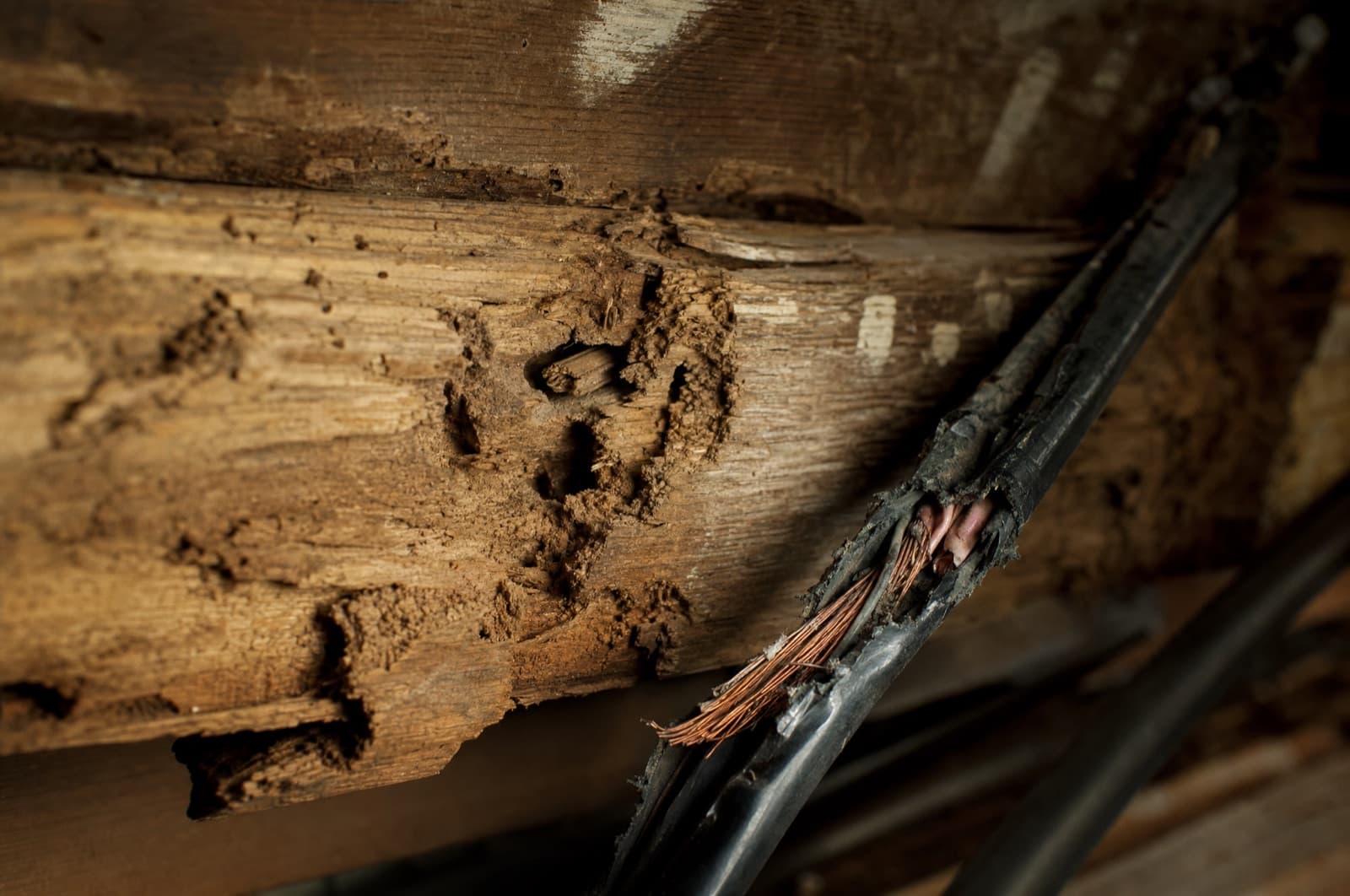
Pest damage evidence — a gnawed structural beam and a chewed electrical wire
Daniel Brady · NH-Licensed Pesticide Applicator · License #782664
Reviewed by Daniel Brady

Can raccoon damage lead to roof leaks?

Functional damage — a direct leak path, not a separate risk
Yes. When a raccoon tears open a vent, soffit, flashing seam, or shingles to enter an attic, the opening it leaves behind is a straightforward hole in the building's weatherproofing envelope, and rain or snowmelt follows the path of least resistance right through it. This isn't a rare secondary event — it's the direct physical consequence of the breach that's already there. How much damage results depends on the size of the opening, the weather that follows, and how long it takes before someone repairs it, not on some inevitable catastrophe baked into raccoon entry itself.

At a glance

  • Can it?: Yes
  • How common: Routine
  • Hype: About right
  • Evidence: Well documented
The honest answer

The short of it

The verdict
Functional damage — a direct leak path, not a separate risk

Yes — once a raccoon tears open a vent, soffit, or shingle to get into an attic, that opening is a hole in the roof's weatherproofing, and rain follows it in directly. The genuinely compounding damage after that point is the water, not the raccoon.

The correction

What they claim vs. what the evidence supports

One shared severity track, two markers. The span between them is the hype delta — named out loud.

The claim — raccoon roof and attic entry causing water damage through a roof leak

That any raccoon entry into a roof leads to inevitable, near-catastrophic water damage — collapsed ceilings, ruined framing, a gutted attic — practically guaranteed the moment an animal gets in.

Where the claim comes from: Wildlife-removal and roofing marketing, where a dramatic water-damage scenario justifies an urgent, broad-scope service call.

Severity, 0–100
Hype says75
65Evidence says
The hype is fairWell documented
The evidence

A physical opening in a roof's weatherproofing genuinely does let water in — that mechanism is direct and real, not exaggerated. But the actual severity scales with the size of the breach, the weather that follows, and how long it takes before someone repairs it. A small vent tear found and sealed within days behaves nothing like an unnoticed hole left open through an entire wet season.

The gap

There's very little gap to publish here — a hole in your roof genuinely leaks. The only honest correction is that 'inevitable catastrophe' overstates it slightly: severity is a function of time and weather, not a guarantee baked into the entry itself.

Damage assessment

What is actually harmed

Damage verdict
Functional damage — a direct leak path, not a separate risk
FunctionalCan it?Yes
The specimen
Pest
Raccoons (Procyon lotor)
What is in question
Roof decking and shingles around the breach, flashing seals, attic insulation, framing (via rot over time), and ceilings below a sustained leak
How common
Routine
Evidence
Well documented
Mechanism

The leak isn't a separate event from the entry — it's the same hole doing what an open hole in a roof always does. Once a raccoon tears a vent, soffit seam, flashing joint, or shingle open to get inside, that opening sits in the weatherproofing layer the same way any storm damage would, and rain and snowmelt find it on the very next weather event. Wet insulation loses R-value and holds moisture against nearby wood; left long enough, that sustained dampness softens and eventually rots roof decking and rafters.

Actually at risk5
  • Roof decking and shingles immediately around the breach
  • Flashing seals disturbed during entry
  • Attic insulation directly beneath the opening
  • Framing and rafters, if moisture sits long enough to cause rot
  • Ceiling drywall and paint below a sustained, undetected leak
Not at risk — despite the myth3
  • The leak does not cause instantaneous structural collapse — this is a progressive problem, not a sudden one
  • Masonry, poured concrete, and steel framing are unaffected by water intrusion at this scale
  • Areas of the attic away from the actual breach stay dry and undamaged
Worst realistic case
A sustained, undetected leak that rots roof decking and rafters and requires mold remediation and insulation replacement — a real repair job, but one that starts as a simple hole that could have been sealed within days.

Assessed from: NH Fish & Game (species/behavior); CDC (contamination precautions during attic cleanup); roofing-industry field observation on breach-to-leak mechanics

The compounding clock

Does it get worse if you ignore it?

Over time
Compounds

Compounds with every rain event — the breach itself doesn't get worse sitting still, but New Hampshire weather makes sure it doesn't stay small.

The timeline
3 stages
  1. DaysReversible

    The first rain or snowmelt after the breach finds the opening; water reaches the insulation directly beneath it and sometimes the ceiling below. Fully reversible with a prompt seal and dry-out.

  2. WeeksReversible

    Repeated wet-dry cycles keep insulation and nearby wood damp; mold can begin establishing in the dampest, least-ventilated spots around the breach.

  3. One seasonReversible

    An unaddressed breach through a full wet season or spring melt can soften and begin rotting the roof decking and rafters directly under the opening, and the insulation beneath it loses most of its usable R-value.

What stops the clock
Sealing and repairing the actual breach. The leak stops being a leak the moment the hole is gone, regardless of how long the raccoon situation took to resolve — the water doesn't have a mechanism of its own.
Repair scope

Who actually fixes this

Scope, not dollars — the honest answer to “how expensive is it,” routed to the right trade.

Who fixes it
Roofer
Effort
A project

The leak itself is a roofing repair — once the raccoon is confirmed excluded, sealing the breach, replacing damaged shingles or decking, and re-flashing the area is squarely a roofer's job, not a pest-control one.

The right order
  1. 1
    Confirm the raccoon(s) are fully excluded so the same spot isn't reopened
  2. 2
    Roofer inspects the breach and repairs decking, shingles, and flashing
  3. 3
    Remediation dries out and replaces wet or moldy insulation and treats any mold that's established
Route by symptom
  • Wildlife / exclusion specialista raccoon is still present, or a litter may be denning nearby — the animal has to be resolved before any repair holds
  • Qualified remediationinsulation is visibly wet, moldy, or has been sitting damp for more than a few weeks
Do not
  • Don't patch a leak from the outside without confirming the raccoon is genuinely gone — a cosmetic patch over an active den just traps moisture behind it
  • Don't leave a small, 'manageable' leak through a whole season assuming it will stay small — the honest evidence says it compounds the longer it's left
Where we help — and where we don't

The roof repair and the water/mold remediation are both outside Anchor's lane — a roofer and a remediation specialist are the right calls, and we'll say so plainly. Anchor's honest role here, if any, is general perimeter pest defense after the structural and wildlife sides are resolved.

Health risk

The health angle

If a raccoon denned behind the leak, the same space may still carry a latrine and a raccoon roundworm (Baylisascaris) risk in addition to the mold that follows sustained water intrusion.

Caution
Who is at risk
  • Anyone entering the attic to inspect or repair the area before the wildlife side is confirmed resolved
  • Anyone disturbing wet, moldy insulation without protection
Precautions
  • Have a wildlife professional confirm the den is genuinely empty before repair crews go in
  • Don't disturb visible droppings or heavily soiled, wet insulation yourself
Do not
  • Don't dry-sweep or vacuum droppings found during a repair inspection
When to seek care

Discuss any suspected exposure to raccoon droppings, or a bite or scratch encountered during repair, with a doctor.

Health guidance from: CDC — About Raccoon Roundworm

In depth

The full picture

01

The leak isn't a coincidence — it's the same hole

It helps to be precise about what's actually happening physically. A raccoon doesn't cause a leak the way a burst pipe does, as a separate malfunction somewhere else in the house. The leak IS the entry hole, doing exactly what any breach in a roof's weatherproofing does the next time it rains. There's no extra mechanism required — a torn vent, a pried-open soffit seam, or a shingle ripped back is already a gap in the same layer that's supposed to keep water out.

That's why this page's honest answer is close to the popular one. Most of this hub exists to separate a real mechanism from an inflated number; here, the mechanism and the fear largely line up. A hole in a roof leaks. The nuance worth adding isn't whether it leaks, but how much it leaks and how fast, which depends on the breach size, the season, and how long it sits open.

02

What water actually does once it's inside

Once rain or snowmelt is getting past the roof envelope, it saturates the insulation directly beneath the opening first, which is both an immediate problem (lost R-value, a damp attic) and a slower one — sustained moisture against wood eventually causes rot, and standing dampness in an enclosed attic space is exactly the condition mold needs to establish. None of this happens instantly. A leak found and sealed within days is a very different animal from one that runs unnoticed through an entire New Hampshire wet season.

That's the real honest ceiling here: rotted decking and rafters, saturated insulation that has to be replaced, and mold that needs professional remediation — a genuine repair project, but one whose scale is set by time and weather, not guaranteed the moment the raccoon got in.

03

Sequence matters more than urgency

The single most common mistake here is trying to fix the leak before the raccoon situation is actually resolved. Patching a hole from the outside while an animal is still using it, or while a litter is denning nearby, either fails outright (the animal tears back through) or traps a den behind a newly sealed opening — neither of which is a safe or effective outcome. The honest order is: confirm the wildlife side is done, then repair the roof, then deal with whatever water damage accumulated in between. Skipping ahead doesn't actually save time.

Key takeaways
5 points
  • Yes — a raccoon roof breach is a direct leak path, not a separate or rare event; water follows the hole the raccoon already made.
  • This is one of the honest 'about_right' pages in the hub — the leak mechanism is exactly as real as the fear suggests.
  • Severity scales with breach size, weather, and how long the hole sits open — not a guaranteed catastrophe baked into the entry itself.
  • The worst realistic case is rotted decking and rafters plus mold remediation, and it takes an entire unaddressed season to get there.
  • Sequence matters: confirm the raccoon is excluded before a roofer repairs the breach, and before any water damage is remediated.
New Hampshire context

Roof leaks after raccoon entry in New Hampshire

Southern and central New Hampshire's freeze-thaw cycles and spring snowmelt make an unrepaired roof breach a particularly bad thing to leave open through winter — meltwater can find its way through an opening just as readily as summer rain, and a damp, poorly ventilated attic through a long cold season is favorable to the mold this page's compounding clock describes. Homeowners who find raccoon entry damage in fall are usually better served getting the breach sealed before the first hard frost (historically around October 19 to 29 in Manchester) than waiting.

  • NH-licensed #782664

    Southern New Hampshire

  • Family-owned

    Since 2017

  • Honest routing

    Even when it isn’t us

We serve these communities

ManchesterNashuaConcordDerryBedfordSalemHudsonAmherstAuburnGoffstownHooksettLitchfieldLoudonMilfordBristol

Service Area Map

Southern New Hampshire

BristolPop. 3,200LoudonPop. 5,500ConcordPop. 43,900HooksettPop. 14,800GoffstownPop. 18,000AuburnPop. 5,700ManchesterPop. 115,600BedfordPop. 23,300LitchfieldPop. 8,500AmherstPop. 11,300DerryPop. 34,500MilfordPop. 15,700HudsonPop. 25,600NashuaPop. 91,100SalemPop. 30,000HQCityHover for info

A raccoon roof leak needs a roofer, not a pest-control call.

We'll tell you that plainly — and handle the general perimeter pest defense that's genuinely ours to do.

Follow-up questions

Frequently asked

Sources & citations(2)
  1. NH Fish & Game — Public reminded about rabies and other disease precautions

    Raccoon species behavior and rabies-vector context

    govverified 2026-07-16
  2. CDC — About Raccoon Roundworm (Baylisascaris)

    Contamination risk when inspecting or repairing a former den site

    govverified 2026-07-16

Written & reviewed by

Verified

Daniel Brady

NH-Licensed Pesticide Applicator · License #782664 (NHDAMF, RSA 430)

Daniel Brady is the New Hampshire–licensed applicator behind Anchor Pest Services, a family-owned pest control company serving the Manchester area since 2017.

Verify license

Last updated Jul 2026

Honest pest help for New Hampshire homes

The Roof and the Water Damage Aren't Ours to Fix.

Once a raccoon has breached your roof, the leak that follows is a roofing and water-damage repair, not a pest-control job — we'd rather route you to a roofer and a remediation specialist than take a call we can't finish. What Anchor Pest Services genuinely does is general pest exclusion and perimeter defense across southern and central New Hampshire. Family-owned since 2017, NH license #782664.

  • Honest advice — we route you to the right trade, even when it isn't us
  • NH-licensed applicators (#782664) — free inspection, same-day service
  • General pest exclusion and perimeter defense across southern and central New Hampshire

NH License #782664 · No obligation · We answer in person