
Skip to content
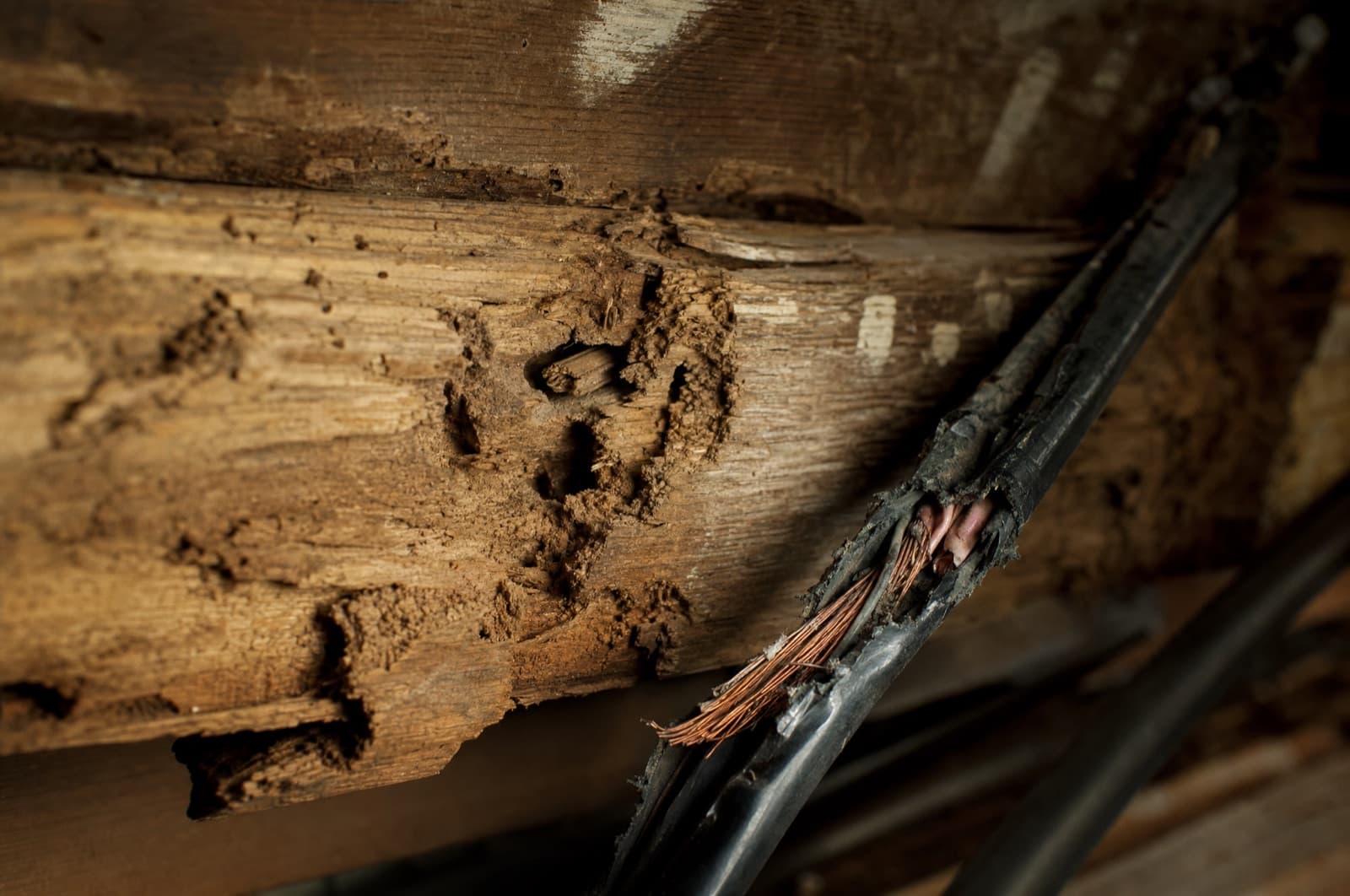
Pest damage evidence — a gnawed structural beam and a chewed electrical wire
Daniel Brady · NH-Licensed Pesticide Applicator · License #782664
Reviewed by Daniel Brady

Why do mice chew on wires and furniture?

Functional damage — biology explains it, wiring is the real stake
Mice chew because their incisors grow continuously — roughly 0.4 millimeters a day — and must be worn down or the mouse develops a painful, eventually fatal jaw misalignment. Recent neuroscience shows gnawing is also an actively rewarded, dopamine-driven behavior, not a passive mechanical reflex. Wires and furniture are simply conveniently sized, gnawable objects along a mouse's travel routes — they aren't eating the wire and aren't targeting your furniture out of malice. The real consequence to watch for is stripped wire insulation, not the furniture.

At a glance

  • Can it?: Yes
  • How common: Routine
  • Hype: Overstated
  • Evidence: Debunked
  • 0.4 mm/day

    How fast a mouse's rootless incisors grow, forcing constant gnawing

    Colorado State University

  • 5.5 Mohs

    Hardness of rodent incisor enamel — harder than iron or copper

    Rat Behavior and Biology

  • ~750/year

    U.S. home fires that pets and wild animals combined have a part in — NFPA's actual animal figure (not the fabricated 20-25%)

    NFPA — Animals Fact Sheet

The honest answer

The short of it

The verdict
Functional damage — biology explains it, wiring is the real stake

Mice chew wires and furniture because their incisors grow continuously for life and gnawing is a dopamine-rewarded behavior — not hunger, not spite, and not evidence your house is uniquely at risk.

The correction

What they claim vs. what the evidence supports

One shared severity track, two markers. The span between them is the hype delta — named out loud.

The claim — the leap from "mice chew wires and furniture" to "mice cause 20 to 25 percent of house fires"

Many pest and wildlife-removal sites move directly from explaining that mice chew wires to citing a figure that rodents cause 20 to 25 percent of house fires, often those of "undetermined" origin.

Where the claim comes from: Pest-industry blog copy and viral home-safety posts repeating a figure that traces to a 2012 trade-magazine article.

Severity, 0–100
Hype says75
40Evidence says
Hype delta35point gapDebunked
The evidence

The chewing itself is genuine and well documented biology. The fire figure is not: no NFPA, USFA, or NFIRS fire-cause dataset contains a rodent-specific ignition category, and "undetermined cause" fires by definition have no assigned cause, so any percentage attributed to rodents is an invented extrapolation. NFPA's own animal-related figure — pets and wild animals combined having a part in roughly 750 U.S. home fires a year — is far smaller than what the popular claim implies.

The gap

The chewing is 100 percent real and biological. The house-fire statistic bolted onto it is invented — and conflating the two turns an honest behavioral fact into a scare number.

Correction
The claim
Mice, or rodents generally, cause 20 to 25 percent of house fires, especially those of undetermined origin.
Why it is wrong
The figure traces to an October 2012 pest-industry trade-magazine article that offered no citation, no methodology, and no primary dataset. No fire authority's cause-of-ignition coding includes a rodent or animal-specific category, and NFIRS has no such code at all — so a percentage of "undetermined" fires attributed to rodents cannot come from tabulated fire data.
What is true instead
NFPA's own animal-related home-fire figure is that pets and wild animals combined have a part in roughly 750 U.S. home fires a year — all animals, not rodents alone, and orders of magnitude below the popular claim. Separately, mice stripping insulation off energized wire is a real, physically sound way a fire can start; the mechanism is genuine even though the specific percentage is not.
Source
NFPA, Home Fires Caused by Electrical Failure or Malfunction (Campbell, 2019); NFPA Animals fact sheet; USFA NFIRS Complete Reference Guide
Damage assessment

What is actually harmed

Damage verdict
Functional damage — biology explains it, wiring is the real stake
FunctionalCan it?Yes
The specimen
Pest
House mice (the mechanism applies to rats as well)
What is in question
Wire and cable insulation, furniture surfaces and legs, and other accessible household objects
How common
Routine
Evidence
Well documented
Mechanism

A mouse's incisors are rootless and grow for life; unworn incisors overgrow into malocclusion and the animal eventually starves, so gnawing is obligate maintenance rather than a response to hunger. Recent work published in Neuron found gnawing is also wired to a dopamine-reward circuit in the brain — disrupting the circuit abolished gnawing and caused malocclusion, while activating it triggered a reward response — meaning mice are motivated to gnaw independent of any nutritional or mechanical need. The enamel on the gnawing surface is iron-rich and roughly 5.5 on the Mohs hardness scale, harder than iron or copper, letting a mouse shear wire insulation and softwood furniture surfaces wherever it finds an edge.

Actually at risk3
  • Wire and cable insulation — the highest-consequence target, since a stripped conductor can arc if energized
  • Furniture legs, corners, and upholstered edges
  • Stored cardboard, paper, and soft plastic along travel routes
Not at risk — despite the myth3
  • The copper conductor itself isn't consumed, only the insulation around it
  • Solid hardwood furniture frames and joints are rarely gnawed through structurally
  • Metal furniture hardware, tile, stone, and glass
Worst realistic case
An exposed, energized conductor that an electrician has to find and make safe — a real and serious repair, but not evidence the house is about to catch fire on the strength of a viral statistic.

Assessed from: Colorado State University (hypselodonty, malocclusion); Neuron DOI 10.1016/j.neuron.2026.01.021 (dopamine-rewarded gnawing); ratbehavior.org (incisor hardness)

Repair scope

Who actually fixes this

Scope, not dollars — the honest answer to “how expensive is it,” routed to the right trade.

Who fixes it
Pest pro first
Effort
A trade visit

Nothing stops the chewing except removing the mice — furniture repair or wire replacement while they're still active just gives them fresh material.

The right order
  1. 1
    Anchor: remove the mice and exclude entry points
  2. 2
    Electrician: inspect and repair any wire with stripped or damaged insulation
  3. 3
    Homeowner: patch or replace cosmetically chewed furniture
Route by symptom
  • Licensed electricianAny wire insulation is stripped or a circuit behaves oddly — this is never a DIY job
  • You — a DIY patchThe damage is limited to furniture surfaces
Do not
  • Don't ignore stripped wire insulation because the circuit "still works"
  • Don't wait for something to catch fire before treating an active mouse infestation — the point is to stop the exposure before it becomes a hazard
Where we help — and where we don't

Anchor removes the mice. We do not inspect or repair wiring — that's a licensed electrician's call every time, given what's at stake.

In depth

The full picture

01

Teeth that never stop growing

A mouse's incisors are hypselodont — rootless, and growing continuously throughout its life, at roughly 0.4 millimeters a day. Without regular wear, the teeth would overgrow, curve into the mouth or jaw, and cause malocclusion, a painful misalignment that ultimately keeps the animal from eating and leads to starvation. Gnawing, in other words, isn't optional. It's the same biological maintenance every mouse performs regardless of whether food, shelter, or valuables are anywhere nearby.

02

It's not just mechanical — it's rewarding

For a long time, the working assumption was that gnawing was a purely mechanical behavior — teeth grow, so the animal chews. Research published in Neuron overturned that simple picture: a touch-guided neural circuit rewards gnawing with a dopamine release in the brain's reward center, and disrupting that circuit doesn't just reduce gnawing, it abolishes it and produces severe malocclusion. Activating the circuit, conversely, triggers the reward response directly. The study's lead author summarized the old view as treating gnawing as "a very passive behavior driven by mechanical considerations" — which the data show it plainly is not. Mice are motivated to gnaw, not just obligated to.

03

Why wires specifically matter more than furniture

Both wires and furniture get chewed for the identical biological reason, but the consequences aren't remotely equal. A gnawed chair leg is cosmetic — unattractive, but structurally and functionally harmless. A gnawed wire is different: strip the insulation off an energized conductor and you have exposed metal capable of arcing, which is a recognized and physically real ignition pathway in fire investigation. That distinction — same behavior, very different stakes depending on the object — is the single most useful thing to take from this page.

04

The chewing is real. The house-fire statistic is not.

It's common to see the biological explanation for mouse gnawing used as a springboard straight into the claim that rodents cause 20 to 25 percent of house fires. That specific number has no home in any fire authority's data: NFIRS, the federal database fire departments use to code causes, has no rodent or animal-specific ignition category, and NFPA's actual animal-related figure — pets and wildlife combined having a part in roughly 750 home fires a year — is a small fraction of what the popular claim implies. The honest position holds both truths at once: the gnawing is completely real, and exposed wire is a genuine hazard worth an electrician's attention, while the specific statistic used to dramatize it is invented.

Key takeaways
5 points
  • Mice chew because their incisors grow continuously for life and unworn teeth cause a fatal jaw problem — it's biology, not spite.
  • New research shows gnawing is also dopamine-rewarded — mice are motivated to chew, not just mechanically driven to.
  • Wire insulation is the highest-consequence target because a stripped, energized conductor can arc.
  • Furniture damage is cosmetic; wire damage is functional and worth an electrician's attention.
  • The "20-25% of house fires" statistic has no primary source — don't let it drive panic, but don't ignore exposed wiring either.
New Hampshire context

Mice, wiring, and furniture in New Hampshire homes

As overnight temperatures drop toward Manchester's first hard frost, historically around October 19 to 29, house mice push indoors and settle into garages, basements, and storage areas — exactly where stored furniture and accessible wiring runs tend to concentrate. A local pattern worth knowing: an unheated garage or a basement storage room, undisturbed through a New Hampshire winter, is prime territory for both furniture gnawing and wiring damage to show up together.

  • NH-licensed #782664

    Southern New Hampshire

  • Family-owned

    Since 2017

  • Honest routing

    Even when it isn’t us

We serve these communities

ManchesterNashuaConcordDerryBedfordSalemHudsonAmherstAuburnGoffstownHooksettLitchfieldLoudonMilfordBristol

Service Area Map

Southern New Hampshire

BristolPop. 3,200LoudonPop. 5,500ConcordPop. 43,900HooksettPop. 14,800GoffstownPop. 18,000AuburnPop. 5,700ManchesterPop. 115,600BedfordPop. 23,300LitchfieldPop. 8,500AmherstPop. 11,300DerryPop. 34,500MilfordPop. 15,700HudsonPop. 25,600NashuaPop. 91,100SalemPop. 30,000HQCityHover for info

Mice chewing wires or furniture? Remove the mice before anything else.

Anchor removes the mice and seals their entry points — the step that stops the gnawing at its source.

Follow-up questions

Frequently asked

Sources & citations(6)
  1. Colorado State University — Dental Anatomy of Rodents

    Rootless, continuously growing incisors and malocclusion

    academicverified 2026-07-16
  2. Duan & Emrick et al. — A Touch-Guided Neural Circuit Regulates Motivated Gnawing to Maintain Dental Alignment (Neuron)

    Gnawing is a dopamine-rewarded, motivated behavior, not a passive mechanical reflex

    academicverified 2026-07-16
  3. Rat Behavior and Biology — Rat Teeth

    Incisor enamel hardness (~5.5 Mohs), harder than iron and copper

    academicverified 2026-07-16
  4. NFPA Research — Home Fires Caused by Electrical Failure or Malfunction (R. Campbell, 2019)

    Arcing as the leading ignition factor in home electrical-failure fires; no rodent factor identified

    fireverified 2026-07-16
  5. NFPA — Animals Fact Sheet

    Pets and wild animals combined have a part in roughly 750 U.S. home fires a year

    fireverified 2026-07-16
  6. USFA/FEMA — NFIRS Complete Reference Guide

    No rodent- or animal-specific cause-of-ignition code exists in NFIRS

    fireverified 2026-07-16

Written & reviewed by

Verified

Daniel Brady

NH-Licensed Pesticide Applicator · License #782664 (NHDAMF, RSA 430)

Daniel Brady is the New Hampshire–licensed applicator behind Anchor Pest Services, a family-owned pest control company serving the Manchester area since 2017.

Verify license

Last updated Jul 2026

Honest pest help for New Hampshire homes

We Remove the Mice. An Electrician Handles the Wiring.

Exposed wire insulation is a licensed electrician's call, every time, and we won't tell you otherwise. What Anchor Pest Services does is remove the mice and exclude their entry points — the step that stops new gnawing for good. Family-owned since 2017, NH license #782664, serving Manchester, Nashua, Concord and nearby towns.

  • Honest advice — we route you to the right trade, even when it isn't us
  • NH-licensed applicators (#782664) — free inspection, same-day service
  • Rodent removal and exclusion across southern and central New Hampshire

NH License #782664 · No obligation · We answer in person