
Skip to content
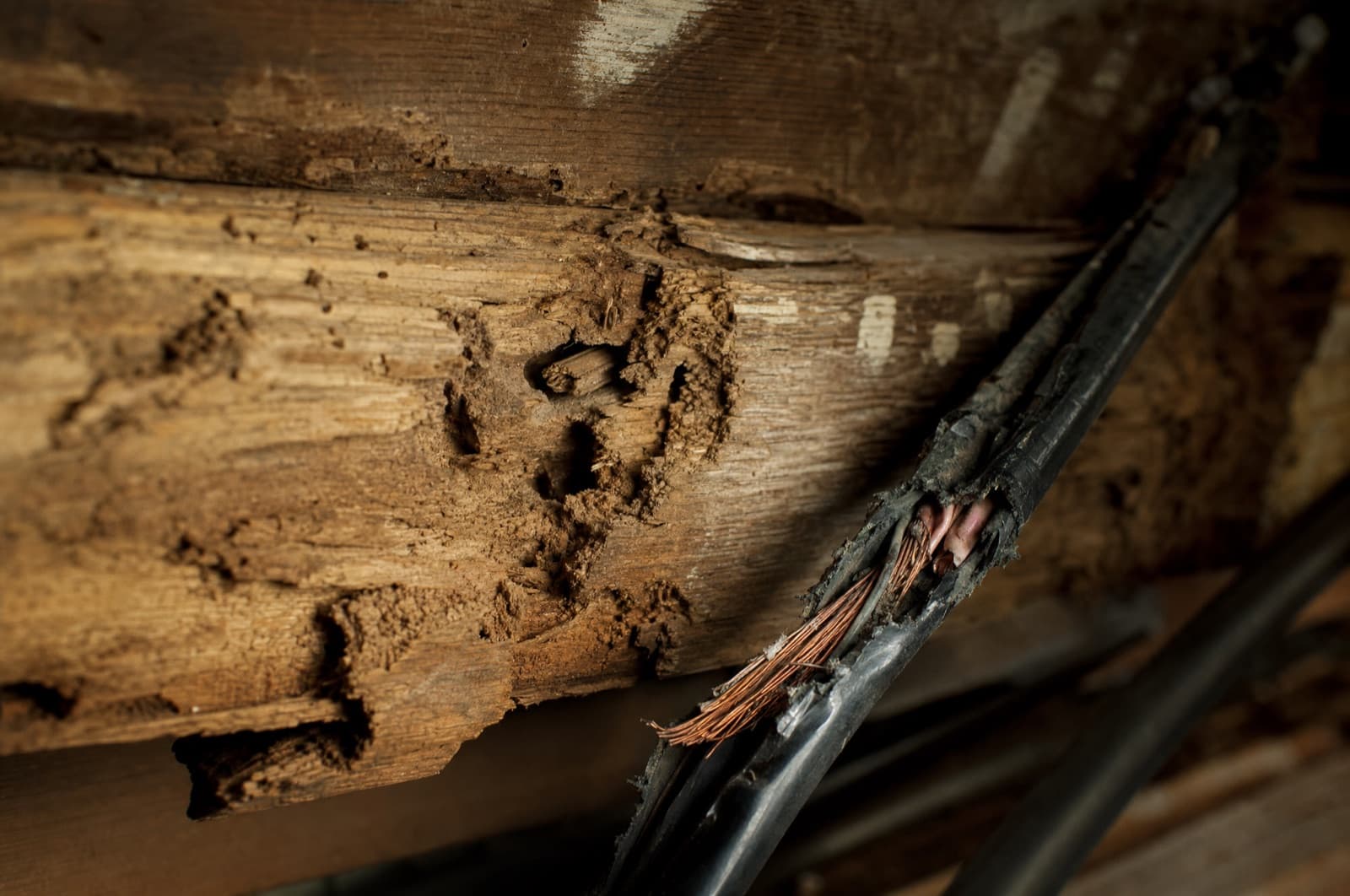
Pest damage evidence — a gnawed structural beam and a chewed electrical wire
Daniel Brady · NH-Licensed Pesticide Applicator · License #782664
Reviewed by Daniel Brady

Can wood-boring beetles damage furniture?

Functional damage to the piece — real, but slow
Yes. Powderpost beetles — lyctids on hardwood, anobiids on softer or damp-stored wood — and related wood-boring beetles infest wooden furniture, antiques, tool handles, and paneling, tunneling internally as larvae and leaving telltale round exit holes and fine frass once adults emerge. Most infestations were already present in the wood before it became furniture, brought home in an antique, a piece of reclaimed lumber, or unseasoned wood. Development inside the wood is slow, and Oklahoma State University Extension notes 'there is no need for extreme haste in treatment' once an infestation is found.

At a glance

  • Can it?: Yes
  • How common: Occasional
  • Hype: Overstated
  • Evidence: Well documented
The honest answer

The short of it

The verdict
Functional damage to the piece — real, but slow

Yes, wood-boring beetles genuinely tunnel inside furniture, antiques, and tool handles, leaving exit holes and frass behind — but most infestations arrived already in the wood, and development is slow enough that there's no reason to panic-treat overnight.

The correction

What they claim vs. what the evidence supports

One shared severity track, two markers. The span between them is the hype delta — named out loud.

The claim — wood-boring beetles infesting household furniture and antiques

That beetles will rapidly 'devour' furniture and spread uncontrollably through a home's wood items if not treated immediately.

Where the claim comes from: Pest-control blog copy and antique-care forums that frame any exit hole discovery as an urgent, spreading household infestation.

Severity, 0–100
Hype says65
40Evidence says
Hype delta25point gapWell documented
The evidence

The internal tunneling is real and genuinely damages the individual piece over time, but it's a slow process measured in years and generations, confined to susceptible wood, not a fast-moving household catastrophe. Oklahoma State Extension's own guidance stresses there's no need for extreme haste in treatment.

The gap

The tunneling is genuine and the loss to an individual piece can be real over years — but the 'urgent household infestation spreading fast' framing overstates both the speed and the reach. Most cases are a single vulnerable item developing slowly, not a race against time through your whole home.

Damage assessment

What is actually harmed

Damage verdict
Functional damage to the piece — real, but slow
FunctionalCan it?Yes
The specimen
Pest
Lyctid (hardwood) and anobiid (broader, moisture-favoring) powderpost beetles, plus related wood-boring beetles
What is in question
Wooden furniture, antiques, tool handles, and paneling
How common
Occasional
Evidence
Well documented
Mechanism

Larvae feed and tunnel inside the wood, invisible from the outside, for a developmental period that can run from months to several years depending on species and conditions. Adults emerge by chewing round exit holes roughly one thirty-second to one-eighth of an inch wide, pushing fine, powdery frass out behind them — this is usually the first visible sign an infestation exists. Anobiid beetles specifically need elevated wood moisture to thrive, so damp-stored furniture in a basement or unheated space is more vulnerable than furniture kept dry.

Actually at risk4
  • Hardwood antiques and furniture (lyctid beetles)
  • Furniture stored in damp basements, garages, or unheated spaces (anobiid beetles)
  • Tool handles, picture frames, and wood paneling
  • Any wooden item with existing beetle exit holes, which signal the wood was already vulnerable when the piece was made
Not at risk — despite the myth4
  • Metal, plastic, or upholstery-only components of a furniture piece
  • Well-sealed, painted, or varnished wooden pieces, which resist new egg-laying and reinfestation
  • Furniture kept consistently dry, which anobiid beetles in particular cannot thrive in
  • Other rooms or items in the house that aren't wood, or aren't the vulnerable wood species involved
Worst realistic case
An antique piece riddled internally by multiple overlapping generations, its structural integrity to the point of joints loosening or wood crumbling under pressure — a genuine loss for that specific piece, reached only after years of undetected, repeated reinfestation.

Assessed from: Oklahoma State University Extension powderpost beetle guidance; University of Florida IFAS IG119; University of Missouri Extension G7422

The compounding clock

Does it get worse if you ignore it?

Over time
Compounds slowly

Slow and reinfestation-driven — each generation takes time, and drying or sealing the wood stops the cycle.

The timeline
3 stages
  1. MonthsReversible

    A generation of larvae develops inside the wood, undetected, following eggs laid in exposed pores or cracks in unfinished wood.

  2. YearsReversible

    Adults emerge through exit holes, and if conditions remain favorable — bare wood, sufficient moisture for anobiids — a new generation can reinfest the same piece, deepening the internal tunneling over successive cycles.

  3. DecadesReversible

    In a piece left undisturbed and untreated for many years, repeated reinfestation can compromise structural elements like joints and legs enough that the item becomes fragile or unusable.

What stops the clock
Drying the wood below the moisture level anobiid beetles need, sealing exposed surfaces so new eggs can't be laid, or professional treatment of the piece itself — including controlled temperature treatment for valuable items. Once the cycle is broken, existing damage doesn't worsen further.
Repair scope

Who actually fixes this

Scope, not dollars — the honest answer to “how expensive is it,” routed to the right trade.

Who fixes it
Pest pro first
Effort
An afternoon

An actively infested piece should be professionally treated — often by chamber fumigation or controlled heat/cold treatment of the item itself — before deciding whether it needs structural repair or restoration, since treating first can save a piece that repair alone wouldn't.

The right order
  1. 1
    Confirm whether the infestation is active (fresh, light-colored frass) or old and inactive
  2. 2
    Have an active infestation professionally treated, which for furniture typically means treating the specific piece rather than the whole house
  3. 3
    Seal exit holes and consider a protective finish once the piece is confirmed inactive
Route by symptom
  • You — wipe it upThe infestation is old and inactive — vacuum frass and monitor for any new activity
Do not
  • Don't treat a family heirloom or valuable antique yourself with a household insecticide — professional treatment protects the piece
  • Don't assume old exit holes with no new frass mean the piece is still actively infested — confirm before treating unnecessarily
Where we help — and where we don't

Treating a small, actively infested item may route to a specialist equipped for chamber fumigation or controlled treatment of individual pieces; broader household wood-destroying-insect concerns are Anchor's lane. Furniture restoration and refinishing are not an Anchor service.

In depth

The full picture

01

Yes, but it usually arrived with the piece

Wood-boring beetles do genuinely infest wooden furniture, antiques, tool handles, and paneling — this isn't a manufactured concern. But the more useful fact for a homeowner is where most infestations actually start: the wood was frequently already infested, as eggs or young larvae, before it became furniture at all. An antique bought at an estate sale, a piece built from reclaimed or insufficiently seasoned lumber, or an old tool handle can all carry an infestation that only becomes visible years later when adults finally emerge.

02

What the tunneling actually does

Larvae feed and tunnel inside the wood for a developmental period, invisible from the outside, before adults chew their way out through small round exit holes and leave fine, powdery frass behind. That's usually the first sign anyone notices. Lyctid beetles specifically need large-pored hardwoods, while anobiid beetles favor damp conditions and can attack a broader range of wood, including furniture stored in a humid basement or unheated garage.

03

The honest pace: slow, and no reason to panic

The real correction here is about urgency, not existence. Oklahoma State University Extension is direct that 'there is no need for extreme haste in treatment' once an infestation is found — development inside the wood is slow, measured in months to years per generation, and a well-considered treatment decision beats a rushed one, especially for a valuable antique where the wrong treatment could damage the finish.

The damage that does accumulate is real for the specific piece — enough repeated reinfestation can loosen joints or weaken structural elements of a chair or table leg — but it stays confined to susceptible, typically unfinished or damp wood. Sealed, painted, or consistently dry furniture is a much lower risk, and this isn't a threat that spreads through a house's structural framing the way a wood-destroying insect targeting the building itself would.

Key takeaways
5 points
  • Yes — wood-boring beetles genuinely tunnel inside furniture, antiques, and tool handles, leaving exit holes and frass.
  • Most infestations were already present in the wood before it became a finished piece.
  • Development is slow — there's no need for extreme haste in treatment once an infestation is found.
  • Sealed, painted, or consistently dry furniture is much less vulnerable than bare or damp-stored wood.
  • A specialist can often treat an individual valuable piece rather than requiring whole-house measures.
New Hampshire context

What this looks like in New Hampshire homes

New Hampshire's older housing stock and active antique trade mean many homes have inherited or secondhand wooden furniture with an unknown history, and damp basements or unheated barns and garages common across Manchester, Nashua, and Concord create favorable conditions for anobiid beetles specifically. A newly noticed exit hole in a piece that's been in the family for decades is far more likely to be old, inactive damage than a fresh infestation — checking for new frass accumulation over several weeks is the simplest way to tell the difference.

  • NH-licensed #782664

    Southern New Hampshire

  • Family-owned

    Since 2017

  • Honest routing

    Even when it isn’t us

We serve these communities

ManchesterNashuaConcordDerryBedfordSalemHudsonAmherstAuburnGoffstownHooksettLitchfieldLoudonMilfordBristol

Service Area Map

Southern New Hampshire

BristolPop. 3,200LoudonPop. 5,500ConcordPop. 43,900HooksettPop. 14,800GoffstownPop. 18,000AuburnPop. 5,700ManchesterPop. 115,600BedfordPop. 23,300LitchfieldPop. 8,500AmherstPop. 11,300DerryPop. 34,500MilfordPop. 15,700HudsonPop. 25,600NashuaPop. 91,100SalemPop. 30,000HQCityHover for info

Found tiny exit holes in an antique or furniture piece? Confirm before you treat.

Anchor can assess whether wood-boring beetle activity in your home's wood items is active or old, and point you to the right treatment for valuable pieces.

Follow-up questions

Frequently asked

Sources & citations(3)
  1. Oklahoma State University Extension — Powderpost Beetles

    No need for extreme haste in treatment; slow development inside furniture wood

    extensionverified 2026-07-16
  2. University of Florida IFAS Ask IFAS — Powderpost Beetles (IG119)

    Larval tunneling mechanism, exit holes, and frass in furniture and wood items

    extensionverified 2026-07-16
  3. University of Missouri Extension — Powderpost Beetles (G7422)

    Anobiid beetle moisture requirements and reinfestation conditions in stored furniture

    extensionverified 2026-07-16

Written & reviewed by

Verified

Daniel Brady

NH-Licensed Pesticide Applicator · License #782664 (NHDAMF, RSA 430)

Daniel Brady is the New Hampshire–licensed applicator behind Anchor Pest Services, a family-owned pest control company serving the Manchester area since 2017.

Verify license

Last updated Jul 2026

Honest pest help for New Hampshire homes

We'll Tell You If It's Even Still Active.

Wood-boring beetles genuinely damage furniture, but most infestations arrived already in the wood and develop slowly — there's rarely a reason to panic-treat overnight. Anchor Pest Services can assess activity and treat structural wood-destroying insect concerns; a specialist chamber-treats individual valuable pieces, and furniture restoration is a separate trade. Family-owned since 2017, NH license #782664, serving Manchester, Nashua, Concord and nearby towns.

  • Honest advice — we'll tell you when there's no need for extreme haste
  • NH-licensed applicators (#782664) — free inspection, same-day service
  • Wood-destroying insect assessment across southern and central New Hampshire

NH License #782664 · No obligation · We answer in person