
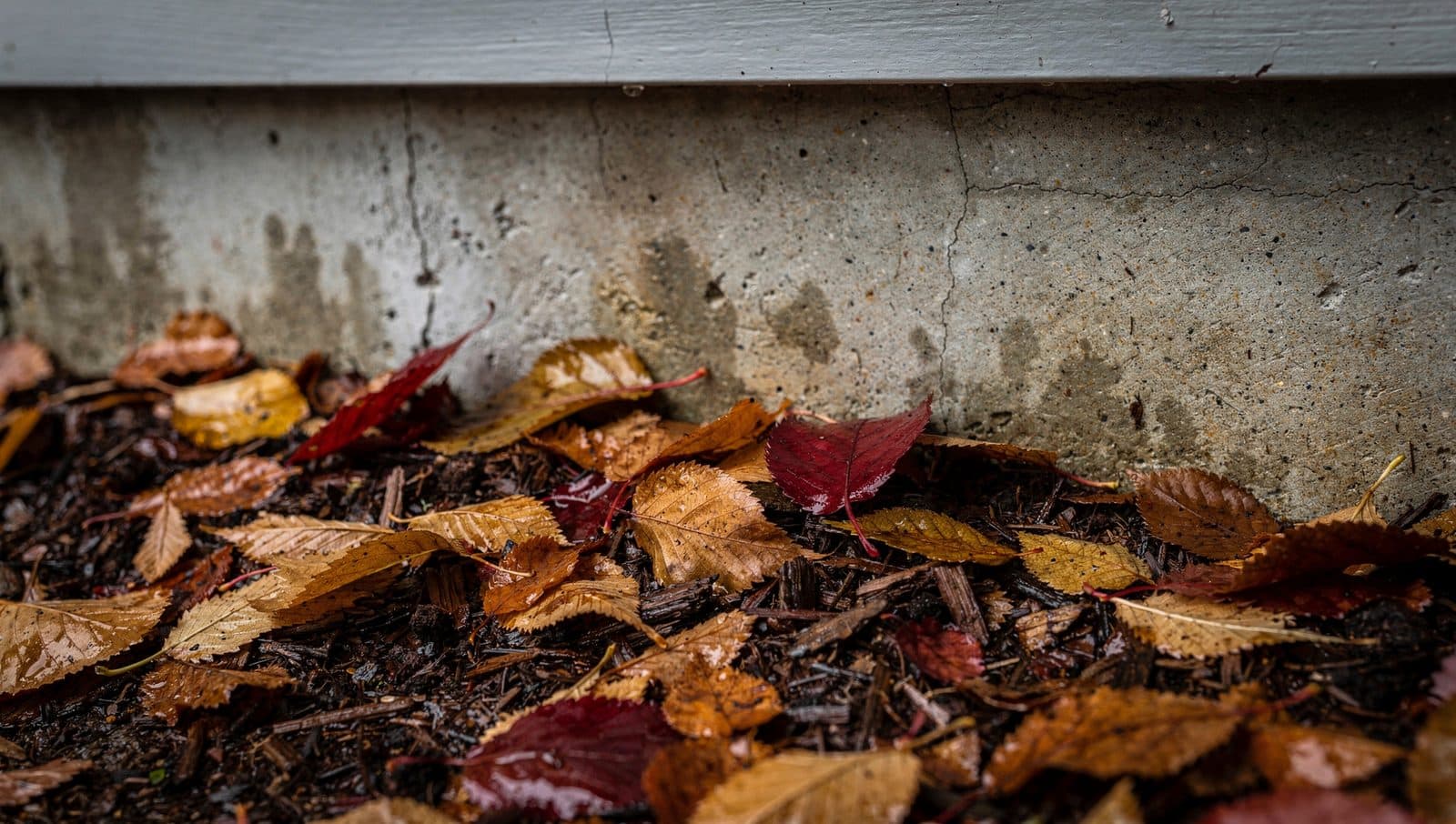
Can Pests From Leaves Infest Furniture or Walls?
The bugs that actually live in leaf litter can't infest your furniture or walls; the genuine risk is carpenter ants and rodents that stage in litter and then move into the structure.
At a glance
- The verdict: Mostly no — with one real exception
- Who fixes it: You
- Category: Fallen Leaves, Yard & Structural Pest Risk
The short answer
Mostly no, and this is a case where the honest answer disappoints the fear. The insects that actually live in leaf litter — millipedes, sowbugs (pillbugs), springtails — can wander indoors as accidental invaders, but they can't establish in dry furniture or breed inside walls; they simply dry out and die once they're inside. The genuine structural risk is different: carpenter ants and rodents that stage in damp foundation litter and mulch can go on to establish nests in damp wood or wall voids. So the leaf bugs themselves are a nuisance at worst, but litter against the house can still set up a real pest problem — just not the one most people picture.
Is this a pest-harborage risk?
Pest-harborage risk
situationalDamp leaf litter and mulch banked against the foundation, with the fear framed as "bugs from the leaves getting into my furniture or walls"
- Why it matters
- The decomposer insects that actually live in leaf litter need constant moisture and organic matter to survive; a dry indoor environment kills them within days, so they can wander in but can't infest furniture or breed in walls. The real mechanism worth worrying about is different pests that stage in damp foundation litter and mulch — carpenter ants excavating damp wood, and rodents nesting in wall voids after using exterior debris as cover and a travel corridor.
- When it's low risk
- If your foundation line is kept clear of deep litter and mulch, and the wood around your home stays dry, sustained indoor infestation from leaf-litter insects is very unlikely — at worst you'll see the occasional wandering millipede or sowbug near a door or window, which dies indoors on its own.
- What to do
- Keep leaf litter, mulch, and firewood off the foundation and away from exterior walls; fix moisture sources (gutters, downspouts, grading) that keep wood damp; seal obvious entry points around doors, windows, and utility penetrations. If you're already seeing carpenter ants, sawdust-like frass, gnaw marks, or droppings near walls, that's a genuine structural pest problem and squarely Anchor's work — an inspection finds the nest and the moisture source driving it.
Who actually fixes this?
Start here
You
For the vast majority of cases, this is a basic exclusion-and-drying job: keep litter off the foundation, keep wood dry, and seal gaps — no structural pest is actually established.
- Pest-control pro — You find carpenter ants, frass, gnaw marks, droppings, or other signs that a real structural pest has established in wood or a wall void — that's a different problem from a wandering millipede.
The details, straight
Why the leaf-litter bugs themselves usually can't infest your home
Millipedes, sowbugs (also called pillbugs or roly-polies), springtails, and centipedes are the classic residents of damp leaf litter. University of Minnesota Extension notes these decomposer-and-predator insects are found in moist, decaying leaf litter or other organic material around building foundations, and that they crawl into homes from the soil and leaf litter, especially during late summer and fall. Once inside, though, they're accidental invaders: without the constant moisture leaf litter provides outdoors, they dry out and die — they don't set up shop in furniture or breed inside wall cavities. That's the honest, disappointing-to-the-fear answer: most of what lives in your leaf pile simply can't live in your house.
The real structural risk: carpenter ants
UNH Cooperative Extension calls carpenter ants, along with termites, the most troublesome structural pest in New Hampshire, and stresses that they strongly prefer damp wood for excavating their galleries. Leaves and debris that keep wood chronically wet — along with firewood and stumps left near the house — support the outdoor parent colonies that eventually send out satellite colonies into damp wall voids or framing. This is the genuine version of "pests from leaves getting into your walls": not the leaf-litter bugs themselves, but a structural pest that used damp debris nearby as a stepping stone.
The other real risk: rodents
Mice and rats nest in wall voids after staging in exterior litter, mulch, and clutter that gives them cover close to the house. National Pesticide Information Center guidance notes mice usually stay within about 30 feet of their nests, and nests are built near food sources — so a debris pile close to the foundation puts a potential nest close to your walls. Unlike the harmless decomposer insects, rodents are fully capable of living, feeding, and reproducing inside a wall void once they're in.
How to tell the difference at home
If you're finding the occasional millipede, sowbug, or springtail near a doorway or window, especially after rain, that's the low-concern nuisance-invader pattern — clean it up and address exterior moisture and litter, and it resolves on its own. If instead you're seeing large ants with a heart-shaped head and elbowed antennae, small piles of sawdust-like shavings, faint rustling in walls, droppings, or gnaw marks, you're looking at a genuine structural pest, not a leaf bug — and that's worth an inspection.
Key takeaways
- Decomposer leaf-litter insects (millipedes, sowbugs, springtails) can wander indoors but dry out and die — they can't infest furniture or breed in walls.
- The real structural risk is carpenter ants, which prefer damp wood and can be supported by moisture-holding debris near the house.
- Rodents also stage in exterior litter and clutter before nesting in wall voids, and unlike leaf bugs, they can fully establish indoors.
- Keeping litter and mulch off the foundation and wood dry prevents both the nuisance invaders and the genuine structural pests.
- Signs of carpenter ants, frass, gnaw marks, or droppings mean it's time for a pest-pro inspection — a wandering millipede does not.
Seeing carpenter ants or rodent signs indoors?
That's a different, genuine problem from the wandering leaf-litter bugs — and it starts with an inspection to find the nest and the moisture source.
Get a structural pest inspectionA New Hampshire note on carpenter ants
Carpenter ants are active across Southern and Central New Hampshire and are drawn to the same damp wood conditions that heavy tree cover and fall leaf litter can create near a foundation. Keeping a clear, debris-free band along your exterior walls — especially where leaves tend to bank up against siding or a shed — is one of the most effective things a homeowner can do. If you find signs of an active carpenter-ant colony or rodent activity in a wall, Anchor Pest Services serves Manchester, Nashua, Concord, and the surrounding towns with an inspection-first approach that finds the nest and the moisture source behind it.
NH-licensed applicator #782664 (NHDAMF, RSA 430) · NEPMA member · family-owned since 2017.
Related questions
Sources(3)
- [1]University of Minnesota Extension — Sowbugs, Millipedes, and Centipedes
Decomposer insects live in moist leaf litter around foundations and are accidental indoor invaders that die out indoors
extensionverified 2026-07-14 - [2]UNH Cooperative Extension — Carpenter Ants Fact Sheet
Carpenter ants as a leading NH structural pest that strongly prefers damp wood for excavation
extensionverified 2026-07-14 - [3]National Pesticide Information Center — Mice
Mice nest near food sources and typically stay within about 30 feet of the nest
npicverified 2026-07-14
Written & reviewed by
VerifiedDaniel Brady
NH-Licensed Pesticide Applicator · License #782664 (NHDAMF, RSA 430)
Daniel Brady is the New Hampshire–licensed applicator behind Anchor Pest Services, a family-owned pest control company serving the Manchester area since 2017.
Last updated 2026-07-14
Your next question
Honest pest help for New Hampshire homes
Leaf-Litter Bugs Are Mostly Harmless — Carpenter Ants and Rodents Are Our Job
We'll tell you plainly when a leaf bug in your house is just a stray wanderer. Where Anchor Pest Services genuinely helps is when carpenter ants or rodents have used damp debris near your foundation as a stepping stone into the structure. Family-owned since 2017, NH license #782664, serving Manchester, Nashua, Concord and nearby towns.
- Honest advice — we tell you when it's not actually an infestation
- New Hampshire applicators' license #782664 — no-cost quote, quick response
- Around-the-home pest control for southern and central New Hampshire
NH License #782664 · No obligation · We answer in person
Your next step
- Book a NH pro
Pest Control Services
Licensed, family-owned pest control across southern NH.
Book now - Related guide
Can Leaf Pests Spread to My Home?
Read the answer - Related guide
Can Leaf Piles Attract Rats or Insects?
Read the answer - Related guide
Do Piles of Tree Leaves Attract Termites?
Read the answer - Also relevant
Can wood-boring beetles damage furniture?
Read the answer - Related guide
Do Fallen Leaves Attract Pests?
Read the answer